October 2, 2026
 Categories: Ask the Rabbi / Torah
Q & A: Learning Torah on Tisha B’Av (Part I)
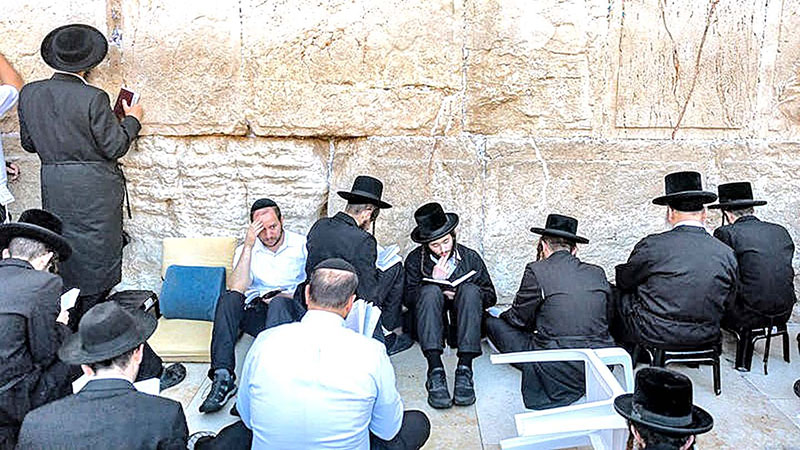


Question: I was taught that due to our mourning on Tisha B’Av, we are not allowed to learn or discuss Torah. Since Torah causes us joy, we are forbidden to lessen our mourning through its study. While I understand why we read Kinot and Eicha, how do we justify reading from the Torah at Shacharit and Mincha? A further question: Do these halachot apply to an individual during his or her seven days of mourning?
H. Ellis
Via E-mail
Answer: The halacha to which you refer is stated in Yoreh De’ah (384:1, based on Mo’ed Katan 15a): “During the entire seven-day period [of his mourning], a mourner is forbidden to read from the Torah, the Prophets and the Writings, the Mishna, the Gemara, halachot and aggadot, except if people need him to teach them. In such a case, it is permissible...”
We also find similar halachot regarding Tisha B’Av, our national day of mourning for the destruction of the Temple and Jerusalem, as the Mechaber notes (Orach Chayyim 554:1).
We must ask: What is the reason that a mourner is forbidden to read (i.e., study or discuss) Torah, Scripture, Talmud, etc.? The Shach (Orach Chayyim ad loc.) explains the source, citing a verse in Psalms (19:9), “Pikudei Hashem yesharim mesamchei lev, mitzvat Hashem barah me’irat eynayim”– The commands of Hashem are right; they gladden the heart; the commandment of Hashem is of such clarity that it enlightens the eyes.
Torah has the power of offering unique enjoyment and pleasure. A mourner in his bereavement is precluded from this delight. It is interesting to note that this citation of the Shach is at variance with the Mechaber’s source for the halacha (Tractate Mo’ed Katan 15a), where he says that a mourner is prohibited to utter words of Torah [discussion], since Hashem stated (Ezekiel 24:17), “He’anek dom” – Sigh in silence.
Scripture there refers to the tragedies of the Jewish people and specifically to Ezekiel’s personal travail, yet Ezekiel himself is precluded from any manifestation of outward sorrow – “Sigh in silence.” Rabbenu Chananel explains that our Sages implied that such is the halacha in this case only, and that indeed all others are to manifest their grief in an open, public manner.
In truth, we do find a Gemara (Ta’anit 30a) stating that all customary restrictions relating to the mourner during the seven days of mourning apply as well to the community as a whole on the Ninth of Av. However, there is a difference. In the case of the national mourning on Tisha B’Av, one is prohibited from eating and drinking. (Rashi, s.v. “Asur be’achila uvi’shetiya,” explains that these two restrictions apply only to the mourning for the Temples’ destruction. Indeed, both Rosh and Rif simply remove these first two restrictions from their amended texts.)
The Gemara in Ta’anit explains that one is prohibited from [washing and] anointing, the donning of [leather] shoes, and marital relations. One is also forbidden to read from the Torah, Prophets, and Writings, and to study Mishna, Talmud, and Midrash, as well as halachot and aggadot. However, one is permitted to read that which he usually does not read (Rashi, s.v. “Be’makom she’eino ragil likrot,”explains that since this is a matter beyond his familiarity and understanding, it actually causes distress to the mourner), and similarly he may study a Mishna or Gemara that he does not usually study. He may read the Kinot and Job and the elegies in Jeremiah. Young schoolchildren (tinokot shel beit rabban) remain idle – we do not study with them on the Ninth of Av – as the verse (Psalms 19:9) states, “Pikudei Hashem yesharim mesamchei lev” – The commands of Hashem are right; they gladden the heart.
R. Yehuda states that the restrictions include even those matters (of Torah and Mishna, etc.) that one is not used to reading, the only exception being Job, Kinot, and the elegies in Jeremiah.
Thus we see that both verses apply: 1) The Gemara’s citation from Ezekiel (24:17), “He’anek dom”– Sigh in silence – means that only Ezekiel must sigh in silence, but all others are to manifest their mourning outwardly and thus not study Torah publicly. 2) The Gemara in Ta’anit explains further that this is due to the fact (Psalms 19:9) that “[t]he commands of Hashem are right; they gladden the heart,” which is surely forbidden in the midst of mourning.
Regarding the reading of the Torah in the synagogue on Tisha B’Av, at both Shacharit and Mincha, the Mechaber (Orach Chayyim 554:4) addresses that as follows: “One is permitted to read the complete order of the day [he is referring to the order of the daily prayer service] as well as the portion of the Korbanot, the Mishna of “Ezehu Mekoman” (Tractate Zevachim, chapter 5), and the Midrash of Rabbi Yishmael (Baraita, in Sifra). The latter three constitute the portion of tefillah referred to collectively as Korbanot. The Rema adds that one is allowed to review the parsha on Tisha B’Av. However, both the Ba’erHeiteiv and MishnaBerurah(ad loc.) note that this applies only to the chazzan, who reads the Torah publicly for the congregation. His reading and advance preparation are obviously considered tzorech ha’tzibbur – a public need.
To be continued.