 October 23, 2026
 Categories: Torah
A Shoulder of Tears
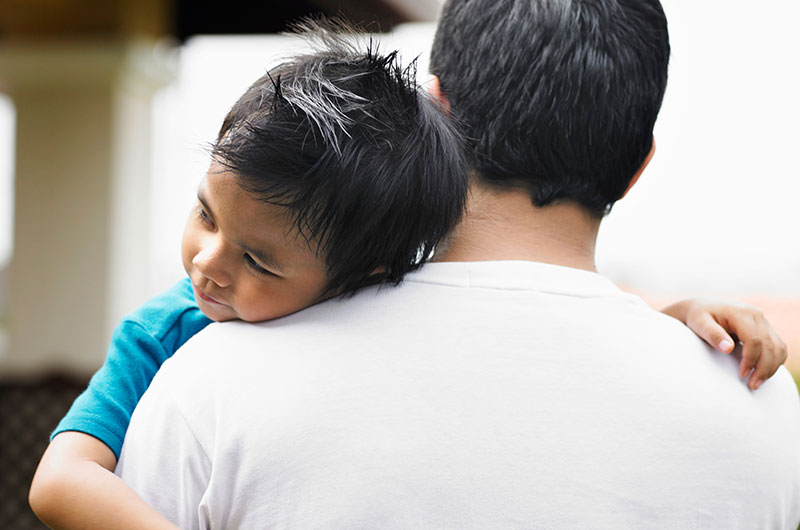


The Torah describes the stirring moment when Yaakov reunites with his long-lost son Yosef. Few scenes in the Torah evoke such quiet pain. After twenty years of longing and uncertainty, an aging father and the son who has risen to power in Egypt meet again. They draw close, embrace, and rest on one another’s shoulders.
When the Torah describes the tears in that embrace, it states that one of them cried – as if the other did not. Chazal address this irregular phrasing: Yosef wept on his father’s shoulder, but Yaakov did not. Overwhelmed by emotion, Yaakov directed that moment toward Shema, reciting the opening verse and channeling his joy into Kabbalat Ol Malchut Shamayim.
There are moments when emotion gathers – joy, relief, fear, or gratitude – and a religious personality seeks to direct that inner tide toward expression rather than be carried away by it. Yaakov, overwhelmed by the return of a son he had assumed dead, channels his feelings into worship. Though the formal verse of Shema would only be inscribed later in Torah, Yaakov sensed its truth centuries earlier.
This scene leaves us with a resonant image: a human being directing emotion toward steady relationship with Hashem. In that moment, Yaakov placed his awareness of Hashem before his feelings for Yosef.
Torah or Tears
This portrait raises a question. What of Yosef? Are we to imagine that, because he was not reciting Shema but simply weeping on his father’s shoulder, he stands on lesser spiritual ground? If the ideal response is embodied in Yaakov’s Shema, does Yosef somehow fall short?If Yosef did not recite Shema, his response is no less legitimate. Yaakov turns the moment into ritual, but Yosef simply weeps on his father’s shoulder. He had lived for two decades without a father’s warm shoulder and without the reassurance that only a father can provide. He allows himself to feel love and longing directly rather than translate them into Shema. The Torah preserves his tears, and his response carries integrity.
This scene contains two legitimate layers. It validates two pathways for navigating an emotionally charged encounter. One channels feeling through ritual – in this case, reciting Shema. The other allows emotion to remain human and unfiltered – the love of a son reclaiming a father. Yaakov recites Shema. Yosef cries. Each response holds integrity.
By presenting these responses side by side, the Torah affirms that healthy relationships and the emotions they awaken are part of religious life. The capacities that animate our relationships were planted in us by Hashem. Bonds between parent and child – longing, reunion, and restored closeness – are fashioned by the Divine will. When those emotions surface honestly, they, too, give expression to what Hashem placed within human experience.
Standing Alone, Standing Together
This scene raises a religious question. What room do we make for relationships within a life of avodat Hashem? How often do we stand before Hashem as solitary individuals – engaged in ritual, studying Torah, fulfilling obligations – and how much time and energy do we devote to building relationships with family, friends, colleagues, and the people who populate our days?Religion often asks us to transcend surroundings and stand before Hashem in solitary submission. The Gemara in Eruvin even advances a jarring image: a person seeking mastery in Torah should be as indifferent to spouse and children as a raven to its young. Even if we treat that line as hyperbole – and some did not – it points to a sober truth: moments of ascent may demand a temporary sacrifice of affectionate bonds. Relationships, even with family, do not exhaust religious life. In the end, religion demands those silent moments in which we stand before Hashem alone.
At the same time, we pour energy into human attachment – shaping families and friendships that occupy large parts of our emotional lives. This, too, is not peripheral to avodat Hashem. Our tradition surrounds relationships with safeguards – prohibitions against deceit, humiliation, exploitation, or injury. But the legal boundaries only hint at something deeper. We cultivate relationships not merely to avoid sin, but because loyalty, love, empathy, and responsibility enlarge the religious self. Standing alone before Hashem is indispensable – but so is the labor of standing with one another.
Why are relationships integral to religious experience? Why should we pour time, attention, and emotional resource into bonds that seem to siphon energy away from ritual, study, and inward ascent? Why should human attachment be counted among the labors of avodat Hashem?
The First Classroom
Firstly, because the bonds we build with others become templates for the relationship we hope to cultivate with Hashem. One might expect Sefer Bereishit to unfold as a treatise of theology, yet explicit theology is almost absent. We receive no full account of creation and no systematic defense of monotheism. Instead, the narrative lingers over the strains of family – competing wives, rival siblings, succession anxiety, honor, betrayal, and protection.The implication is clear: the family is our first school of avodat Hashem. The traits we refine in human attachment – honesty, trust, devotion, loyalty, selflessness – are the traits we later bring to our encounter with Hashem. When we treat relationships as religious labor, we turn human connection into preparation for standing before Hashem.
Without Gaps
Secondly, we must frame relationships as part of religion so that our inner world does not become bifurcated. Bifurcation occurs when we act religious in select settings yet feel spiritually neutral across much of life. The result is a choppy interior landscape – brief peaks of piety interrupted by hollowness.Ideally, avodat Hashem is holistic. We stand before Hashem in every setting, though our awareness is expressed differently across the varied frames of experience. The goal is not unending ritual, but steady consciousness.
If we cannot breathe avodat Hashem meaning into relationships, then portions of life fall outside our religious horizon. If we treat relationship-building merely as avoiding harm, rather than as investment, we leave countless hours untouched by religious purpose – and for long stretches we are nowhere near avodat Hashem.
Emotional Grounding
Finally, relationship-building is crucial to religion because religious meaning rests on emotional stability. If the inner structure of a person is brittle, religious achievement cannot endure; it bends and snaps under pressure. Relationships steady the inner life. They are harder to build in the modern world, yet more necessary than ever in an age of strain and anxiety.The strain on relationships begins with practical pressures. The pace of contemporary living has become relentless, and screens have become ubiquitous. We once had time for conversation and the dignity of eye contact. Now the glare of devices absorbs attention, and the hurry of our days leaves little space to breathe into relationships.
A second pressure is ideological. The rise of individualism places strain on family life. Families demand compromise rather than constant self-assertion, and that runs against the cultural mood. And the erosion of boundaries compounds the problem. The workplace follows us into our homes and leaks into private spaces. We no longer work nine to five; the thin line between vocation and home makes sustaining relationships difficult.
Yosef’s tears remind us that emotional health and human attachment are not distractions from avodat Hashem but part of its hidden architecture. His tears teach that standing before Hashem sometimes begins with standing alongside those we love.