 October 9, 2026
 Categories: Book Reviews / Features
Author of New Book Wants Jews to “Refuse to Lose”
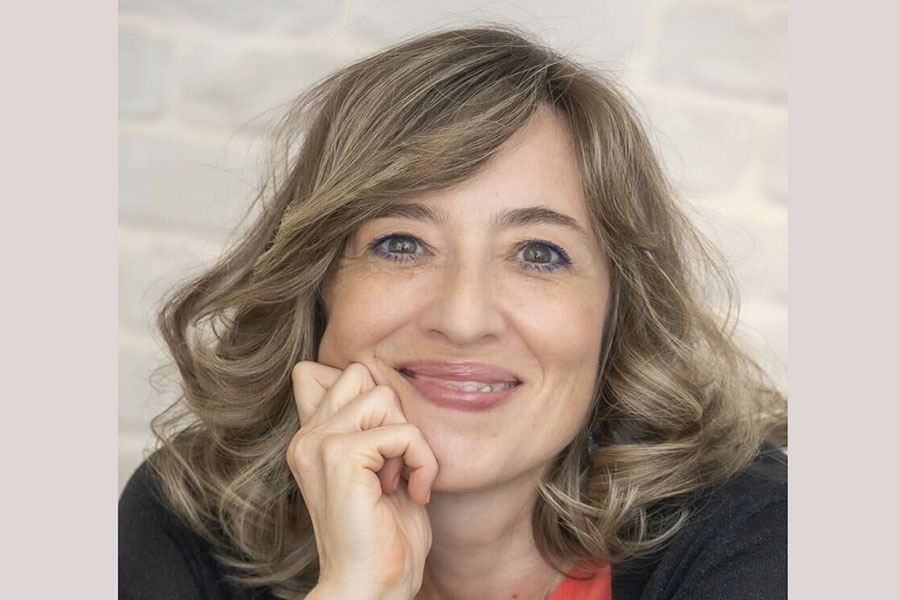


In Siberia, where she was born, an antisemite told Izabella Tabarovsky she should flee to Israel. She would have loved to do so, but the Soviet rulers would not allow it. In 1989, she was finally able to leave. She went on to graduate from Harvard and now lives in Jerusalem.
Her powerful new book, Be A Refusenik: A Jewish Student’s Survival Guide, includes a passionate foreword by Natan Sharansky, who became the face of the refuseniks and was released from prison in 1986.
Tabarovsky explains that while there are differences between today’s America and the Soviet Union of the past, the anti-Zionism and antisemitism on college campuses are much like the hate propaganda created by the Soviet regime in 1967.
The term “refusenik” refers to Jews in the Soviet Union whose request to leave for Israel was refused and who were then viewed as traitors. Tabarovksy urges Jews to be defiant and not be intimidated or silenced either online or in real life by the mob mentality. A scholar of Soviet and contemporary antizionism, Tabarovksy is also a senior advisor at the Wilson Center’s Kennan Institute.
She begins her book with the horror of a Manhattan anti-Israel protestor flashing a swastika on his phone and also writes about the bizarre congressional hearing at which the then-president of Harvard, Claudine Gay, said that whether calling for the genocide of Jews counted as harassment would depend on the context. Gay was demoted but still works at Harvard.
“I looked at it not as a Harvard graduate but as someone who studied antisemitism and was aware that Harvard made a big deal about microaggressions and any type of speech that could offend someone,” Tabarovsky told The Jewish Press. “But suddenly, here, it depended on the context. The hypocrisy revealed in that testimony was blatant. The usual rules that apply to everyone else don’t apply to Jews and Israel.”
She said the newer move to demonize Zionism can be traced back to Covid in 2020.
“Part of the far-left-wing culture is to believe capitalism is bad, socialism is good, and Israel must be bad,” she said. “It becomes part of a package where you must take the whole package. It’s been passed down generations. There are articles in The New York Times from the 1970s [stating] that ani-Zionism is the new form of antisemitism. Why do we forget? Why do we think this is something new? It keeps hitting us on the head. It explodes and we ask ourselves, ‘What is this thing?’”
In her book, she writes about numerous Jewish dissidents in the Soviet Union, some of whom were jailed, and how American Jews mobilized with a famous rally in Washington, D.C. and how some who set an empty chair at their bar mitzvah celebration to represent a Soviet Jewish boy who could not have a bar mitzvah.
“I thought, coming to America, I wouldn’t see what I saw where I grew up,” she said. “What I realized in America is, you don’t need an oppressive regime. You only need pressure from Twitter and other social media to demonize, and it’s disturbing because we are not as free as we think. This is especially hard for young people on college campuses because it is much easier to go with the flow and much more difficult to stand up against people. Young Jews are under massive amounts of pressure to disavow their connection to Israel and their Zionism.”
Her book includes the stories of several Jews who have battled colleges, including Shabbos Kestenbaum, who sued Harvard and got a settlement and is now a leading force in debating antisemites and anti-Zionists.
The Soviet playbook is now being used, including by some on the right, like Tucker Carlson and Candace Owens.
“They question the loyalty of Jews, ask if they are working for Mossad, ask if they are real Americans. [They] say Zionism means disloyalty,” Tabarovsky said. “Once you open that Pandora’s box, antisemitic outcomes are inevitable, and it can range from someone not getting a job to being assaulted on the street. I warned about it for years. I wrote articles…and gave speeches. I wanted to demonstrate what it was like to live under anti-Zionist ideology. I ask myself if I should have been more explicit.”
Things began to change on college campuses in 2017, she said, where the oppressor vs. oppressed motif was being taught and Zionism was seen as evil. She said most Gen Z Jews have little or no knowledge of the struggle of refuseniks to get out of the Soviet Union.
“I wanted to tell stories so people could relate to what it was like to be there,” she said about writing her book. “I think young Jews need role models. We are awfully short on heroes these days. Also, we are attached to victimhood, as this is the currency today, but while calling out anti-Zionism and antisemitism, we must show young Jews examples of people who acted with courage and defiance. Otherwise, what do you have to fall back on in difficult times?”
She said the refuseniks wanted to learn Hebrew, and their passion for Israel was anchored in a positive outlook. She said it is crucial to reach young Jews today who are facing propaganda on college campuses.
What is the best way to fight anti-Zionism and antisemitism?
“I don’t think there will be one answer,” she said. “There will be many answers. I think legacy organizations are paralyzed, but organic leadership is emerging, especially [those on] college [campuses] who are in the thick of this fight.”
Tabarovsky has been inspired by many Jewish students and former students advocating on college campuses, including Kestenbaum as well as Lishi Baker at Columbia University, who led a counter-protest where all the flags were American and yet the group was attacked.
Be A Refusenik is a must-read for high school and college students as well as their parents. It is a torch that can be placed into the hands of people reaching up for something to help them push back against the onslaught of propaganda. The torch comes in the form of lessons from some of their ancestors whom they might not have known about before.
This book will help readers not be tricked into believing the lies of bad-faith podcasters and understand that its propaganda designed to make Jews feel ashamed and think what is happening is totally new.
“To an extent, there is some success [by] the conspiracy theorists saying that Israel controls America,” she said. “Any fact that debunks a conspiracy theory is used to show how the conspiracy theory is true. I will not be silent, and I hope people see that there is a need to look at Jews in colleges and what they are facing.”