יום שישי, כ״ב אלול תשפ״וFriday, September 4, 2026



Follow Us


Daniel Pipes is a world-renowned Middle East and Islam expert. He is President of the Middle East Forum. His articles appear in many newspapers. He received his A.B. (1971) and Ph.D. (1978) from Harvard University and has taught at Harvard, Pepperdine, the U.S. Naval War College, and the University of Chicago. He is a board member of the U.S. Institute of Peace and other institutions. His website is DanielPipes.org.
Read More
By Daniel Pipes
Odd that CUFI is out there swinging and the American Israel Public Affairs Committee is silent.
By Daniel Pipes
Middle East expert Daniel Pipes appeared on the 'Cross Talk' program to argue that the West should use its influence to oppose Islamism instead of supporting it.
By Daniel Pipes
Daniel Pipes: I predicted that 'Israel's troubles will really begin' should Obama win a second term. These have begun; Jerusalem, brace for a rough four years.
By Daniel Pipes
The time is well overdue to respond to IRGC atrocities with the language of force that Iranian leaders only understand.
By Daniel Pipes
The 25-minute show was the most hare-brained and loony of my 35 years going on television.
By Daniel Pipes
It will be a long, hard road to traverse, but there is no short cut and it can succeed.
By Daniel Pipes
Freed of the military's oversight only in mid-2011, Erdoğan could win enough dictatorial power for him (or a successor) to achieve his dream and fully implement the Shari'a.
By Daniel Pipes
Ideologues are dictators on steroids who don't moderate upon reaching power but dig themselves in.
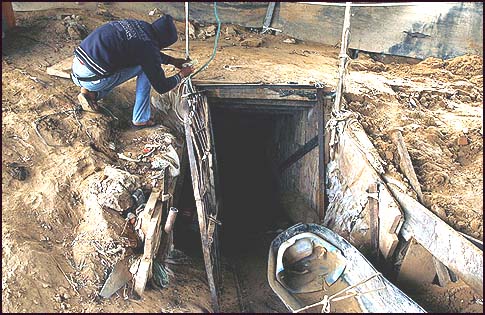
By Daniel Pipes
By removing this layer of Israeli protection, an "exponential increase" in the Gaza arsenal predictably followed, culminating in the Fajr-5 missiles that reached Tel Aviv this month.
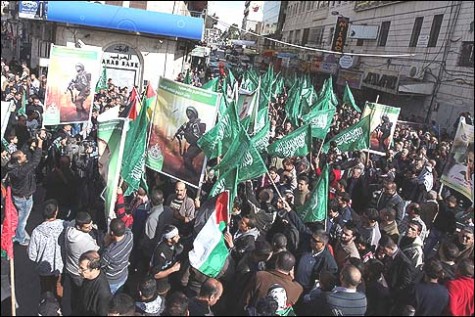
By Daniel Pipes
If Hamas knows it cannot defeat the Israel Defense Forces and will get a bloody nose for its efforts, it obviously has motives other than victory in mind.

By Daniel Pipes
I vote Republican because I support the party's core message of individualism, patriotism, and respect for tradition, in contrast to the core Democratic message of dependence, self-criticism, and "progress." I am inspired by the original reading of the U.S. Constitution, by ideals of personal freedom and American exceptionalism. I vote for small government, for a return of power to the states, for a strong military, and an assertive pursuit of national interests.
By Daniel Pipes
It happens every four years, as U.S. presidential elections roll around: I feel like a stranger. That's because news reports blare out what's not of interest: trivial statistics (171,000 jobs added in October; jobless rate up 0.1 percent to 7.9 percent), biographical irrelevancies (claims that Romney outsourced jobs to other countries when at Bain Capital), and forgettable gaffes (Obama saying that "Voting is the best revenge"). This limited discussion misses the main points.
By Daniel Pipes
The Nation of Islam's historic role as a bridge between American blacks and Islam ended in 1975 when W. Deen Mohammed followed his father, Elijah Muhammad, as leader of the Nation and immediately disavowed his father's folk religion, bringing his followers to normative Islam, the Islam of the Middle East. From then on, despite the theatrics of Louis Farrakhan, the Nation has been in a long downward trajectory. Now comes evidence, thanks to Tony Ortega in the Village Voice and Eliza Gray in The New Republic, of a jaw-dropping turn by Farrakhan, 79, to Scientology; as Gray's subtitle puts it, "America's two weirdest sects join forces."

By Daniel Pipes
Barack Obama has a weak record in the Middle East, but one would not learn this from the debate, where Mitt Romney praised Obama's achievements ("It's wonderful that Libya seems to be making some progress"), agreed with Obama more than he disagreed, and rarely pointed out his failings. Presumably, Romney took this mild approach to establish his likability, competence, and suitability to serve as commander-in-chief.
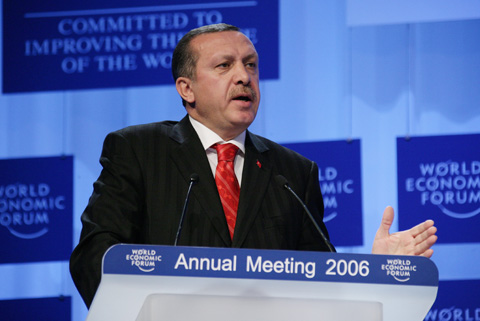
By Daniel Pipes
Why does the Turkish government act so aggressively against the Assad regime of Syria? Perhaps Prime Minister Recep Tayyip Erdoğan hopes that lobbing artillery shells into Syria will help bring a satellite government to power in Damascus. Maybe he expects that sending a Turkish war plane into Syrian air space or forcing down a Syrian civilian plane en route from Russia will win him favor in the West and bring in NATO. Conceivably, it's all a grand diversion from imminent economic crisis due to borrowing too much.
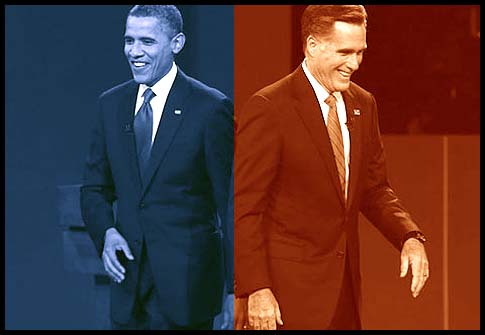
By Daniel Pipes
Obama got away with saying that he had characterized the attack on the Benghazi consulate as a terrorist incident because the moderator confirmed his point; in fact he misrepresented the facts when he said "The day after the attack, governor, I stood in the Rose Garden and I told the American people and the world that … this was an act of terror."
By Daniel Pipes
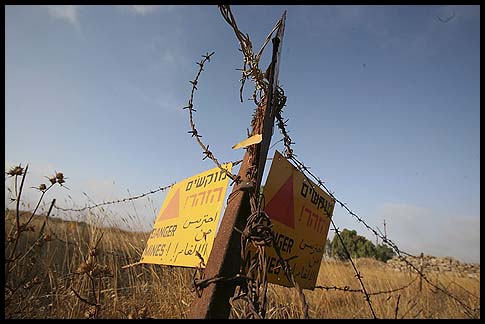
Shimon Shiffer reports in Yedioth Ahronoth that in secret talks in 2010 via U.S. government mediator Frederic C. Hof, Israel's Prime Minister Binyamin Netanyahu agreed in principle to a full withdrawal from the Golan Heights to the June 4, 1967, lines in return for the "expectation" of Bashar al-Assad cutting ties with Iran, and that the nearly-completed negotiations ended because of the anti-Assad uprising that began in January 2011.

By Daniel Pipes
Middle East expert Daniel Pipes' thoughts on the Biden-Ryan debate.
By Daniel Pipes
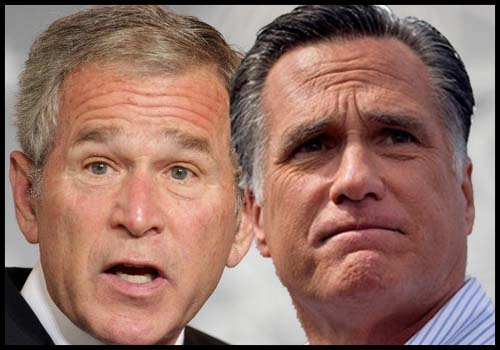
Mitt Romney gave a generally fine speech today on the Middle East. Sensibly, he criticized the Obama administration for its Benghazi shenanigans, for the "daylight" with Israel, fecklessness vis-à-vis Tehran, and the cuts in military spending. Very justifiably, he called it "time to change course in the Middle East." But I worry about three specifics.
By Daniel Pipes
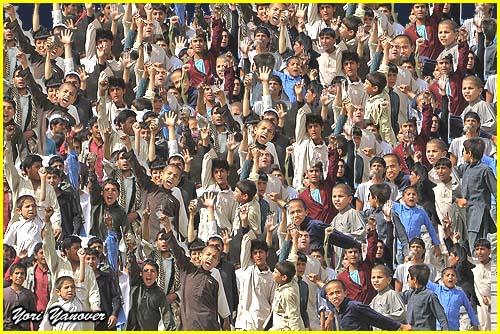
As Muslim crowds dissipate and American diplomatic missions return to normal activities, here are three final thoughts on the riots that began this Sept. 11 and killed about thirty.

By Daniel Pipes
My last article prompted a solemn reply from Sheila Musaji of The American Muslim website, who deemed it "irresponsible and beyond the pale." Why so? Because, as she puts it, "The solution to escalating violence and hate speech is not more hate speech."

By Daniel Pipes
Would repetition inspire institutionalization, generate ever-more outraged responses, and offer a vehicle for Islamists to ride to greater power? Or would it lead to routinization, to a wearing out of Islamists, and a realization that violence is counter-productive to their cause?


 September 4, 2026