יום רביעי, י״ט תשרי תשפ״זWednesday, September 30, 2026



Follow Us


Elliot Resnick, Ph.D., served as chief editor of The Jewish Press from 2018-21. He is the author of six books and the editor of four more including, most recently, The Rav Samson Raphael Hirsch Dictionary. These books, and his new online course, “Ten Tips to Drastically Improve Your Writing,” are available on his website, www.BrennBooks.com. He was a student in Rabbi Kaufman’s class from 1995-96.
Read More
For Steinsaltz, the Rebbe was no less than “the greatest man I have ever met,” as he writes in the preface to his book.

Are women not as important as animals? Are they not our sisters? Are they not our daughters?
If a child is seldom required to yield his desires and needs to those of others, surely doing so as an adult will not come naturally to him.

Wherever I was invited around the world, I always met with people and let them know that I wanted to hear great stories.

When the state was established, gedolim went to Ben-Gurion and asked him not to draft women and, later, yeshiva bachrim.

With the new baseball season underway, The Jewish Press chatted with Zalta in his Flatbush home about some of his other memories.
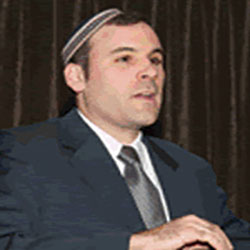
Rabbi Hammer recently spoke with The Jewish Press about his new book, Derash Yehonatan: Around the Year with Rav Yehonatan Eybeshitz (Koren), and his work in teaching Torah to secular Israelis.

Halpert doesn’t know why he was fired, and YU apparently won’t explain

There’s also the issue of accusing the Jews of being excessively materialistic and exploitative of non-Jews. You see a lot of that in far-left propaganda – that the Jews are overwhelmingly concentrated in the petty bourgeoisie, which in itself is an archaic class form, and thrives on tricking people and squeezing money out of them through illicit methods of trade.

Recently dubbed “the greatest living figure of chassidic music” by NPR, Shenker still composes several new pieces every year. He is currently recording an album of some of his Haggadah compositions, which he hopes will be out before Pesach.

Schanzer, who holds a doctorate from King’s College London, is currently vice president of research at the Foundation for Defense of Democracies and has testified before Congress on Middle East affairs on several occasions.
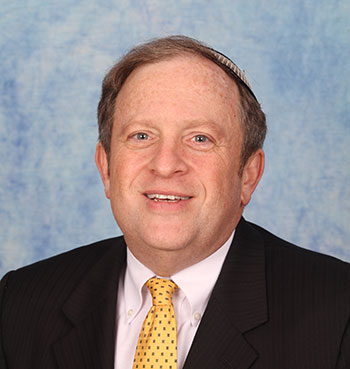
We want to hire couples who are going to reach out to singles to become their spiritual leaders and introduce them to someone of the opposite gender because there’s a lot of casual relationships but not nearly enough serious dating going on. This generation – even if they had rebbeim in yeshiva or seminary – they’re not connected anymore. There isn’t really anyone looking out for them at this point.
The 100 divrei Torah in this book originally appeared online and were distributed via e-mail. Unsurprisingly, therefore, many of them address contemporary issues. For example, on Parshat Mishpatim (and elsewhere), Rabbi Angel berates Israel’s chief rabbis and others for making life increasingly difficult for would-be converts to Judaism. On Parshat Vayigash, Rabbi Angel scolds 40 Israeli rabbis who signed a proclation prohibiting Jews from selling land in Israel to non-Jews.
All these polls asked either “Do you agree that Israel is conducting a war of extermination against the Palestinians?” or, alternatively, “Do you agree Israel behaves toward the Palestinians like the Nazis do?”
For his latest book, City College’s William Helmreich walked 120,960 blocks – in other words, nearly every block of New York’s five boroughs.
Rabbi Genack first met Clinton at a fundraiser in New Jersey in 1992. “At the time,” Rabbi Genack recalls, “there was a lot of discussion about President Bush’s lack of vision, so when I introduced Governor Clinton I said, quoting a pasuk from Mishlei, ‘Where there is no vision, the people perish.’ Clinton liked the remarks and said, ‘You know what? I might use that in my acceptance speech at the convention.’ He did, and ever since Rabbi Genack and Clinton have been friends.
There’s nothing like sharing knowledge. Last month a delegation of New York Red Cross leaders – including American Red Cross CEO Gail McGovern – visited their colleagues at Magen David Adom in Israel to compare notes on how they respond to natural disasters and terrorism.
An Interview with Professor Sarah Bunin Benor.
The age of the universe. Fifteen billion or less than 6,000? The debate shows no signs of letting up in the Orthodox community. One of the latest to toss his hat in the ring is Rabbi Yosef Bitton, formerly chief rabbi of Uruguay and today the head of a Syrian community in Manhattan Beach, Brooklyn. […]
“Presentation is very important. Judaism is not necessarily appealing to a lot of people and you want to make it as attractive as possible,” said Rabbi Chaim Miller, founder of the Kol Menachem publishing house.
Writing about Israeli politics can sometimes be a depressing endeavor, but P. David Hornik has been doing it consistently for over a decade for such media outlets as FrontPage Magazine, Pajamas Media, American Spectator, and The Jewish Press.
With almost all of world Jewry located in liberal democracies today, it is easy to forget that a mere 25 years ago, 1.5 million Jews lived under a totalitarian Soviet regime that suppressed Judaism. In the Soviet Union, even procuring a siddur or Jewish calendar could be a clandestine affair filled with fear.
For hundreds, perhaps thousands, of years, Jewish thinkers have tried to prove God’s existence and the veracity of the Torah. That endeavor is no longer in vogue. Indeed, many educated Jews today believe the attempt an exercise in futility.
To his parents’ friends, he was “Mrs. Greenberg’s disgrace,” but to sports fans he is one of the greatest – if not the greatest – Jewish baseball players of all time. Long before Sandy Koufax, Hank Greenberg excited Jewish sports fans with his prowess on the baseball diamond.
From December 2002 to January 2009, Elliott Abrams was an insider. As deputy assistant to the president and later deputy national security adviser – with the Middle East as his focus – Abrams interacted daily with such figures as President George W. Bush, Secretary of State Condoleezza Rice, and Israeli Prime Ministers Ariel Sharon and Ehud Olmert.
Yesh Atid is sometimes perceived as avidly secular, but two rabbis currently serve in the party as MKs. One is Rabbi Shai Piron, Israel’s new education minister. The other is Rabbi Dov Lipman, the first American-born Knesset member since Rabbi Meir Kahane.
The Jewish Press recently spoke with Rabbi Goldstein – author of the bulk of The Legacy: Teachings for Life from the Great Lithuanian Rabbis (Maggid Books). Rabbi Goldstein will be visiting Los Angeles and San Diego from April 11-16.

In an exclusive interview with the Jewish Press, newly elected MK Moshe Feiglin affirms he is still trying to revolutionize Israel.
Although it was released in 2011, “Unmasked Judeophobia: The Threat to Civilization” is still playing to audiences across the world. As the title suggests, “Unmasked Judeophobia” examines the history of anti-Semitism and its alarming resurgence in the form of anti-Zionism in the late 20th and early 21st centuries.
An interview with historian Gil troy on his new book, “Moynihan’s Moment: America’s Fight Against Zionism and Racism.”
Is the man who ends a fight just as guilty as the one who started it? Is the man who kills a killer just as immoral as the killer himself?
“In that case, what makes you better than the terrorists?” I often hear this question. It usually comes up after someone suggests that Israel ruthlessly defeat its enemies instead of maintaining its current wishy-washy approach of hiding behind security walls, wearing the enemy down, and offering land in an effort to advance peace.
Out of prison since 2010, Abramoff is committed to reforming the lobbying industry that he helped tarnish.

That Israel and the U.S. share a special relationship is conventional wisdom in the 21st century. That the roots of this relationship extend to the very founding of the United States is perhaps less known. A new book, “The Elected and the Chosen: Why American Presidents Have Supported Jews and Israel – From George Washington to Barack Obama” (Gefen Publishing), attempts to highlight this relationship by describing various encounters American presidents have had with Jews and the support they extended to Israel. Its author, Denis Brian, has published 17 previous books, including “Joseph Pulitzer: A Life” and “Genius Talk: Conversations With Nobel Laureates and Other Luminaries.”
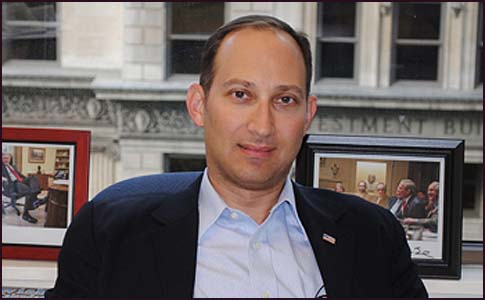
Had Mitt Romney won the presidential election, Tevi Troy would be director of domestic policy on his transition team.
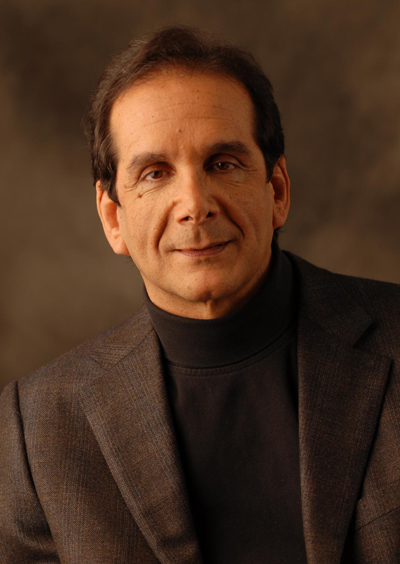
Charles Krauthammer is widely regarded as one of the most influential political commentators in America today. A contributing editor to The Weekly Standard and The New Republic, Krauthammer is also a nightly commentator on Fox News’s Special Report with Bret Baier and a weekly panelist on PBS’s Inside Washington. Close to 250 newspapers carry his weekly column, which earned him a Pulitzer Prize in 1987.
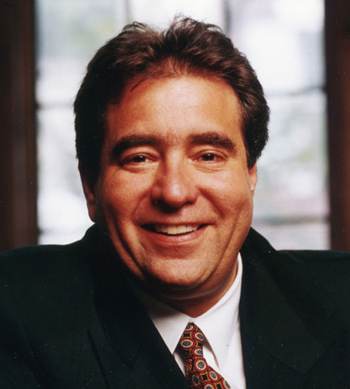
Mention the Jewish National Fund (JNF) and the image of a blue tzedakah box likely comes to mind. Starting in 1904, Jews throughout the world dropped coins into these blue boxes, helping the JNF buy and develop land in Palestine on behalf of the Jewish people. Although the state of Israel was founded in 1948, the JNF continues to function, helping develop the country in a variety of ways. It has planted 250 million trees in its 108-year existence and still owns 13 percent of the land. The Jewish Press recently spoke with JNF CEO Russell Robinson.

The NYPD and Brooklyn district attorney’s office have both opened investigations into the October 8th beating of 21-year-old Ehud HaLevy by two Brooklyn police officers.

Danon, 41, deputy speaker of Israel’s Knesset and chairman of World Likud, published his first book last month, Israel: The Will to Prevail (published by Palgrave Macmillan). In it, he outlines his vision for Israel’s future while also reviewing historical, religious, political, legal, and contemporary factors crucial for understanding modern-day Israel.
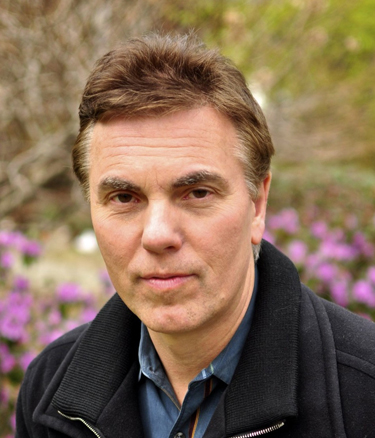
The mystique of the Mossad. Few can resist it. Hardly any Jew bears anything but affection and admiration for the foreign intelligence agency that produced Eli Cohen, kidnapped Adolf Eichmann, and attacked Iran’s nuclear program with a computer virus in 2009.

Yeshiva University’s Center for the Jewish Future seems to expand with each passing year. Founded in 2005, the Center – among other activities – now educates hundreds of ordained rabbis through its Rabbinic Training Placement and Continuing Education program; sends 1,000 students every year to help communities around the world through its Experiential Education and […]
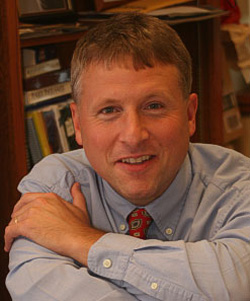
Arguably, no previous U.S. president has had as many disconcerting friends and associates as Barack Obama. Many Americans know of Reverend Jeremiah Wright, Bill Ayers, and Rashid Khalidi, but few have heard of perhaps the most important figure in Obama’s life: Frank Marshall Davis.
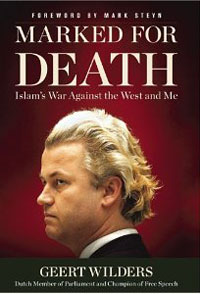
Many conservative pundits write and lecture on the threat of radical Islam. Almost none, however, possess political power. Geert Wilders is an exception. Head of the Netherlands’ third largest political party – the Party for Freedom – Wilders is on a mission to halt Islam’s advance in the West.
“Wherever there are Israelis in trouble…we are there to help them,” said Yoni Yagodovsky, a spokesman for Israel’s Magen David Adom (MDA), told The Jewish Press.

An insulin pill. That’s what Oramed Pharmaceuticals, a small Israeli-based company, hopes to offer millions of diabetics by 2016. “Oral insulin does not exist in the world today, but we are the furthest advanced in getting it into the market,” said Nadav Kidron, CEO of Oramed. “We are just about to start a Phase 2 trial in the United States, which is big news.”
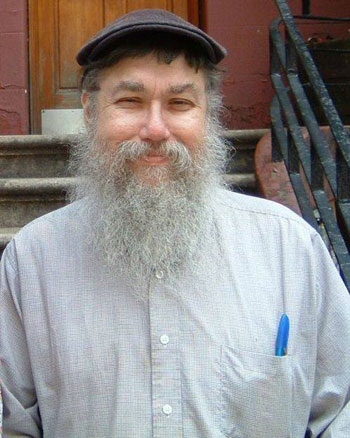
Books. Some people love them; others claim they can do without them. For Zalman Alpert, they are essentially his life. For the past 35 years, Alpert has served as a reference librarian at Yeshiva University (YU). Educated at Columbia University’s School of Library Services and New York University’s School of Education, where he attained a master’s degree in Modern Jewish History, Alpert is one of those individuals who knows a little (sometimes a lot) about everything. Over the years, he has contributed articles to such works as Encyclopedia of Hasidim; Jewish American History and Culture: An Encyclopedia; Encyclopedia of Jewish American Popular Culture; Midstream; and The Jewish Press.
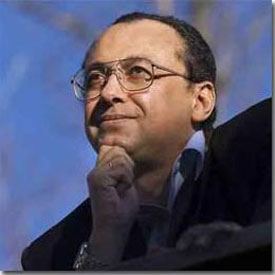
Egypt’s future remains in flux. On Sunday, Mohammed Morsi of the radical Muslim Brotherhood movement became Egypt’s new president, narrowly defeating the secular Ahmed Shafiq by 52-48 percent. Just two weeks ago, however, Egypt’s military council issued an interim constitution stripping the president of most of his powers. A few days before that, the Supreme Constitutional Court dissolved Egypt’s parliament, controlled by radical Islamic parties, on a legal technicality.
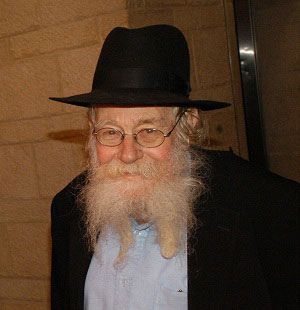
Rabbi Adin Steinsaltz is quite an accomplished personality. The author of over 60 books, Rabbi Steinsaltz has also translated the entire Talmud into Hebrew, a project he started in 1965 at the age of 28 and took 45 years to complete. To date, over two million copies of the Steinsaltz Talmud – in Hebrew, English, French, and Russian – have been sold. No wonder Time magazine once dubbed him a “once-in-a-millennium scholar.”
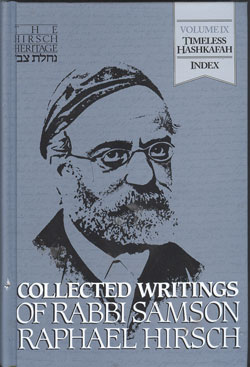
Looking for inspiration? Read Rav Samson Raphael Hirsch. This is my general rule of thumb, which is why I was thrilled when the ninth (and presumably last) volume of the Collected Writings of Rabbi Samson Raphael Hirsch (Feldheim Publishers) came out a few weeks ago.
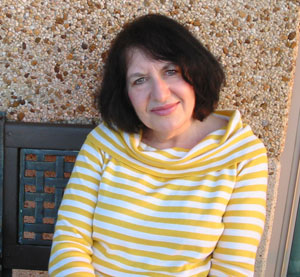
Husband and wife. Both Jewish. Both history professors. Both right wing. Both combat anti-Semitism on American college campuses. Meet Stephen H. Norwood and Eunice G. Pollack.

The Nazis perpetrated the Holocaust, but the indifference of onlookers facilitated it. One of the guiltiest parties in this regard, according to a new book by former federal prosecutor Gregory Wallance, is the U.S. State Department. In the book, America’s Soul in the Balance: The Holocaust, FDR’s State Department, and the Moral Disgrace Of An American Aristocracy, Wallance quotes Treasury Department lawyers who accused State Department officials of being “accomplices of Hitler” and “war criminals in every sense of the term.”
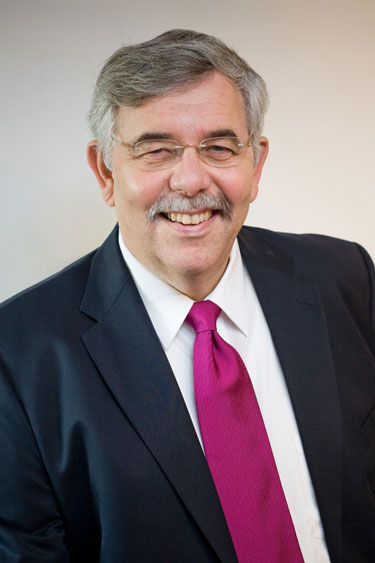
Michael Widlanski grew up on the West Side of Manhattan. He went to Ramaz Yeshiva and then Columbia University, writing for both school newspapers, before landing a job at The New York Times. He also studied Arabic in college, traveling to Cairo to master the language – and learning to chant the Koran while he was at it. Partly motivating him was his desire, as a ba’al keriah, to learn how to properly pronounce the Hebrew letters ayin and chet. “The Arabs do it better,” he said. Presently, Widlanski is a professor at Bar-Ilan University after having taught Middle East politics and communications at Hebrew University for 20 years. Last month, he published his first book, Battle for Our Minds: Western Elites and the Terror Threat.

If you asked someone to outline the profile of a director making a film on The New York Times’s coverage of the Holocaust, “non-Jewish,” “college student,” and “South Carolina native” would probably not be the first descriptors he would use. Yet, they perfectly fit the profile of Emily Harrold, a 21-year-old senior who is currently completing “Reporting on the Times,” a film inspired by Laurel Leff’s 2005 book, Buried by the Times: The Holocaust and America’s Most Important Newspaper.

The Second Intifada may have ended seven years ago, but countless Israelis injured during that harrowing period, and in the years since, continue to suffer.
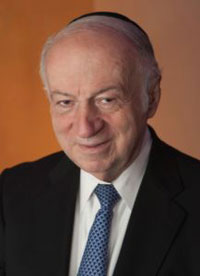
“We feel that this is a critical moment in the history of property restitution,” Julius Berman, chairman of the Conference on Jewish Material Claims Against Germany, told The Jewish Press last week, after returning from a weeklong trip to Europe.
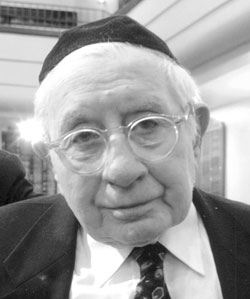
It’s not often that I get to speak to a rabbi about to celebrate his 99th birthday.
If the stars are aligned in his favor, attorney David Storobin will become the first immigrant from the former Soviet Union to serve as a New York state senator.


 September 25, 2026