יום ראשון, ט״ז תשרי תשפ״זSunday, September 27, 2026



Follow Us


Read More
“Wisdom is better than rubies, and all things desirable are not to be compared unto her” (Proverbs 8:2). Rabi Aha explained in the name of Rabi Tanchuma ben Rabi Chiya: “My desirable things and your desirable things are not to be compared to her.”
This is the story of a staff, the most miraculous staff that was ever created. It was none other than the staff that Moshe used to perform all the amazing miracles in Egypt.

Reb Levi Yitzchak of Berdichev would use the Yomim Tovim as a forum for his continued dialogue with the Holy One blessed be He and as opportunities to demonstrate to the Almighty that His children, Israel, were deserving of both forgiveness and a better fate.
The Gaon, Reb Yechiel Michel Epstein, the author of the Aruch HaShulchan, and the chief rabbi of Novordak for 34 years, was known to be a very liberal person.
The story of Bnei Yisrael in the land of Mitzrayim is a tale that has become tragically repetitive in the history of our people. It is the story of a land which allows Jews to enter, and devote their talents and energies to building it up land and making it strong, only to have the ungrateful inhabitants turn on them through jealousy and greed.
Pesach is synonymous with aiding the poor and the needy. In the city of Kovno where the great Reb Yisroel Salanter was the chief rabbi, there was a special house set aside for the very poor; there they were housed and given food. Unfortunately, the house was a dilapidated one and in massive disrepair.
Chazal thought very highly of a jester, a person who makes people laugh. They say that a special high place is waiting for him in Gan Eden.
The piety of the saint Rabi Chanina ben Dosa was so great that people would often request that he daven on their behalf. Once, the son of Rabban Gamliel became dangerously sick. He sent two talmidim to the home of Rabi Chanina with the message: “Pray to God that my son will get well."
The relatives of the 80 witches whom Rabi Shimon ben Shetach brought to the gallows vowed vengeance as they bided their time for an opportune moment to strike back at the Nasi of the Sanhedrin. It was not long afterwards that their chance arrived.
Chazal taught: He who judges his associates (in questionable acts) with favor will be judged with favor from Above.
The piety and good deeds of Rabi Chanina ben Dosa inspired his disciples to follow in his footsteps. Foremost among his good deeds was charity. The following story is told about two of Rabi Chanina's disciples.
While Shimon ben Shetach was head of the Sanhedrin a great sage passed away. He came to a disciple in a dream and told him of the great punishments awaiting Rabi Shimon ben Shetach because he permitted 80 witches to continue living in Ashkelon. As these witches were casing the people to sin, he would be punished for allowing them to live.
After the death of Balshazzar, Darius the Medean became king of Babylon. He appointed 120 governors to rule over his provinces and over them he appointed three presidents, and over them he appointed Daniel. The king admired the wisdom of Daniel and this evoked jealousy and enmity among all the ministers who sought to find fault with him. But Daniel was too honest and wise.
When Alexander Yannai, king of Judea, appointed Rabi Shimon ben Shetach as president of the Sanhedrin, peace and tranquility reigned in the land. Prosperity came to the people as they followed in the ways of the Torah.
When the sages prevented Alexander Yannai, king of Yehuda, from becoming Kohen Gadol, he ordered that all the sages of Israel be killed. Many were; those not caught, fled. The greatest sage of them all, Rabi Shimon hen Shetach, was saved by his sister, Queen Shlomit Alexandra, who sheltered him in a secret hiding place.
Through the influence of Daniel, who was one of the ministers of King Nevuchadnezar, his three companions, Chananiah, Mishael and Azariah were appointed as governors over various provinces in Bavel.
"Interrogate the witnesses extensively; yet be cautious with your words, lest they learn from them to lie,” the sage and leader of the generation, Rabi Shimon ben Shetach admonished the chief justice, Rabi Yehudah ben Tabai. This was because of a grievous error the chief justice had committed.
There are many wonderful stories narrated in Scriptures about the experiences of the Navi Daniel. Many of these stories are found in Sefer Daniel, while others are found in the Talmud and Midrash.
A famous scholars of the beis midrash in the city of Brodi was Rav Avraham Gershon of Kitov. This modest and unassuming man possessed such wondrous qualities of goodness and knowledge that the great Nodah B’Yehudah referred to him, in part, as follows:
Rabba Bar Bar Chana related the following, “Sailors told me that once they were threatened with gigantic waves that could have sunk their ships. These waves appeared with a ray of whitish light at their crest and when they struck it with clubs engraved with the words ‘I will be what I will be, L-rd G-d, King of Hosts, Amen, Amen, Selah,’ the waves subsided.”
Our forefathers were giants when it came to having faith and a belief that G-d would take care of them. Nothing worried them save that they wasted time not studying our holy Torah. They relied on G-d to take care of their needs.
Among the great giants of Chassidism were two brothers, Rav Zusha of Hanipoli and Rav Elimelech of Lizhensk. But the apple does not fall far from the tree and the deeds of the father are lessons for the children. These two tzaddikim owed much of their character to their father, Rav Eliezer Lippa.
The kinship and love between Jews is one of the cardinal principles and hallmarks of Judaism and none could match Rav Eliezer-Lippa, father of the two great chassidic leaders Reb Elimelech of Lizhensk and Reb Zusha of Hanipoli, when it came to this particular characteristic.
The great Rabban Yochanan Ben Zakai was once asked by a student, “Rebbe, I have a question which has puzzled me for some time. We find in the Torah a law concerning an eved Ivri, a Hebrew slave. He serves for six years and at the end of that time he may go free. Should he refuse, however, saying that he likes his master and prefers to remain with him, the tribunal takes him and makes a hole in his ear as a punishment.”
From the remarkable beis midrash in the town of Brodi came forth a dazzling number of Talmudic chachamim, many of whom went forth to greatness. The most famous was the great Nodah B’Yehuda, Rav Yechezkel Landau, who was the rav of the Diaspora during his lifetime. But there were other towering scholars who were members of the famous beis midrash. One of them, a giant in his time, was Rav Chaim Tzanzer.
Rabi Yehudah Hanasi (the prince) known as Rebbe had an amazingly warm friendship with the Roman Caesar, Antoninus. The friendship began at the birth of the two men and continued until their dying days.
Rav Moshe Sofer (The Chasam Sofer), one of the greatest Gaonim in his generation, always preached and practiced charity and kindness towards his fellow man. His door was always open to the poor and to the needy for help and advice.
Chazal tell us that Torah is our life and the length of our days. Here is a story that proves this statement quite literally. In Yerushalayim there lived a family in which all the children passed away at an early age. Everything possible was done to protect the children from illness and the slightest danger, however, it was to no avail. Not one child lived past the age of 18.
On Erev Yom Kippur, the Gaon Rav Atshal of Frankfurt (Tifereth Avraham) would usually permit the eating of every doubtful fowl, which was brought before him to decide. He would make all the doubtful cases kosher.
The Strength Of Suffering Man does not have it easy in this world. Sufferings are often visited upon him tempting him to curse his fate and ask why the Almighty punishes him so. But suffering has great value and serves a vital purpose. Rabi Akiva teaches this a clear and beautiful way. Rabi Eliezer had […]
The Gaon, Reb Nachum devoted all his time, day and night, to collecting money for charity and helping the poor. The vast majority of the people thought so highly of Reb Nachum that they would deduct a fixed amount of their income every week and give it to him to distribute it to the poor. But there was always the exception, some people just tried to avoid contributing.
How often we, even the greatest among us, tend to forget the respect and honor due every single human being. Every one who walks the face of the earth was created in the image of G-d and carries within him the Divine Spark. Therefore, when we insult any human being we are really insulting the Almighty Himself which is the worst of all sins.
The name of the Gaon, Rav Yitzchok Elchonon Spektor, was known to Jewry throughout the world. He was also well know to Russian royalty, having visited the Czar many times to plead for his fellow religionists.
How the Sages of the Talmud used to honor Shabbos! Each day of the week was only an introduction to the coming Shabbos and everything was done with an eye towards Shabbos.
The Gaon, Rav Yisrael Hopstein, known as the Maggid of Koznice, was the prototype of Aharon HaKohen. He loved peace. When the dispute arose between the Chassidim and the Misnagdim he refused to participate in it. When asked to help the cause of the Chassidim, he replied: “Not through quarrels or excommunications can Chassidim hope to win, but only through showing their strength in the study of Torah, prayers, observing mitzvos and doing the work of Hashem.”
In the days of Shmuel Hakatan a terrible drought held the land in its deadly grip. The wheat withered in the field and the grass dried and died. Day after day, the skies remained leaden and no clouds appeared to bring rain and salvation to the parched land.
The Gaon, Rav Eliyahu Chaim Maizel, the chief rav of Ludz, loved his fellow man. He treated every person as an equal; whether Jew or a Gentile and when a matter of dishonesty came before him he bent all of his efforts to apprehend the culprit.
Rabi Moshe ben Nachman, widely known as the Ramban was born in the year 1194 in the town of Gurunda, Catalina. He became famous as a great scholar and sage and wrote interpretations on the Torah and on many Gemaras, and authored many seforim, which are revered to this day. The Ramban was also a philosopher and a physician and his services were in great demand.
Rav Tzvi Hirsh Levin, the rav of Berlin, was an extremely clever and sharp individual and possessed a remarkable sense of humor that he used well in his attempts to get across Torah views.
The power of faith is unmatched; it can lift man above adversity and help him climb the highest of mountains. It can help him overcome pain and torture. It can make him see the light in a night that is inky in its darkness. The Gaon Rav Tzvi Hirsh Levin manifested such a faith when he was a starving and poverty-stricken rav in Halberstat.
Man is seldom satisfied with his life. Even when he has done great things, amassed vast amounts of wealth and achieved great fame, he still yearns for more and his soul is not fulfilled. "No man dies with even half of his ambition fulfilled," say Chazal.
Rav Chaim Soloveichik, the Torah luminary of the city of Brisk, was a legendary figure when it came to charity and good deeds.
Many inspiring stories emanate from the Lubavitch chassidic movement. One of the stories published in Di Yiddishe Heim bulletin describes the early years of Rav Menachem Mendel of Lubavitch, known as the Tzemach Tzedek. This year marks the 146th anniversary of his passing.
“Leave me Zemira,” cried Raamyah, “I have shamed you and your family. I have deceived my child whom I love so much. Turn your back on me for I can offer you only tragedy and unhappiness.”
As Zemira threw herself (and her infant), into the path of the king’s carriage, the crowd shrieked. Hastily, the driver reined the horses up sharply, and the hoofs of the lead horse stopped barely inches from where she lay.
No matter what Zemira said and how much she implored Avinadav to tell her what was bothering him, he remained adamant in his silence.
In the days of the Second Beis Hamikdash the Romans ruled over Eretz Yisrael and installed a king by the name of Hordus, or Herod, to enforce their rule. Hordus was an evil and ambitious man, and was quick to do whatever the Romans requested of him, no matter how terrible the decree was. Because of this, the Jewish people hated him, and this in turn caused him to hate them even more.
In the 19th century, the heart of European Jewry – its centers of Torah learning, its crown of glory – was centered in the vast expanse of the Russian Empire. There, under the hand of the czars, lived millions of Jews – poor in material wealth but blessed with a love of Torah and a dedication to their faith that was unshakeable.
Lag B’Omer is the yahrzeit (anniversary of the death) of Rabi Shimon bar Yochai. Thousands visit his grave in Meron to pay homage to this tzaddik and leader in Israel.
Reb Aryeh Leib, the author of the Shaagas Aryeh, was one of the great minds of all times. His genius led him to be very impatient with people, especially with communal leaders who were not worthy of their exalted positions. Because of this he was seldom able to remain as rav in one town for very long, and spent much of his life wandering from city to city, in great poverty.
“You shall not swear in the name of the Lord,” says the Torah. This is true even if what one is saying is the truth.
The inhabitants of Yerushalayim were exceptionally clever. Rabi Chuna said in the name of Rabi Yose, “Wherever this Yerushalmi went in the provinces, they arranged a seat of honor for him to sit upon in order to listen to his wisdom.”
“And Hashem told Moshe, lift up thy rod over the sea and divide it”... And Moshe ordered the sea to divide. But the sea refused. “Why should I obey you,” it said, “You are but a man born of a woman and besides, I am three days older than you, I was established on the third day of creation, and you were created on the sixth day.”
Shares In The Embarrassment Among the famous practitioners of our forefather Abraham’s virtue, hospitality, was Rav Akiva Eger. Naturally, on Pesach, it was “Let all who are hungry come and eat...’’ Once, at the Seder, a guest accidentally overturned his cup. As the red wine stained the fine white tablecloth and the guest’s face […]
In the land of Midyan there lived a pagan priest, Yisro, who was greatly respected by his people. He worshiped idols of stone and wood and so did his countrymen.
Rav Yosef Hochgelanter, the rav of the city of Zamushet, where Rav Akiva Eiger received his early training while still a young boy, was a great scholar and the author of Mishnas Chachamim. At the time he was chosen to be rav of the city he was the son-in-law of a very wealthy man who was very generous with his support.
For weeks before Pesach the people in small towns across Poland, Lithuania and Russia lived only with the Yom Tov in mind. The housewives turned their homes upside down, the matzah bakery became alive, tailors and cobblers prepared to meet the seasonal rush, and the children worked themselves into a pitch of excitement, which they could not have endured had they had to wait for the seder night one day longer than they already did.
A childless man once pleaded to the Almighty, “Creator of the world! Please send me a son so that I may teach him the Torah.” The Almighty heard the prayer and sent him a son whom the father named Shaul. When Shaul was old enough his father began to teach him Torah and, thus, they continued for many years.
One of the great gaonim was Rav Yaakov Berlin, the father of the Netziv (Naftali Tzvi Yehuda of Berlin), the rosh yeshiva of the Volozhin Yeshiva and a leader of European Jewry at the close of the 19th century.
If you were to ask the average Jew who destroyed the Beis Hamikdash and who sent Klal Yisrael into galus (exile), he would instantly answer, “The Romans.”

Almost 450 years ago, in the year 1569, a new Sultan came to power in Damascus. Upon assuming his throne, one of his first acts was to order the destruction of all the Jewish synagogues in the city. The Jews had begun to fear for their lives when on the eve of Purim, a miracle occurred. From a vicious Jew-hater, the Sultan became their friend and during his reign the Jews lived in peace.
Once while Rabi Shimon ben Shetach was studying the Torah, a man entered his beis midrash and said, “I have something very important to discuss with you and I would like no one to be present.”
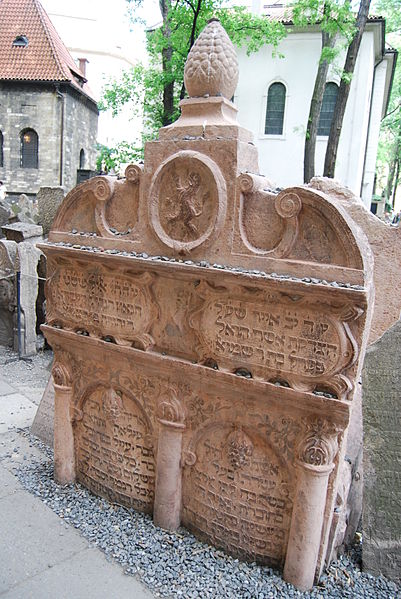
Rabi Yehuda ben Bezalel Lowe, known as the Maharal of Prague, was born in 1525, in Posen. He married Pearl, the only daughter of the wealthy and prominent Reb Shmuel ben Reb Yaakov, but not without the help an anonymous soldier.
The Return Of The Sage When Rabi Simeon ben Shetach saw that he had found favor in the eyes of King Yannai (after he appointed him Nasi of the Sanhedrin), he approached the king and said: “If I have found favor in your eyes will you grant me a wish? Something sorely vexes me that only you can rectify.”
When a person is called a gaon, it is because he is a great scholar, a genius in the Torah. But many of our gaonim, besides their greatness and their scholarly acumen, were also gaonim in their deeds. Their kindness towards their fellow man was unsurpassed.
When Alexander Yannai, king of Judea, was prevented by the sages from becoming the high priest, he issued an order that all the sages of Israel be killed. Many were and the remainder fled. Rabi Shimon ben Shetach, considered the greatest of them all, was saved by his sister, Queen Shlomit Alexandra.
After the Chasmonaim defeated the Greeks their descendants assumed the throne of Eretz Yisrael and ruled over Bnei Yisrael. In the first years of their reign, they followed the path of Hashem and He was good to them.
On the twentieth day of Teves we mark the 808th yahrzeit of Rabeinu Moshe ben Maimon, the Rambam (Maimonides). The Rambam (Maimonides) lived from 1135 to 1204. His scholarly works are world-renowned and it is about him that we say, “From Moses to Moses there never arose so great a person as Moses.”
Ptolemy, King of Egypt, had requested of Elazar Kohen Gadol, that he send sages to his country to translate the Torah. Elazar complied by sending 72 sages. They were wined and dined and then the king put to them 72 questions, to test their wisdom.
King Ptolemy of Egypt had heard that the Jews possessed the Torah, the five books of Moshe, which contained much wisdom and excellent laws. He desired to have this Torah translated into Greek so that he, too, might learn its contents.


 September 25, 2026