October 2, 2026
 Categories: Headline / Features
B’Darchei Tamar: How One Israeli Couple Has Turned Their Pain Into Purpose


Many parents who lose a child to serious illness count themselves fortunate to be able to simply go on and live functional lives while carrying a hole in their hearts. Rav David and Iris Herman have chosen a different – truly remarkable – path.
Inspired by the legacy of their daughter Tamar – who passed away at age 16 after a grueling battle with cancer – the Hermans, who live in Afula in northern Israel and have nine other children ranging in age from 2 to 21, established an organization dedicated to helping families facing cancer or other medical crises as well as those who have lost a child to illness.
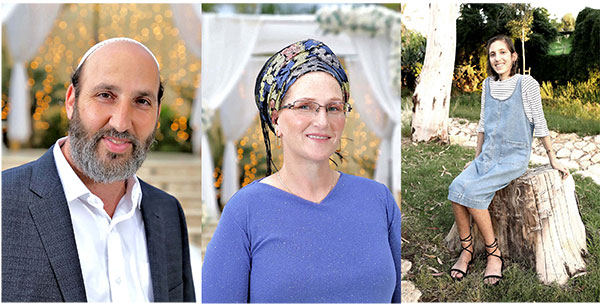
B’Darchei Tamar, the organization they’ve been running since 2012, takes an individualized, highly personal approach that recognizes how addressing even the smallest need – and doing so with love – can make a huge difference to a family in pain.
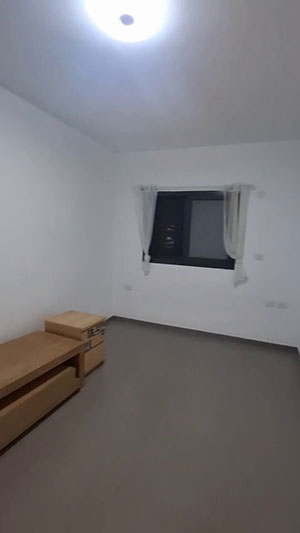
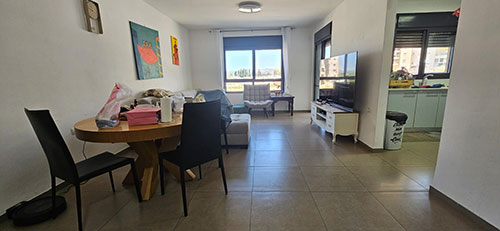
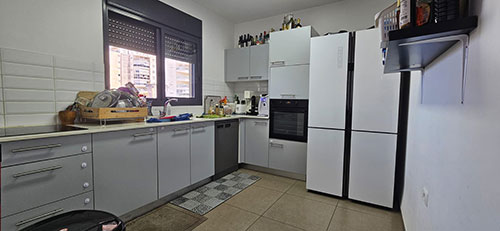
Their new top-priority project: raising funds to set up “Bayit Cham” (A Warm House), a fully equipped, multi-family home a few minutes’ walk from Emek Medical Center in Afula – a town often off the radar screen of larger non-profits – which will give families of children receiving cancer treatment there a comfortable place to stay.
The Jewish Press spoke to the Hermans* about B’Darchei Tamar, the void they are trying to fill for bereaved parents in Israel outside the military context, and how supporting other families heart-to-heart has helped them through their own loss.
*Answers have been translated into English from their original Hebrew.
Tell me about how, in her passing, your daughter Tamar, z”l, led you to create this organization.
David: The organization was born out of two main factors. The first was the “will” that our Tamar left us, which grew out of the deep frustration she experienced during her illness. Tamar battled cancer and a multi-drug-resistant bacterium called CRE. Throughout that time, she repeatedly tried to contact the major charities in Israel for help – but to her great disappointment, she received no response.
Out of that pain, she said: “If I wasn’t given life-saving support, then at the very least we will give life to others – personally.” This was her final message, and it became the beating heart of the entire organization.
The second factor was the very heavy feeling after Tamar’s death. We were left with immense pain and overwhelming loneliness. We discovered that the state provides no real response – not in terms of treatment, not financially, and not emotionally. From that place, we decided not to remain inside the brokenness, but to turn it into strength.
We said to ourselves: “If we were dealt such a hard and painful blow by G-d, He must be expecting us to build something new out of the pain and crisis.”
From that faith, the initiative “Holchim Yachad B’Shikul Ha’ezrachi” (Walking Together in Civilian Bereavement) was born – a project that connects families who have experienced loss [in a non-military context] and gives all of us mutual strength, warmth, and support on the journey of rebuilding life and hope.
What was the inspiration for the name “B’Darchei Tamar” (In Tamar’s Path) – what was your daughter’s path?
David: The inspiration for the organization’s name came directly from Tamar’s way of life. From a very young age, Tamar genuinely loved the people around her and invested her whole heart in her friendships and social connections.
During her illness – precisely when she was in the most difficult place in her life – the true strength of her soul became visible. Tamar did not focus only on herself; she continued asking about others, caring for them, and checking how they were doing. She sent messages to friends, encouraged other patients, and even looked after the medical staff that treated her – she would ask the doctors and nurses how they were feeling, how their children were doing, and she always made sure to say thank you.
Out of that spirit of giving, sensitivity, and love of people, we chose a name that expresses her path: bringing light to others even in the darkest moments.
The organization’s name is a direct continuation of Tamar’s personality and of her choice to live a life of kindness, love, and gratitude.

How is B’Darchei Tamar different from other organizations helping families dealing with serious illness (Chayenu, Ezer Mizion, Zichron Menachem, etc.)?
David: B’Darchei Tamar differs from other organizations in that it operates in two unique and complementary channels, both of which grew directly from Tamar’s life story and the path she took.
The first channel is individual support for cancer patients – not generic assistance, but truly personalized care for each patient, a kind of “tailor-made suit” that provides human, emotional, and practical support tailored exactly to that person’s needs.
For example, a child in contact isolation for medical reasons, who cannot take part in the larger organizations’ activities – this is precisely where we step in, to provide warm, personal support adapted specifically to that child. This is the kind of support Tamar herself never received.
The second channel is support for bereaved families coping with civilian loss, through our “Walking Together” program. This is a field that receives almost no attention in Israel. We provide mutual support, emotional accompaniment, and a community embrace that helps families draw strength from within their pain.
In this way, the organization works on both fronts – giving hope to those who are fighting for life, and strengthening those living with bereavement – all in the same spirit of love, compassion, and action that characterized Tamar’s path.
Do you focus exclusively on families where the patient is a child?
David: Our primary focus is on children with cancer, guided by the belief that a child facing a severe illness needs comprehensive support – emotional, social, and practical – that helps them feel they are not alone.
At the same time, when we receive a request from an adult in distress, and we see that they have no other support framework, we mobilize immediately to help.
Our guiding principle is simple: “In a place where there is no one to be human – strive to be that person.” Every person in need of help, child or adult, deserves an outstretched hand and a hug of hope – and this is exactly what we try to be.
What unexpected obstacles did you encounter during Tamar’s illness? What specific needs did you experience during her illness that were not being filled?
Iris: During Tamar’s illness, we faced extraordinarily complex medical and human challenges – situations that even the doctors defined as extremely rare.
For about two and a half years, Tamar dealt with a series of severe and unpredictable medical conditions. After a bone marrow transplant that initially appeared to engraft well, the disease relapsed within just two months. Later she developed a serious intestinal infection caused by graft-versus-host disease, and was forced to remain hospitalized for ten consecutive months without seeing home.
When preparations began for a second transplant from her father, a very rare black fungus suddenly appeared – called mucor – a lethal infection that, according to the doctors, almost no one survives. Tamar underwent twelve surgeries and continued to fight even when the disease returned a third time.
Later she contracted a multi-drug-resistant bacterium (CRE) and had to remain in complete isolation, with only one specially trained nurse and one doctor allowed to approach her.
It is important for us to say: Schneider Children’s Medical Center did absolutely everything possible. The medical team there was truly remarkable – professional, devoted, and exceptionally humane. They accompanied us with love, sensitivity, and genuine efforts to ease Tamar’s suffering in every possible way.
And yet, alongside the medical support, there was a significant lack of emotional, social, and community care – a single place that would embrace us, accompany us, and provide a sense of belonging and safety. Tamar felt profound loneliness inside her illness, and that is precisely what led us to understand that we must create a framework that provides this kind of support for patients and their families.
One of the doctors told us during the shiva: “We learned more from Tamar than she learned from us.”
Tamar truly left us with many “homework assignments,” and out of those lessons the organization was born – so that no patient and no family will have to walk this road alone.
Tell me about the type of support you provide to families after the loss of a child and why that is so important.
David: We established within the organization a support system for families who have lost a child, out of a deep understanding that civilian bereavement receives almost no response – neither from the state nor from society.
Immediately after the loss, our volunteers make personal contact with the bereaved family and provide an initial support package – a genuine embrace, attentive listening, and the first tools for coping with the painful days following the death.
Afterwards, the family joins our community, “Walking Together” – a group of bereaved families who accompany one another throughout the year. We meet in the summer, on holidays, and on meaningful dates for gatherings of strength, connection, and support: fun-days, shared outings, communal meals, sharing circles, lectures, and workshops.
In every meeting, sincere conversation, acceptance, and belonging are created – a real sense of “we are in this together.” This support is different from standard therapeutic processes – it is communal, ongoing, and heart-to-heart. “Walking Together” provides a deeper response: a continuous embrace, not just one-time therapy.
In addition, we look at the practical needs of each family – help with meals during the first month, accompaniment at family events, or assistance in going on a short vacation to allow them to breathe. Each family receives what is right for them, based on personal listening.
And alongside all of this, it is important to state honestly: In our society [in Israel], army-related bereavement is embraced – and rightly so – whereas civilian bereavement is left with almost no recognition or support.
We believe there is no difference: The pain is the same pain, the loss is the same loss, whether a child was killed in the army or died of illness. Every family that has lost a child deserves an embrace, support, and a home that can contain their brokenness – and that is exactly what we are trying to be.
How are your support groups run? Are the meetings in person or online? Is there a professional facilitator?
David: Our support groups meet in person, face to face, because we believe there is no substitute for a hug, for eye contact, and for human touch. The direct connection and shared presence create a sense of safety and openness that allows for genuine, in-depth conversation.
In most meetings, there is professional guidance from a psychologist, social worker, or emotional therapist, depending on the group’s needs and the topic of the meeting.
At the same time, we often hold open, authentic discussions just within the circle of families – without an external facilitator – out of an understanding that sometimes the greatest strength comes from mutual listening and shared experience.
The groups operate in a warm, supportive, and accepting atmosphere, where each participant feels they are not alone – that they have a place to speak, share, and find renewed strength.
Was Tamar also treated at Emek Medical Center, where you are building the home-away-from-home for families?
Iris: Yes. Tamar was first diagnosed with cancer at Emek Medical Center, when she was only 14 years old. After about a week, the medical team at Emek decided to transfer her proactively to Schneider Children’s Medical Center in Petach Tikva, since Schneider has an advanced bone marrow transplant unit – a treatment that is not performed at Emek.
It is important to note that even after the transfer, the medical staff at Emek maintained close contact with our family and with the doctors at Schneider. They asked about Tamar’s condition, accompanied us from afar, and made sure to receive regular updates throughout the journey.
The connection, commitment, and personal involvement of the staff at Emek accompanied us even after the move and showed us how many doctors and staff members there truly have a very big heart.
Up to now, where have families of children treated at Emek been staying? Are there other options available, such as hospitality rooms operated by Bikur Cholim or Chabad?
Iris: As of today, Emek Medical Center does not have a “home away from home” or a dedicated lodging facility for cancer patients and their families. The hospitalized children stay in the hospital, but their family members are forced to return home every evening – sometimes at distances of several hours’ drive – or to spend the night in their cars or in hospital corridors.
Unlike other hospitals in Israel, where solutions such as hospitality houses run by organizations like Bikur Cholim or Chabad exist, Emek Medical Center currently has no such arrangement at all. It is, in fact, the only hospital in Israel that has no lodging framework for families of cancer patients, despite this being a basic human need.
Our vision is to establish a warm home near the hospital, where families and sick children who come from far away can stay. This will ease the burden of long, exhausting journeys, allow them real rest, and give them a sense of home and support during such a difficult time.
Besides the family accommodation that you are establishing and the support network you operate, tell me about some of the other services you provide and what you’ve been able to accomplish so far.
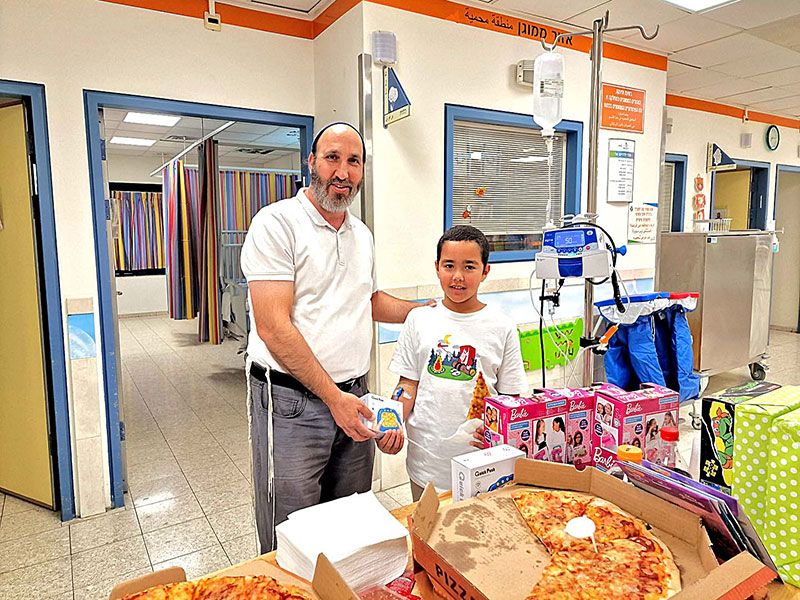
David: One of our main projects is “Tamar’s Light” – an ongoing initiative that provides food, drinks, and a lot of warmth to families whose children are hospitalized in the oncology department. Several days each week, for the past three years, our volunteers [some of whom are serving their sherut le’umi] go through the department with a cart of food and hot drinks, in cooperation with business owners from Afula and the surrounding area. Through this activity, we reach around 200 families every week and bring a bit of light and humanity into the difficult days of illness and hospitalization.
Every two weeks, we also provide personal support to cancer patients, and we take about five families each time for a “day of joy and pampering” – to give them a break from the treatments, a moment to breathe and to experience happiness, because even in the midst of the struggle, they deserve to live.
How have the hospital and the local community in Afula responded to your initiative?
David: Emek Medical Center received our initiative with great warmth and full support. Dr. Sergey [Postovsky], head of the pediatric hemato-oncology department at Emek, welcomed the establishment of the family home and emphasized how vital it is for patients and their families. In his words, this place is expected to give a real response to an existing need and to significantly improve the quality of life of patients during hospitalization.
The local community in Afula has also rallied in a moving way – residents, business owners, and many volunteers have expressed willingness to help with food distribution to families, cleaning, maintenance, and any assistance that might be needed. There is a real sense of joint action, whose core values are mutual responsibility and human warmth.
How did Tamar’s illness and the entire journey affect your family, including your other children?
Iris: Tamar’s illness had a profound impact on our entire family. Each one of the children experienced that period differently – depending on their age, their understanding, and their capacity to contain what was happening. We all lived in constant tension, swinging daily between hope and despair.
During the long hospitalization, which lasted many months, we as parents had to divide our roles – one of us stayed by Tamar’s side at Schneider Medical Center, and the other stayed in Afula with the children. In the middle of the week, we would switch places, and on weekends the children would come to be with us near the hospital, just to maintain a sense of family and a little sanity in the midst of the storm.
Our marriage also went through a major upheaval. At the beginning it was extremely challenging, but over time we learned how to cope together – to maintain open communication, mutual respect, and the strength to hold one another up.
The children received emotional support from school staff and professional counselors; later, we also arranged external therapy so they would have a place to talk, process, and release their feelings.
In the midst of the illness, we noticed that we were being drawn almost completely into caring for Tamar – and we understood that we had to pause and also give space to our other children, to listen to them and to be with them as much as possible. It was a hard, tumultuous, and deeply instructive period – but it also re-connected us as a family and gave us a deep understanding of what truly matters: to be together, no matter what.
How do families hear about B’Darchei Tamar? Do the doctors refer them to you?
David: Most of the families who come to us do so through direct referrals from medical teams in the hospitals, especially from Emek Medical Center. Doctors, social workers, and other staff members keep our business cards on hand, and pass them along to families coping with serious illness or loss as soon as they sense a need for accompaniment, a hug, and support.
In addition, we are consistently present on the ground: We are in the wards, we visit families, distribute food and hot drinks, and get to know people personally. Out of this human encounter, a personal connection is formed, which enables us to offer meaningful help tailored to their needs.
Beyond that, many families find us through our website and social media, as well as via natural word-of-mouth – one family that has received support tells another. This is how, gradually, a warm, embracing and supportive community is forming around us – one that keeps growing all the time.
What kinds of specific requests have you received from families dealing with illness which you been able to help with?
David: The requests we receive are highly varied – from basic needs to small moments of hope and comfort.
We have helped many families with hot meals and daily support throughout the treatment period; we have funded and organized “time-out” vacations – a few days in a guesthouse or hotel in Israel, where the family could simply be together, breathe, and gather strength for the road ahead.
We accompanied several families who traveled abroad for innovative medical treatments with personal support and financial assistance that made those trips and treatments possible.
In one especially moving case, we mobilized donors to buy a Nintendo gaming console for a young girl who had fallen ill and asked for it to distract her from fear and pain – and we were able to fulfill her wish.
We have also received requests we could not answer on our own, such as families asking for lodging near the hospital. In such cases, we turned to the wider community, which responded with love and generosity.
In this way, with the help of a network of good people, we continue to accompany, support, and bring hope – with open hearts and outstretched hands.
Are all the families you help Jewish? Have you been approached by non-Jewish families, such as Arab families, for assistance?
David: B’Darchei Tamar works for anyone in need of help – with no distinction as to religion, nationality, or background.
When we come into the hospital wards, we distribute food, drinks, and treats to all hospitalized children and their families, without asking and without distinguishing between Jew and Arab.
On a personal level, we have received requests from non-Jewish families as well, and in every such case we mobilized to help with the same love and dedication as for any other family.
I particularly remember a case where a nurse at the hospital approached us and asked us to organize a birthday party for a girl from the Arab community. Of course, we happily agreed, and that day turned into a very emotional and joyful celebration for everyone.
In the end, we are all in the same boat – dealing with pain, hope, and our shared humanity – and we believe that to give is simply to love.
Tell me about your “day jobs,” and how you manage to run the organization while working to support your family.
Iris: The work of B’Darchei Tamar is an inseparable part of our lives. Alongside intense volunteer activity, we are also parents and a couple managing a family and working full-time.
I work as a registered nurse at Emek Medical Center in the maternity ward – a demanding job, but one filled with light and giving.
My husband serves as a rabbi and educator, giving classes and workshops for children and teenagers in educational institutions across the country. It is both a livelihood and a mission in education, which he sees as a great privilege.
Our strength for this daily work actually comes from giving to others. Every child’s smile, every “thank you” from a family that has been through a difficult period reminds us why we started this journey.
The organization was born out of very deep personal pain following the loss of our daughter Tamar – but from that same pain, a great comfort has also grown: the ability to offer hope, a hug, and support to others. Giving to others is what heals us and fills us with the strength to go on.


What costs associated with the “Bayit Cham” is the current campaign seeking to fund?
David: B’Darchei Tamar has already purchased the “Bayit Cham” – a house that will serve as a place of rest, hope, and embrace for families coping with severe illness or loss. The current fundraising campaign is intended to finance the final stages leading up to its full opening.
The costs include $90,000 U.S. dollars to repay the loan taken to purchase the house, in order to ensure the organization’s stability and full ownership of the property; as well as $13,000 for basic renovation and full furnishing of the house, adapting it for hosting three families at the same time, including spacious rooms, a fully equipped kitchen, new equipment and furniture, and pleasant spaces for both children and adults.
Together with our supporters and partners on this journey, we hope to turn the “Bayit Cham” into a place where families can find a moment to breathe, to grow stronger, and to rediscover hope – with open hearts and great love.
David, I understand that you used to be involved in kiruv. Are there any parallels between that type of outreach and B’Darchei Tamar?
David: There is definitely a connection. My earlier work in outreach came from the same place – a love of people, genuine connection, and an open heart – and these are precisely the foundations on which B’Darchei Tamar is built. I believe that when a person meets a religious Jew who comes from a place of loving heart, attentive listening, and a sincere desire to give, it opens hearts and brings people closer to one another.
On every retreat for bereaved families, and in every sharing circle, you will find religious, secular, ultra-Orthodox, and traditional Jews sitting side by side. Everyone sits together, shares, supports, and gains strength together.
In our personal assistance, there is no difference either – every person who approaches us receives accompaniment and a hug. Giving, humanity, and sincere connection – these are the real bridges that bring hearts together.
What is your ultimate goal and vision for the organization?
David: B’Darchei Tamar has several major dreams, all of which grew out of the road we have traveled and our daily encounters with families coping with pain and loss.
- To establish the “Bayit Cham” near Emek Medical Center – a complex of five houses where families of hospitalized patients and children can stay, and receive support, an embrace and a space of calm and serenity.
- To create a national memorial site for civilian bereaved families – a place where anyone can tell the story of their loved one who is no longer with us, share a project established in their memory, and keep their legacy alive. The site would also include reminders for memorial dates and offer a place of honor and recognition for civilian bereavement in Israel.
- To set up a 24/7 emotional support hotline staffed by volunteer professionals and trained counselors, available to any person in need of conversation, a listening ear, or accompaniment during a difficult period.
* * * * *
For more information or to make a tax-deductible contribution, go to https://www.jgive.com/new/en/ils/donation-targets/142822. Rooms or other parts of the “Bayit Cham” home-away-from-home project can be dedicated in memory or honor of loved ones.
* * * * *
The following are excerpts from a few of the notes of appreciation (translated from Hebrew) which the Hermans have received from parents helped by B’Darchei Tamar:From families helped during illness:
I wish to thank you from the bottom of my heart for the support you gave me during the difficult moments with my son, David Chaim. The strength and encouragement you provided accompanied me every step of the way and lit up my path.
– Irina Vishniakov
The Nintendo device you provided through B’Darchei Tamar gave my daughter moments of joy and an escape from the pain during her chemotherapy treatments. It filled her time with a positive activity and helped ease some of the tension and fear. This support gave her real strength to keep fighting, day after day.
– Adi Ezra
Dear David, a few days ago you came to Emek Medical Center and asked how you could bring some joy to my daughter, who has cancer. I told you we would be happy to receive a game called Alias. Today, you arrived at the hospital together with the wonderful volunteers, holding a brand-new Alias game in your hands. I want to thank you, on my own behalf and on behalf of my daughter, for this surprise. You made our Shabbat so much happier – you brought a smile to her face and joy to her heart. Once again, thank you for the great effort you made for her. There is truly no one like you.
– Sigal Chalifa
From families supported after loss:
Thank you for recharging our batteries in such a needed way. With Hashem’s help, may you succeed in all your endeavors!
– Ravit Cohen
A huge thank you to David and Iris for giving us such an empowering gathering. You thought of every detail and invested thought into every minute of the schedule. It was the first time our whole family went away together on a vacation, and it was simply perfect and enjoyable! Thank you for recharging our batteries – may you be blessed.
– Hodaya Rifkin