October 2, 2026
 Categories: Featured / Arts / In Print
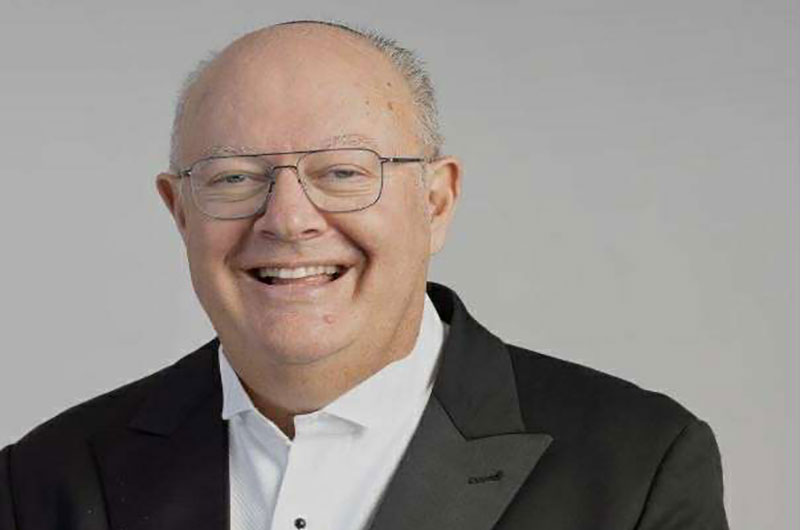
Cantor Colin Schachat: A South African-Born Sensation Creating a Family Legacy


Special Chazzanut Series
I became familiar with Colin Schachat through his performance in “Avinu She’baShamayim,” the popular chazzanut piece recorded in 2006, also featuring Cantors Yaacov Motzen and Micha Schachat (Colin’s son) and conducted by Dr. Mordechai Sobol. “Avinu she’baShamayim tzur Yisrael ve’go’alo, barech et Medinat Yisrael…”
If you Google “Avinu She’baShamayim” or just search on YouTube, you’ll find many other chazzanim performing this piece. But I’ll be honest with you, I think Colin Schachat’s performance is the best one. I especially like to listen to it around Yom HaAtzmaut. Then I was curious, so I listened to other pieces by him, and found many more beautiful recordings of his work.
Around the High Holidays, I like to listen to chazzanut pieces from the tefillot, such as “Avinu Malkeinu” and, of course, “Kol Nidrei.” It turns out that Colin Schachat has beautiful performances of both of these, which you can listen to on his YouTube channel. So, when I started the chazzanut series for this column, I decided that I needed to talk to him and hear his story. I reached out to him and learned about his journey from Johannesburg to Israel. We also spoke about chazzanut in general. Colin is a very nice person, and on a personal level I enjoyed our conversation.
Colin Schachat was born and raised in Johannesburg, South Africa. As a kid, he used to love to sing and always liked Jewish music. From an early age, he sang in the synagogue’s choir. There, he first started learning how to read notes and how to sing professionally. In almost every synagogue in South Africa there was a choir. Until the 80s there were great cantors in South Africa.
Growing up in South Africa, Colin was exposed to all different types of music. Popular music, chazzanut, even Israeli music. His parents used to visit Israel often and brought him back albums. He really liked musicals and even took part in a musical himself when he was 12.
As a child, he learned to play violin and a little piano, but he wasn’t very good at it. Between ages 14 and 18, he played clarinet, but also didn’t excel. He continued to learn to read notes and some theory. At 19, he resumed singing in the synagogue’s choir and started performing at community concerts.
In 1984, Colin was invited to take part in the World Chassidic Festival in Jerusalem, Tel Aviv, and Haifa. Colin was then 22. There he met Mordechai Sobol and sang one of his pieces. The big names in chassidic music took part in the festival – artists such as Duo Reim, Dudu Fisher, as well as famous chazzanim. Reim Duo, or “Tzemed Re’im” in Hebrew, used to be very popular in the 70s and 80s. They were among the pioneers of chassidic music in Israel. At the festival, Colin started to become familiar with all the big names in the chazzanut world. This gave him a chance to get to know people. He was actually lucky – they had first invited another cantor to participate but he couldn’t make it, and since that cantor had once heard Colin sing, he gave his number to the organizers and this is how Colin got to perform at the festival. Colin said it was an unforgettable experience.
A few years later, the cantor in his synagogue in South Africa left and asked Colin to replace him. Before that, Colin used to replace him here and there, but was not fully familiar with the nusach. However, when the chief cantor left, he had to learn everything, so he spent hours learning the nusach and stepped into his shoes. As the chief cantor, Colin had great success and the community really liked him. So, when they heard that he decided to make aliyah in 1992, the community tried to convince him to stay. They told him that there are enough cantors in Israel. But Colin went ahead anyway and moved to Israel in 1992.
After making aliyah, Colin joined the Cantorial Institute of Naftali Herstik, z”l (which became the Tel Aviv Cantorial Institute), where he learned solfeggio at a higher and advanced level. Solfeggio is singing notes from the page. Instead of playing notes with musical instruments, the cantor sings the notes. At the school, he focused on singing techniques: when to strain the vocal cords and when not to; how to build a piece that is interesting to the audience. He focused more on practice than theory. He learned how to build a concert that will be balanced and not boring to the audience.
For three years he studied chazzanut professionally at the Tel Aviv Cantorial Institute. There he met cantors who years later would become also famous. Cantors Yitzchak Meir Helfgot and Israel Rand were a year ahead of him in the school. Among his teachers were great cantors such as Shmuel Baruch Taube, David Ullmann, Yitzhak Eshel, and of course Cantor Naftali Herstik, z”l. Herstik taught him that the most important thing for a cantor is to know what not to sing.
And since he doesn’t have a higher tenor voice – he’s a baritone – he had to learn materials that matched him. He chose songs according to his voice. Most of the Eastern European chazzanut pieces were written for cantors with higher tenor voices as opposed to Western Europe chazzanut, which better matched his voice. The singing in Western Europe chazzanut is easier – shorter and less complex pieces. When preparing for a performance, it’s very important to know how to choose a piece. It’s not enough for the cantor just to like the music. It has to be a piece that matches his voice.
Colin started to perform in concerts. At some point, Cantor Yoel Bloch, the vice president of the cantorial school and son of the famous cantor from New York, Cantor Charles Bloch, z”l, suggested to Colin to also do classical music. So, he started to do that in parallel with classical Jewish music.
Everything started at the Tel Aviv Cantorial Institute, and for years he continued to go to master classes in Tel Aviv.
Colin says there’s nothing like the feeling of standing on the bimah during Kol Nidrei and representing the kahal (congregants) in front of Hashem. Colin is one of the cantors at Kehillat Shivtei Yisrael in Ra’anana on the High Holidays, which is a community of English speakers. His sons sing with him during the tefillot in the synagogue, which even has a choir. In the past, he used to lead prayers on the High Holidays in Australia, Canada, the United States, and of course South Africa. But now he prefers to be at home during the holidays with his children and grandchildren.
During the rest of the year, he works as a lawyer and also continues with his music. Two of his sons, Gabi and Micha, are also singers, and occasionally he performs with them in Israel and around the world. (Check out their beautiful performance at the Hampton Synagogue – search “Colin Schachat & Sons in Concert Hampton Synagogue” on YouTube.) The brothers also do weddings, singing at chuppot. They are called “The Schachat Brothers in Harmony.” (People enjoy family performances.) One of them is also a composer.
During his career, Colin has worked a lot with Cantor Yaakov Motzen, doing many projects together including recordings and concerts. Currently he’s working with Cantor Raymond Goldstein, who is not only a cantor but also historian of Jewish music. Goldstein does musical arrangements for cantors. Colin considers him a good friend as well as a colleague.
He mentions that what he likes most in the field of chazzanut is that you work with people who become friends. It’s an environment where they want each other to succeed and try to support and help each other.
Colin acknowledges that it’s important to adapt chazzanut to the modern age, to the audience, but he says it’s very important to him to keep the nusach and traditional tunes of the tefillah (I couldn’t agree more.).
I spoke with him about the tefillot of the Yamim Nora’im. In Kol Nidrei, you think of the past, says Colin. You think about the history of Am Yisrael. It’s something special that touches the heart and the soul. Every year he gets excited again. It’s the highlight of his year.
How does he prepare for the High Holidays? During Elul, he takes the machzorim and looks over the tefillot. Even though he’s been leading services for years, he still makes sure to bring something new every year. It is important to have some surprises here and there – new tunes, new ideas. He starts listening to many CDs of other cantors in order to bring something new to the audience. He consults with other cantors. You don’t need too many new songs, he says. One or two or three is enough. Chazzanut should be dynamic, he says. Not static.
I ask him the question that I think I have perhaps asked all the cantors I interviewed for this series: How do you transfer chazzanut to the younger generation?
The role of the cantor is also to educate, says Colin. A kid that comes with his father to synagogue needs to hear something authentic. For example, some say that the Seder Avodah from Mussaf on Yom Kippur were sung in the Beit HaMikdash. You need to keep the tradition and the culture alive, but also make it relevant for the younger generation. You must pass the precise nusach to the next generation for it to survive. You can insert some modern things here and there, while still matching the style to the original nusach. It’s very important to preserve it. (Again, I so agree with him. I think I’d be happy to daven in his shul!)
Shabbat Shalom and G’mar Chatima Tova.