October 2, 2026
 Categories: In Print / Headline / Arts
Cantor Moti Boyer: The Successor to Yossele Rosenblatt?


Special Chazzanut Series
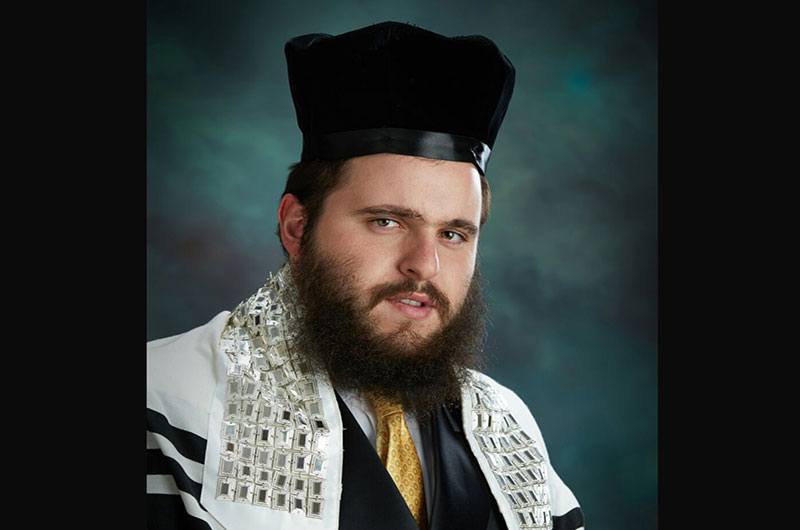
It’s been a while since I followed Cantor Moti Boyer, but I really enjoy listening to his chazzanut pieces. He’s active on social media and YouTube and he’s good – really good. He knows the job. But Moti is not just a cantor. His project is analyzing and studying famed chazzan Yossele Rosenblatt’s work and keeping his heritage alive. Many even consider Moti to be Yossele’s successor – in his singing style, his soft voice, and even his physical look.
So, I reached out to Moti to speak about his story, how he became a cantor, and chazzanut in general. It turns out that Moti is an expert on chazzanut, and my interview with him was longer than the usual interviews I do. I even asked him to sing a few pieces over the phone for me, so I got to enjoy a private show during the interview.
Today, Moti serves as the chief cantor for the High Holidays at Congregation Anshe Sfard of Borough Park. The shul, located on 14th Avenue, is a congregation where the biggest names of chazzanut – such as Yossele Rosenblatt, Samuel Vigoda, Yossele Mandelbaum, and more – used to daven during the High Holidays, and throughout the year featured other famous cantors.
Moti was born in Jerusalem to a chasidic family of Sadigura. His father was (and still is) a baal tefillah. While he was not a professional cantor, he’s been the chazzan for the past 40 years at the Chortkov chasidic shul in Jerusalem for the High Holidays. At home, the family listened to chazzanut. Moti grew up on Yossele Rosenblatt, Zavel Kwartin, Gershon Sirota, Mordechai Hershman – all the golden-age cantors.
When he was nine, Moti began to sing at private events and semachot. At fourteen, when he was in yeshiva, he started to occasionally lead the davening there. His mentor, Cantor Shlomo Eisenbach, told him to daven for the amud every time he had the opportunity. Moti was introduced to Eisenbach through a mutual friend. It turned out they had some distant family connections. It’s been said about Eisenbach that he revived Cantor Yossele Rosenblatt, though he also had his own independent style.
Moti was a big fan of Eisenbach’s and used to listen to his records. When he was seventeen, he attended a concert where Eisenbach performed, and by the end of the concert he reached out to him and asked for his guidance. Eisenbach invited Moti to his house, guided him in chazzanut, and gave him a lot of useful information. Motti is an independent learner; he taught himself chazzanut by listening to cantors and also reading about chazzanut. But Eisenbach pushed him to learn music professionally.
Moti didn’t officially go to cantorial school; rather, he took private classes in music, harmony, composition, and reading notes with a musician in Jerusalem who had made aliyah from Odessa, a classical musician who taught him the principles of classical music and theory.
Moti used to listen to chazzanut for hours and try to analyze the pieces, to listen to the dynamics and understand their meaning. At eighteen, he started taking vocal pedagogy classes privately. And from that time he started to serve as a baal tefillah in shuls as well as perform in concerts around the world.
I spoke to him about cantorial music in general and about Yossele Rosenblatt in particular. Moti is like an encyclopedia of chazzanut. I learned a lot from speaking with him. Chazzanut, says Moti, has become in recent years something that is relevant mostly or even only during the High Holidays. In the past, it was relevant all year round. In the past there used to be weekly columns about chazzanut in Jewish and Yiddish newspapers, and ads about cantorial Shabbatot and concerts. It was in the conversation. Today, not so much.
We speak about how chazzanut developed differently in different Jewish communities in Europe. In the chasidic communities in Poland there was less awareness of chazzanut, while in Russia and Ukraine, there was more interest. Rabbi David from Talne, for example, was a big fan of chazzanut. By the Rebbe of Chortkov in Galicia there was a cantor with a choir, Moti tells me – Manish the Cantor, who was very famous. (The story of Manish is very interesting by itself and you can look it up on Google if you want to read more.)
Even though in chasidic dynasties there was no emphasis on chazzanut, in Ruzhin chazzanut was important. Yossele Rosenblatt, for example, was a Ruzhin Sadigura chasid. Other famous cantors from Ruzhin are Israel Schorr and Barukh Schorr (who despite sharing a name were not actually related). Both of them immigrated at some point to the U.S.
There are a few styles of chazzanut, explains Moti. The operatic style was more common in Western Europe. Very harmonious. Perhaps one of the most influential cantors in Western Europe was Salomon Sulzer, who was a cantor in Vienna. He started the custom of wearing the special cantorial hat and gown. The Ashkenazic Jewish community in Germany was also very ceremonial. They wanted to give the cantor status. A chazzan is like the kohen – he stands in front of the amud and represents the congregation in front of Hashem. Therefore, he needs a special garment.
In Eastern Europe, however, the focus was more on emotion and expression of feelings (known as hishtapkhut) through recitation rather than melody. Cantor Rosenblatt further developed the “cantorial recitative” style. If in the past it used to sound very monotonic, Rosenblatt inserted melody and colorfulness. He inserted energetic and vigorous motions and added tempo. Previous cantors had put less emphasis on these elements, but he brought them to the highest level. He also introduced chasidic melodies. In these ways, he gave interpretation to the text of the davening. Listening to Yossele Rosenblatt’s records was like a cantorial school for Moti.
Other famous Eastern European cantors are Bezalel Shulsinger (also known as Bezalel Odesser) who is considered the father of the Eastern European chazzanut. He moved to Israel and was buried in Jerusalem. One of his famous students is Yerucham Hakatan. Another famous cantor from this school is Nissan Belzer.
The modern chazzanut of today is a synthesis of Western and Eastern European chazzanut. Since many cantors immigrated to the U.S., the style here became a mixture of both traditions.
Moti is not only a cantor but also a cantorial researcher. He gives me so much information as we speak. He spends hours on a regular basis at the National Library of Israel in Jerusalem. One day, he accidentally discovered an estate of a cantor and there he found handwritten notes of Yossele Rosenblatt. For Moti this was like a treasure. He took the notes and performed the lost tunes. Other cantors have also since performed them.
Moti is also a composer of cantorial pieces. So far, he has composed dozens of pieces but has not yet recorded all of them. Among his compositions are “Ata Zocher Maase Olam,” two pieces for “Magen Avot,” “Hashem Melekh,” a nusach for “Hallel,” and pieces for Selichot. The base for his work is the traditional nusach, which he then takes and develops.
He explains that there are two ways to compose. One is to just sit at the piano, start playing, and compose the tune as you go. The other way, which is more complex, is to sit with a music notebook and start writing notes, using composition techniques from the classical music world. The composer takes an idea and starts developing it. He writes the melody in his notebook. Moti says he uses both methods to compose his pieces. He also writes pieces for a cantor with a choir. He gets his inspiration from the golden-age cantors. Besides Yossele Rosenblatt, his biggest influences are Alter Yehiel Karniol, David Moshe Steinberg, David Roitman, and Aryeh Leib Rutman.
I ask him what his favorite piece is. “Kevakarat Roeh Edro” by Yossele Rosenblatt, he says, a piece which reflects Rosenblatt’s hishtapchut and unique style. Some pieces are more suited for a concert and others for tefillah, Moti says; this one is more of a tefillah.
What does he especially like to perform? Besides “Kevakarat Roeh Edro,” he mentions “Meloch Al HaOlam” in Rosenblatt’s tune, “Emet” by Leib Glantz, and “Ata Nigleta” in the tune of Zavel Kwartin.
People need to listen more to chazzanut, Moti concludes. This is how the young generation will come to appreciate it more.
You can listen to Cantor Moti Boyer on his Facebook and YouTube pages and on his Instagram.