 September 25, 2026
 Categories: Halacha & Hashkafa / Torah
Ego on the Menu: The Real Korban at Your Table


Menachos – Daf 97
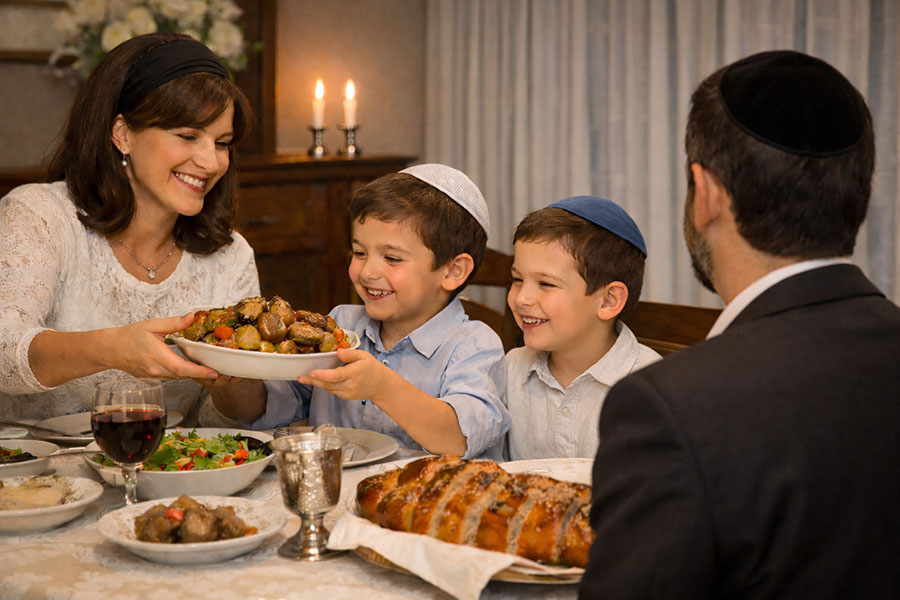
Our Gemara on amud aleph speaks of the spiritual power of one’s own table: “Why does the verse begin with the word ‘altar’ and conclude with the word ‘table’ even though both terms are referring to the same item? Rabbi Yoḥanan and Rabbi Elazar both offer the following interpretation: When the Temple is standing, the altar effects atonement for the transgressions of a person, but now that the Temple is not standing, a person’s table effects atonement for his transgressions, if he provides for the poor and needy from the food on his table.”
Be’er Mayim Chaim elaborates on this point in a number of places (see Bereishis 25:23, Vayikra 6:1, and 16:7). The link between a sacrifice and one’s table is also metaphysical. The transfer of sin onto the animal is a ritual of renouncement of our animal nature. When we eat with restraint – not with gluttony, but with the humble and measured intent to be strong to serve Hashem – we are also sacrificing our animal side on the altar of service.
I will add that another kind of sacrifice one can make at his table is the sacrifice of his ego. Tensions and unhappy moments can occur at the Shabbos table when parents’ wishes for compliance and so-called nachas becomes more about their own gratification than the developmental needs of the child. A child only has about 2,000 Shabbos meals until adulthood; when you think about it, that is not a long time to inculcate the fundamentals of our religion and how to experience it. Do not waste these moments by trying to discipline, check up on schoolwork, or engage in other unpleasantness. Focus on what is good for your children – not your ego.
Shushan and Sensibility: Politics, Piety, and Perspective
Daf 98 Our Gemara on amud aleph discusses the unusual origin of the part of the Temple called “Shushan Habirah” (Shushan the Capital). There is a dispute with regard to this matter between Rav Ḥisda and Rav Yitzḥak bar Avdimi. One said that Shushan was depicted so that those who passed through the gate would know from where it was that they had come back to Jerusalem. The Jews returned once Persia had conquered Babylonia. (We’ll call that Reason A.) And one said that it was depicted so that the fear of the Persian Empire would be upon them. (We’ll call that Reason B.) For Reason A, Rashi explains: So, they should show gratitude to the Persian kingdom. And for Reason B: So, they should be appropriately humbled and not seek to rebel. Both of Rashi’s reasons are social and political. However, it is notable that Rabbeinu Gershom explains it from a more spiritual perspective. For Reason A, he says: So, they should acknowledge the miracles that G-d bestowed upon them through their liberation via the Persian kingdom. And for Reason B: So, they should be appropriately humbled and recognize their prior servitude. Maharsha adds that, similar to the story in the Haggadah, we start with the slavery so as to have gratitude. Why does Rashi not choose the “frummer” option? Is it not superior to understand the process from a spiritual standpoint? The truth is, the question is really more on Rabbeinu Gershom, because Rashi is supported by the next Gemara, which advises: “The fear of kingship should always be upon you, even when the king does not deserve it.” That is to say that it is always important to show reverence for leadership, even for despots. They might indeed not deserve it, but their office deserves it. This is clearly synonymous with Rashi’s political peshat. This is a concept that is more difficult for us modern people to appreciate, as our society is mistrustful of authoritarian leaders and places value on challenging the government instead of compliance and obedience. This is understandable, because in the ancient world, every king still had to answer to G-d in a practical sense, with the prophets keeping them in check – be it Moshe to Pharaoh, Shmuel to Shaul, Nosson to Dovid, or Eliyahu to Yeravam. Nevertheless, within balance and reason, we should show deference toward leaders, which is not necessarily a contradiction to respectful dissent within cultural norms (meaning real peaceful protest, not the fake hypocritical propaganda fed to us by mainstream media).A Quotidian Torah Quota
Daf 99 Our Gemara on amud beis discusses a possible way to technically fulfill the obligation of continuous daily Torah study by merely reciting the Shema in the evening and in the morning: “Rabbi Yoḥanan says in the name of Rabbi Shimon ben Yoḥai: ‘Even if a person recited only the Shema in the morning and in the evening, he has fulfilled the mitzvah of: “This Torah scroll shall not depart from your mouth.” And it is prohibited to state this matter in the presence of ignoramuses [amei ha’aretz], as they are likely to get the impression that there is no need to study Torah beyond this.’ And Rava says: ‘On the contrary, it is a mitzvah to state this matter in the presence of ignoramuses.’” It is notable to compare Rashi’s commentary with that of Rabbeinu Gershom. Rabbeinu Gershom explains the expected motivation of these Sages: that it is forbidden to share this loophole with the ignorant because they will rationalize and not even try to study a bit. The opinion that it is actually a mitzvah to inform the amei ha’aretz is either to give them inspiration – that if it is that easy a mitzvah, imagine how much more reward they can receive for extra study – or possibly so that they will further revere the scholars who voluntarily choose to study, even when not strictly obligated. Rashi, on the other hand, states that it is forbidden to inform the amei ha’aretz of this loophole because they then will not encourage their children to study Torah. This is baffling. Why is Rashi not concerned with the neglect of Torah study by the amei ha’aretz themselves? I will offer a psychological peshat and a lomdishe peshat. In lomdus, we might argue that since the mitzvah is technically fulfilled with the recitation of Shema, the only concern is maintaining expertise in Torah knowledge. This can be seen as less of an individual responsibility and more of a communal and generational responsibility. Therefore, Rashi is focusing on the next generation. Alternatively, we can consider a psychological and sociological peshat. Although there are notable historical exceptions such as Rabbi Akiva, generally the am ha’aretz cannot easily change his education level and would not be inclined to do so due to economic and perhaps legitimate intellectual limitations. However, he still has the opportunity to encourage his sons to study Torah, and therefore the focus of Chazal is on what is deemed salvageable. The amei ha’aretz may indeed be exempt enough from deep Torah study due to circumstances – but their children are not. Indeed, straight through modern times, great scholars have come from parents who were not learned in Torah (although they may have had a deep-seated love and respect for Torah). I certainly can say as much regarding my father’s father, zichrono levracha. One such story about my grandfather, who was thrown out of cheder at age seven, and not particularly educated or strongly observant, illustrates this phenomenon. When my father was a young boy, he already had a thirst for Yiddishkeit. He asked his father if they could have a sukkah on the roof of their apartment. This was around 1930-40, and they had no money. His father said sure, and tried to communicate in “sign” language with the Polish superintendent of the building who did not speak English. Providentially, the super said, “sukkah!” Apparently, he was a “Shabbos goy” back in the old country. And so aside from the rabbi, my father had one of the only sukkahs in that area of the Bronx at that time. That’s how an unlearned, barely observant man was able to raise a son to become a talmid chacham.