 October 9, 2026
 Categories: Features / Interviews and Profiles
Escaping Revolution: One Iranian Jewish Woman’s Journey from Tehran to Hope
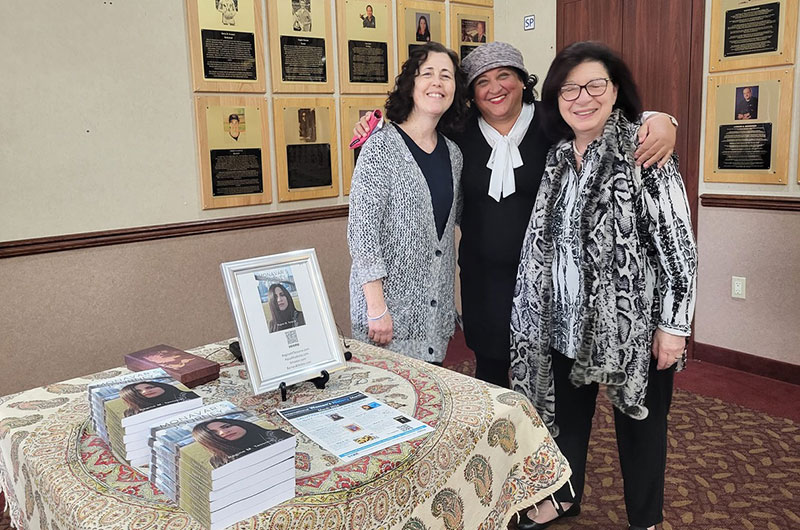


When Regine Monavar Tessone, Iranian immigrant, founder of modest swimwear brand Aqua Modesta, and author of the memoir Monavar’s Journey: Bridge to Hope, learned of the assassination of Iranian Supreme Leader Ayatollah Ali Khamenei earlier this year, she had complicated feelings. On the one hand, she told The Jewish Press in a conversation in early March, she was on “such a high.” But for Regine, who fled Iran during the 1979 Islamic Revolution, she also worried about her family in Israel. “Upon hearing … incredible news, you make that beracha [HaTov V’HaMetiv], but at the same token, afterwards I started to look, what’s the repercussions of that, and I saw my kids were in the shelter.”
She added, “I always say Iran is my birthplace, but Israel is my home of my soul.”
Khamenei’s assassination by the Israeli Air Force at the beginning of the joint U.S.-Israeli operation earlier this year represented a turning point for many Iranians. But Ayatollah Ruhollah Khomeini, the Islamic Republic of Iran’s first supreme leader, is who Regine and other Iranians who lived through the revolution recall most vividly. “I used to be terrified just to hear it,” said Regine of Khomeini’s voice. “And then to look at his face, he had such a drab face and wore all gray, and that color gray, till today I cannot look at that color gray.”
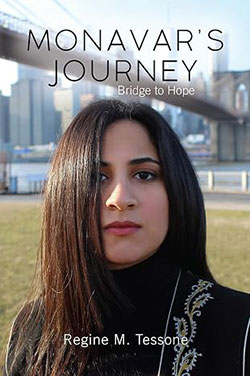
Memories like this make up part of Regine’s memoir, released in 2022, which recounts her childhood in Tehran, her escape at 9 years old, and her life in America.
But her family almost never made it out of Iran at all. “We left on the very last flight on the day Khomeini arrived,” she said. “So, as Khomeini was brought in from France, we left on the same plane out of Iran, and then the airport shut down.”
Before the revolution, her family was well-off, with her father having connections with the government of Mohammad Reza Pahlavi, the last Shah of Iran. She is an alumna of Lycée Razi, the prestigious school attended by the Shah’s son, Crown Prince Reza Pahlavi. All classes were delivered in both Farsi and French, an education she said was “of the finest caliber.”
But soon, chaos began to unfold. In 1978, their local library and theater were burned down. “We have to pack up and start leaving, because they burn the books, they burn the people,” Regine recalled her father saying. Soon, she began being treated differently in school for being Jewish.
In their neighborhood of Yousef Abad, nights were marked by curfews, blackouts, and gunfire, while Khomeini’s Islamic sermons echoed through the streets from loudspeakers. How they left was “a total miracle,” she said.
The family first went to Paris, but before they left for New York, Regine’s father told her he had to return to Iran for money. She was terrified that he would be imprisoned or killed. In America, she struggled to acclimate and missed her father, who eventually reunited with the family. It was only after his death that she learned he didn’t return for Iran to get money but to help save Jews still trapped in the country.
Today, Tessone remembers how good things used to be in Iran. She was once ashamed of her identity, but after encouragement from others, including a Holocaust survivor who said it was important that people learn about Iranian Jews, she began to write her memoir, which took a decade to complete. “It was an intense therapy session for me, and it was very empowering,” she said. “When I wrote it, and I started speaking about it more and more … I myself started to learn more about my own people.”
That experience, plus observing the bravery of the Iranian protestors who took to the streets earlier this year, has helped her feel more proud of her identity. “I feel like I’m a mix of everything,” she said. “I’m a little bit definitely Iranian, Israeli-American [Regine became an Israeli citizen a few years ago], but a Jew, a Jew is number one.”
The protests have also made her optimistic for the future. “The courage and bravery of the Iranian protesters this past year has filled me with enormous hope,” she said. “Azadi – freedom – for my people feels closer than ever, and for the first time, I genuinely believe I may live to walk the streets of Iran again, b’ezrat Hashem, once emancipation arrives.”
But, “it’s not an overnight process,” she said. “This whole thing of bringing the regime down has been happening for quite a few years.”
Still, she lives with a feeling of hope. “What a zechut [privilege] it is to live in these times of geulah [redemption]. We stand on the threshold of total redemption – for the Jewish people and for all of humanity,” she said. “May it come with mercy and without delay, and may the wars of this world soon fall silent. Peace is on the horizon; we simply need to put on our distance glasses to see it.”
Regine M. Tessone’s story is one of courage, faith, and resilience. To live it fully, read her memoir, “Monavar’s Journey: Bridge to Hope” – a journey that will stay with you long after the last page.
Monavar’s Journey: Bridge to Hope by Regine M. Tessone is available now on Amazon at amazon.com/Monavars-Journey-Bridge-Regine-Tessone/dp/163837306X and directly through the author’s website at aquamodesta.com/monavars-journey-bridge-to-hope-softcover. To explore Regine M. Tessone’s celebrated line of modest swimwear and sportswear, visit aquamodesta.com.