 October 9, 2026
 Categories: Columns
From Memory to the Public Square


Judaism was never meant to live only behind a sanctuary door. It was given as a way of ordering time, work, courts, fields, and speech. For centuries that larger canvas was folded away. What remained was precious, and often heroic, but it was partial. A people can survive on memory. It becomes itself again when the memory is allowed to walk outside.
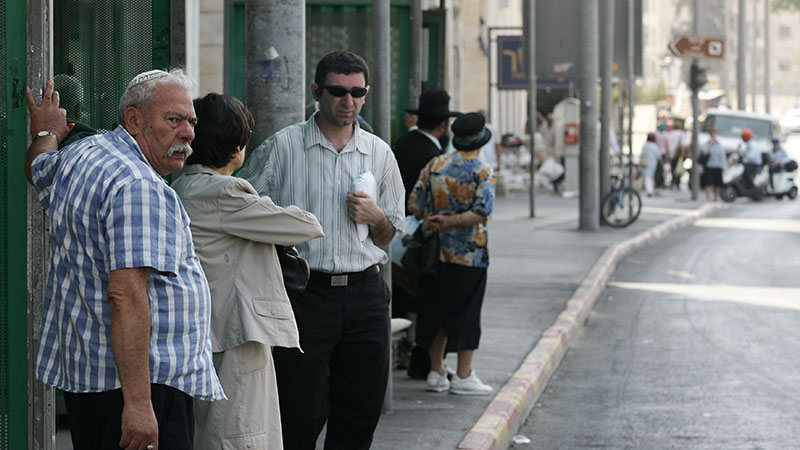
Rabbi Jonathan Sacks put the difference without ornament: “In Israel Judaism is part of the public square, not just the private, sequestered space of synagogue, school and home.” The sentence is descriptive, not promotional. Ride a bus on Friday afternoon and you feel the week lean toward sunset. Hear the siren before Yom HaShoah or Yom HaZikaron and a whole country stops in the street. Watch a Knesset debate and you will hear verses quoted as living claims, not as museum labels. None of that makes every citizen devout. It does mean that Jewish time is not a hobby.
Rabbi Sacks continued, “Even the body knows the direction. The Shulchan Arukh instructs: ‘When he gets up to pray if he was standing outside the Land of Israel, he should return his face toward the Land of Israel and focus also on Jerusalem and to the Temple and to the Holy of Holies.’ For generations that turn of the face was the architecture of exile – stand where you are, aim where you belong. Aliyah does not abolish prayer. It shortens the distance between the body and the place the law already named.
Rav Avraham Yitzchak HaKohen Kook wrote in Orot that “The yearning for Salvation gives the Judaism of the Diaspora its power of stamina; whereas the Judaism of Eretz Yisrael is the Salvation itself.” Yearning is not a small thing. It kept Hebrew in the mouth of the liturgy when it had left the market. It kept Jerusalem at the end of every meal. But stamina is not the same as arrival. A people that only yearns will eventually treat arrival as a metaphor. The public square in Israel is what happens when metaphor is asked to become municipal.
British Prime Minister David Cameron stated the political fact that matches the religious one: “Israel is and will always be the homeland for the Jewish people. That is what the state of Israel was all about and is all about.” Homeland is a public word. It names schools and hospitals and a draft and a language on street signs. It also names the quiet right to be unremarkable as a Jew at noon on a Tuesday.
None of this requires pretending that Israeli life is serene. The public square is loud. It argues. It votes in several directions at once. That argument is part of the gift. In many other places Jewish life must first explain itself before it may proceed. Here the explanation is already in the calendar. The question facing a family considering aliyah is not whether Israel is polished. It is whether they want their children to grow up inside a Jewish argument or adjacent to one.
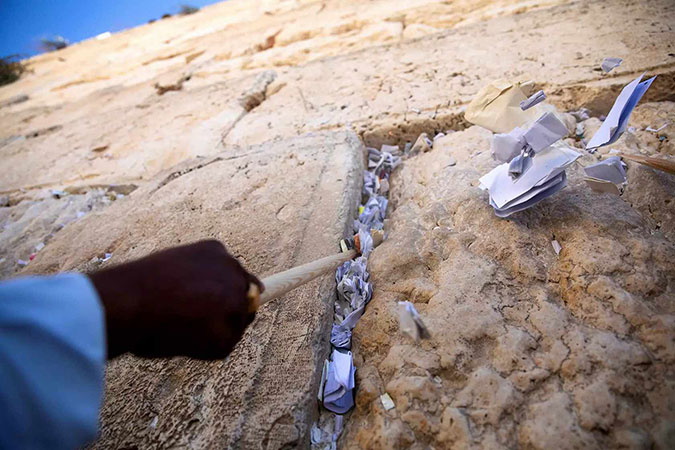
I have watched visitors weep at the Kotel and then fly home, carrying the photograph as proof that they were present. Presence of that kind matters. It is not the same as living where Friday is a civic fact. The column is not a demand that every reader pack a lift. It is a request that we stop speaking as if the highest Jewish achievement were a beautiful private life arranged around an Israel one visits.
The early builders did not talk this way because they had solved housing or traffic. They talked this way because they understood sequence. First a people returns to its language and its land. Then it discovers what justice sounds like in that language, on that land. Rabbi Sacks’s public square is the condition for that discovery. Rav Kook’s contrast between yearning and salvation is the warning against delaying it indefinitely. The Shulchan Aruch’s turned face is the old law still pointing. Cameron’s sentence is the world noticing what Jews have said in prayer for a very long time.
Aliyah, at its least theatrical, is the decision to stop facing the Land and to stand in it. The rest – work, schools, friends, the first Hebrew bill that arrives in the mail – is the unromantic substance of a public Judaism. That substance is what the weekly life of a people looks like when it is no longer an interlude between other nations’ calendars.
A column cannot carry a family across an ocean. It can tell the truth about what is already true on the ground. In Israel the Jewish people are not a guest in someone else’s square. We are at home in our own. That is a positive claim, and it is enough.