 October 23, 2026
 Categories: Headline / Perspectives
Heavenly Good Luck


“We haven’t told anyone we’re pregnant,” the mother confided to me over the phone, as her due date approached.
In my line of work, you are sometimes privy to private information, but I was so curious – why were they keeping it a secret?
“This is our first pregnancy after multiple miscarriages,” the mother continued. Things began to come clear. “Please don’t tell anyone,” she implored. I promised her that the mohel-client relationship is a confidential one.
The mother’s concerns were born from Judaism’s superstitions surrounding pregnancy. Beyond her practice, there are those who refrain from purchasing clothing, some keep the gender private and still others choose not to find out the gender at all. It can feel like a bad omen to plan for something so uncertain.
The mother was in touch just after a premature, challenging labor that led to both her and the baby spending a few weeks in the hospital. I am regularly part of a family’s life for around a week. Some parents reach out for the first time when the baby arrives; others, even closer to the eighth day. But the combination of being in touch early and the bris’s delay led to our back-and-forth lasting over a month. By the time of the event, I felt like we were friends.
I tend to arrive an hour before start time to minimize stress. This results in some level of downtime before everything gets started. But just as I parked, the mother called. “Have you arrived yet because we’d love some help applying the numbing cream?” I was happy to help.
Once the cream was on, it became clear that not everyone had the same arrival policy as mine. Due to traffic, it seemed that we’d be delayed close to half an hour. I didn’t have another bris so I was in no rush. I took my time setting up.
“You were at this boy’s bris,” one of the guests told me, pointing to his son next to him. I had trouble placing him but before I could ask for more information, he told me something even more intriguing: “The mother and father of today’s baby were the kvaterim at his bris,” the gentleman explained.
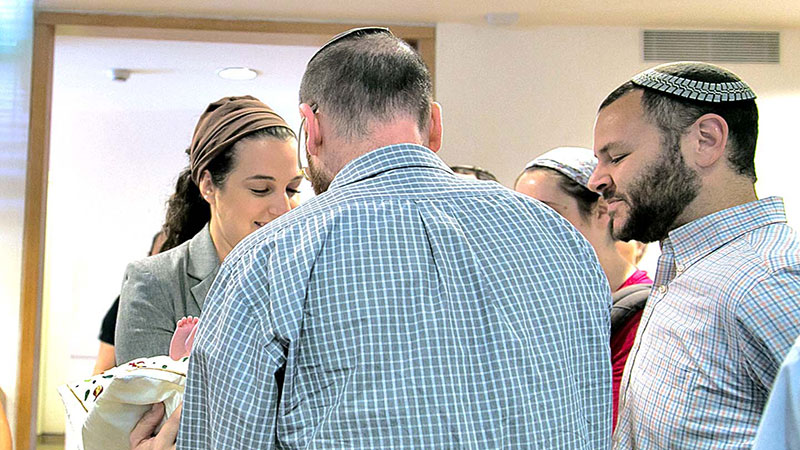
Kvaterim are people who carry the baby on a pillow from the mother to the father at the opening of the ceremony. This honor can be given to anyone, but it’s often reserved for a couple trying to conceive. It’s a segulah (good omen) for conception. However, for those who struggle with conception it can be an albatross – almost a public shaming.
The guest’s son whose bris I attended, standing before me, was fifteen years old. That meant the parents of that day’s bris struggled for fifteen years.
As the event began, the synagogue was filled to the brim. Even with the delayed start, the room felt alive with simcha. We sang songs throughout the ceremony, as I always do, and the crowd eagerly participated. At the conclusion, I yelled out the traditional “Mazal Tov!” and uncharacteristically, the room erupted in cheers.
I leaned over to the mother and said, “Now you’re spoiled.” She looked at me with an inquisitive smirk. “Nothing about that was normal,” I told her. “People don’t generally erupt in cheers at the end of a brit milah. Weddings, yes. Britot, not so much.”
But in this type of scenario, it was the most fitting response. After such a long journey, what else could we do other than join in a round of communal elation. Whereas the rote final words of “Mazal Tov” normally translate to “Let’s eat,” this time, we all knew the phrase was intended literally – today there was heavenly good luck.
The writer is a rabbi, a wedding officiant, and a mohel who performs britot and conversions across the world. Based in Efrat, he is the founder of Magen HaBrit, an organization protecting the practice of brit milah and the children who undergo it.