יום חמישי, י״ד אלול תשפ״וThursday, August 27, 2026



Follow Us


Question: When Shema Koleinu is recited during the High Holiday season, the cantor skips several lines during the interactive repetition. What is the reason? A Reader Wilkes Barre, PA
Question: My husband and I are frequent Shabbos guests at our children’s homes nearby (we eat the meal with them and return to our home after the meal). Where should I light Shabbos candles – in my home or in theirs? Name Withheld

Question: My husband and I are frequent Shabbos guests at our children’s homes nearby (we eat the meal with them and return to our home after the meal). Where should I light Shabbos candles – in my home or in theirs?

Question: What if an eruv was breached on a Shabbat – is it permitted to be repaired and if it is how is this to be done? Zvi Kirschner Via E-mail

Question: The eruv at a facility was discovered to be breached on Shabbat and was repaired without everyone residing there being told anything at the time. Some people learned about it only after the repair. What is the halachically proper manner of dealing with such a situation? If an eruv is breached on a Shabbat, is its repair permitted? If permitted, how is this to be done ideally? Is there a need to announce the breach? Zvi K. Via E-mail
Question: Our family enjoys reading and studying your weekly column as it gives us invaluable insight into our Torah practice. Our question is as follows: If the fast of Tisha B’Av (the 9th of Av) concludes the mourning period for the destruction of the Temple, why wait until the 15th of Av to rejoice? Is there a distinct significance to this date? Sara Gutman Via E-Mail

Question: May leftover meat from the Sabbath during the Nine Days be used during the week so as not to violate “bal tash’chit” – the prohibition against wastefulness? Rabbi Yaakov Spivak, zt”l Rosh Kollel, Kollel Ayshel Avraham Monsey, NY

Question: May leftover meat from the Sabbath during the Nine Days be used during the week so as not to violate “bal tash’chit” – the prohibition against wastefulness? Rabbi Yaakov Spivak [zt”l] Rosh Kollel, Kollel Ayshel Avraham Monsey, NY
Question: Whenever an activity is prohibited because of kavod hatzibbur [namely, the dignity of the congregation], may a kehilla decide that such activity, in their view, does not infringe upon the stature or dignity of the congregation? In my synagogue there are many people who do not wear jackets during services. What of a jacketless ba’al tefillah at Mincha or Ma’ariv, in a synagogue where the custom is such that the shaliach tzibbur does not wear a tallit for these services? Menachem Via Email

My son recently stopped wearing a necktie and lace-up shoes on the Sabbath. He explained that otherwise he fears transgressing the prohibition against tying knots on the Sabbath. Is he correct in this matter? A Mother in Israel Via E-mail

My son recently stopped wearing a necktie and lace-up shoes on the Sabbath. He explained that otherwise he fears transgressing the prohibition against tying knots on the Sabbath. I am concerned, as I do not wish that he appear slovenly especially on the Sabbath, which might not reflect well on him regarding possible shidduchim. Is he correct in this matter? A Concerned Mother Via E-mail

My son recently stopped wearing a necktie and lace-up shoes on the Sabbath. He explained that otherwise he fears transgressing the prohibition against tying knots on the Sabbath. I am concerned, as I do not wish that he appear slovenly, especially on the Sabbath, which might not reflect well on him regarding possible shidduchim. Is he correct in this matter? A Concerned Mother Via E-mail

Question: Recently we read the haftara of Parashat Naso. I am puzzled by the fact that the wife of Mano’ach was given to see things her husband did not see, yet only his name is mentioned. What was the name of Mano’ach’s wife? Yossy Guttman Via email

Question: Recently we read the haftara of Parashat Naso. I am puzzled by the fact that the wife of Manoach was given to see things her husband did not see, yet only his name is mentioned. What was the name of Manoach’s wife? Yossy Guttman Via Email
Question: Lately, various missionary groups have been very active in my neighborhood and other Jewish areas, anxious to convert our brethren to their way. Why don’t we, in turn, seek to convert them? This should be correct especially in light of the Yom Tov of Shavuot that we are celebrating when we read of the conversion of Ruth the Moabite, a woman of such exceeding piety that she proved to be the ancestress of King David and his dynasty, from which will sprout the ultimate king and redeemer, Melech HaMashiach. Moshe Jakobovitz Via email
Question: My friends are getting married on Rosh Chodesh Sivan. I tried to convince them to do otherwise, as many people have a minhag (custom) not to attend weddings until three days before Shavuot. They told me they spoke to rabbis who allowed it. Is this right? May I attend? Name withheld by request

Question: My friends are getting married on Rosh Chodesh Sivan. I tried to convince them to do otherwise, as many people have a minhag (custom) not to attend weddings until three days before Shavuot. They told me they spoke to rabbis who allowed it. Is this right? May I attend? Name withheld by request

Question: Why do we only count the Omer after the first day of Passover, and why for 49 days only, when the Torah commands “Fifty days shall you count?” Additionally, what is the reason for the special celebrations of Lag Ba’Omer? Harvey Abramson Via Email
Question: In my synagogue, and I assume in most others, we all stand at attention as the rabbi or chazzan recites the blessing of Sefirat HaOmer and then proceeds to count the Omer. How can we recite the blessing afterwards when we already clearly heard it before (and thus, presumably, were yotzei with it)? M. Goldblum Miami Beach, FL
Question: In my synagogue, and I assume in most others, we all stand at attention as the rabbi or chazzan recites the blessing of Sefirat HaOmer and then proceeds to count the Omer. How can we recite the blessing afterwards when we already clearly heard it before (and thus, presumably, were yotzei with it)? M. Goldblum Miami Beach, FL

Question: What if one forgot not only to recite the bracha on a Friday, but the actual counting for that day as well, and then after having gone to the synagogue to accept an early Shabbat, suddenly reminded himself? May he then count the missing sefirah before it turns dark so that he would be able to continue counting with a blessing? Pesach Bernstein Via Email
Question: Why do we read Shir HaShirim on Passover and more specifically the Sabbath of Passover? Also, being that it is one of the five Megillot, why don’t we recite a blessing over the reading of Shir HaShirim as we do for Megillat Esther? Menachem Via Email
Question: After the Amida on most mornings we recite Tachanun. It seems that there are many days, including the entire month of Nissan, when such is not the case. My question is, what are those days and why don’t we recite on those days? M. Solow Via Email
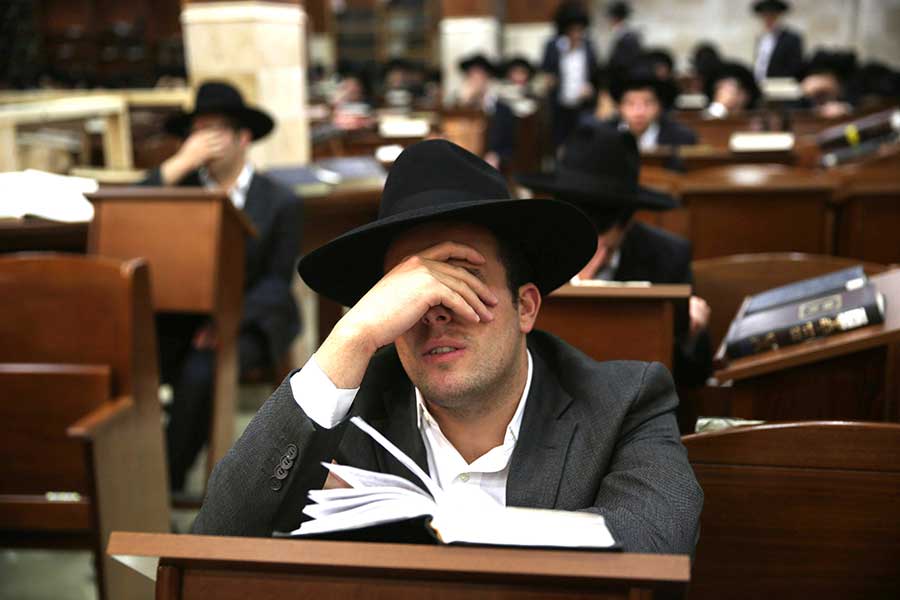
Question: On most mornings, after the Amidah we recite Tachanun. It seems that there are many days, including the entire month of Nissan, when such is not the case. My question is, what are those days and why don't we recite on those days? M. Solow Via email
Question: I would like to know why there are four special readings of the Torah during the period between Purim and Pesach. Also, why do we call each of those four Shabbatot by a special name, such as Shabbat Shekalim, Shabbat Zachor, etc., which we don't do otherwise? Celia Gluck Via Email
Question I would like to know why there are four special readings of the Torah during the period between Purim and Pesach. Also, why do we call each of those four Shabbatot by a special name, such as Shabbat Shekalim, Shabbat Zachor, etc., which we don't do otherwise? Celia Gluck Via E-mail
Why does the Jewish leap year always consist of two Adars? Why specifically Adar? Menachem via email
Why does the Jewish leap year always consist of two Adars? Why specifically Adar? Menachem Via Email
Question: Why does the Jewish leap year always consist of two Adars? And why specifically Adar? Menachem Via email
Question: Why does the Jewish leap year always consist of two Adars? And why specifically Adar? Menachem Via email

Question: Please see my personal situation. If you have time to answer that would be great. I am seriously dating a girl who has a similar name to my mother. Would this present a problem? Name Withheld Via email
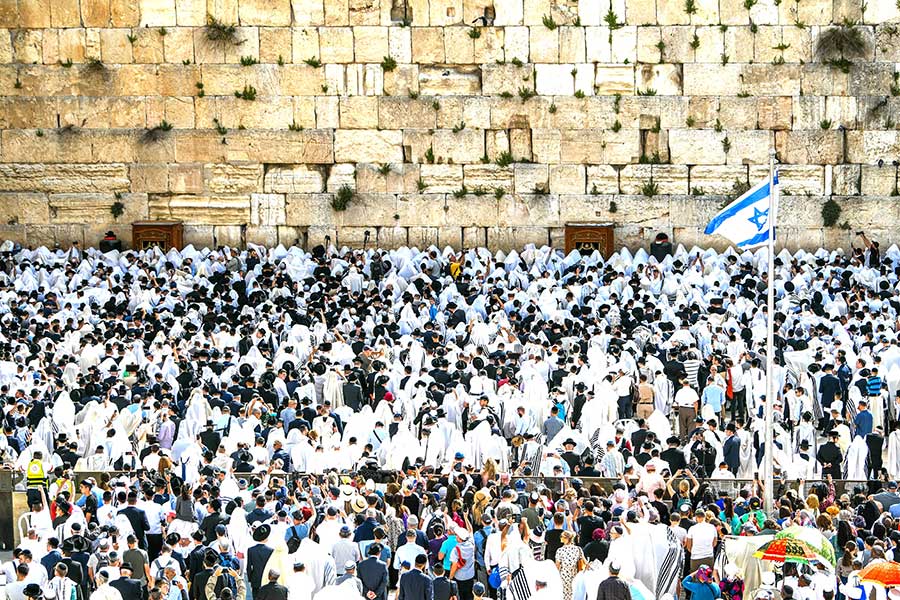
Question: Is there a special prayer or specific role for prayer when the totality of the Jewish people is in danger?
Question: When approaching the mitzvah of Kiddush Levana, should priority be granted to performing the mitzvah at the earliest time – Zerizin u’makdimin l’mitzvot – or to such time as the most people would be available to join in together – B’rov Am hadrat Melech? Michael Katz Via Email
While my uncle at times remarked that my writing style differed from his, he nevertheless would also note that the Torah has 70 facets (Zohar, Bereishit 47a) and is thus a vast resource for countless opinions.

Question: Tu B’Shevat is soon upon us. I am intrigued by the fact that Tu B’Shevat, also known as the New Year for Trees, is in the middle of the month and not at the beginning of a month as all the other New Years. Even the gentiles begin their New Year at the start of a month. Do you have an explanation for this? Pesach Bernstein Via Email
Question: How has it been that in such a world where we are but a very small minority, and after so many generations though the world keeps changing, yet the Jew remains and is the same constant whipping boy? What is the miracle of our survival? Gedalia Estra Via Email

Question: Is it proper to look at tzitzit and kiss them during the recitation of the Keriat Shema? M. Stern Via email
Question: Is it proper to look at tzitzit and kiss them during the recitation of the Keriat Shema? M. Stern Via email
Question: Should we be reciting the prayer for the welfare of the government? Is it a hefsek during the tefillah, or is it important during wartime? Martin Kahn Via email
Question: My husband and I are Ashkenazi, yet my children go to school with Sefardim. My son came home and said that only my husband is to light the Chanukah candles. In my parent’s home, we all lit our own candles on Chanukah to celebrate the great miracle that saved our people for all future generations. Who is correct? Name Withheld Via E-Mail
Question: My husband and I are Ashkenazi, yet my children go to school with Sefardim. My son came home and said that only my husband is to light the Chanukah candles. In my parent’s home, we all lit our own candles on Chanukah to celebrate the great miracle that saved our people for all future generations. Who is correct? Name Withheld Via E-Mail
In essence the manner that we relate to tragic events is by empathizing with those who are affected as if it is us who are personally affected. This is called carrying the yoke of others upon ourselves.
Question: I read your Q&A column, “Kaddish Elevates,” with great interest. However, I feel that there is something you left out: the appropriate phrases or pauses where we are to respond “Amen.” I have not seen why we don’t answer “Amen” after the phrase in Kaddish – Be’alma di’vera chir’utei – In the world He created according to His will.” Is this not one of the greatest praises – that Hashem gave us a world with such benefit that we at times don't understand that benefit. Are we not to acknowledge Hashem's greatness at all times irrespective of outcome? Menachem Via e-mail
Question: Now that we have begun the new cycle of the Torah reading, I read in the Kitzur Shulchan Aruch that one is to say a blessing upon seeing a rainbow but that it is forbidden to gaze upon it excessively. Is this not such a beautiful phenomenon? Why should there be any prohibition connected with it? Zelig Aronson Via Email
Question: Now that we have begun the new cycle of the Torah reading, I read in the Kitzur Shulchan Aruch that one is to say a blessing upon seeing a rainbow but that it is forbidden to gaze upon it excessively. Is this not such a beautiful phenomenon? Why should there be any prohibition connected with it? Zelig Aronson Via Email
Question: Now that we have begun again the new cycle of the Torah reading, I read in the Kitzur Shulchan Aruch that one is to say a blessing upon seeing a rainbow but it is forbidden to gaze upon it excessively. Is this not such a beautiful phenomenon? Why should there be any prohibition connected with it? Zelig Aronson Via Email
Question: Now that we have begun again the new cycle of the Torah reading, I read in the Kitzur Shulchan Aruch that one is to say a blessing upon seeing a rainbow but it is forbidden to gaze upon it excessively. Is this not such a beautiful phenomenon? Why should there be any prohibition connected with it? Zelig Aronson Via Email
Question: I’m told that it is meritorious to complete the reading of the weekly Torah portion during the week and that it is a segula bestowing the blessing of long life. Does this apply even if one has no understanding of the text? Shmuel B. Via Email
Question: I’m told that it is meritorious to complete the reading of the weekly Torah portion during the week and that it is a segula bestowing the blessing of long life. Does this apply even if one has no understanding of the text? Shmuel B. Via Email
Question: I’m told that it is meritorious to complete the reading of the weekly Torah portion during the week and that it is a segula bestowing the blessing of long life. Does this apply even if one has no understanding of the text? Shmuel B. Via Email
Question: I recently learned that one may not dance or clap hands on Shabbat or Yom Tov. If so, how do we dance on Simchat Torah? Aryeh Josefsohn Via Email
Question: The Gemara in Berachot teaches that the Sages authored our prayers. If so, it would seem that we did not pray before this time. Did we pray before their innovation or not? Menachem Via Email
In the United States the issue might be that such action might provoke people to acts of anti-Semitism which has spiraled in the States.
Question: The Gemara in Berachot teaches that the Sages authored our prayers. If so, it would seem that we did not pray before this time. Did we pray before their innovation or not? Menachem Via Email
Question: The Gemara in Berachot teaches that the Sages authored our prayers. If so, it would seem that we did not pray before this time. Did we pray before their innovation or not? Menachem Via Email
Question: The Gemara in Berachot teaches that the Sages authored our prayers. If so, it would seem that we did not pray before this. Did we pray before their innovation or not? Menachem Via Email
Dear Rabbi Klass: As most of us know, in Elul and until Shemini Atzeret we say the 27th chapter of Tehillim (“L’David Hashem Ori – [A Psalm] of David: The Lord is my light”). The second verse states: “Bikrov alay me’re’im le’echol et besarai…– When evildoers approach me to devour my flesh….” Why does it not say “reshaim – wicked ones” or “anashim ra’im – evil people?” Tzila Kleinbart Brooklyn, N.Y.
Dear Rabbi Klass, As most of us know, now that it’s the month of Elul, we say the 27th chapter of Tehillim until Shemini Atzeret (“L’David Hashem Ori – [A Psalm] of David: The Lord is my light”). The second verse states: “Bikrov alay me’rei m le’echol et besarai… – When evildoers approach me to devour my flesh….” Why does it not say “reshaim – wicked ones” or “anashim raim – evil people?” Tzila Kleinbart Brooklyn, N.Y.
Why does it not say “reshaim – wicked ones,” or “anashim ra’im – evil people?” Tzila Kleinbart Via email
Question: In the many shuls that I've attended I observe that there are people who recite the Kaddish silently. Is this correct? I’ve also seen Kaddish recited by some at a cemetery without a minyan is there any reason to sanction this? Charles Rosen Via email
Question: In the many shuls that I've attended I observe that there are people who recite the Kaddish silently. Is this correct? I’ve also seen Kaddish recited by some at a cemetery without a minyan is there any reason to sanction this? Charles Rosen Via email
Question: In the many shuls that I've attended, I observe that there are people who recite the Kaddish silently. Is this correct? I’ve also seen Kaddish recited by some at a cemetery without a minyan. Is there any reason to sanction this? Charles Rosen Via Email
Question: In the many shuls that I've attended, I observe that there are people who recite the Kaddish silently. Is this correct? I’ve also seen Kaddish recited by some at a cemetery without a minyan. Is there any reason to sanction this? Charles Rosen Via Email
Question: In the many shuls that I've attended, I observe that there are people who recite the Kaddish silently. Is this correct? I’ve also seen Kaddish recited by some at a cemetery without a minyan. Is there any reason to sanction this? Charles Rosen Via Email
Question: In the many shuls that I've attended, I observe that there are people who recite the Kaddish silently. Is this correct? I’ve also seen Kaddish recited by some at a cemetery without a minyan. Is there any reason to sanction this? Charles Rosen Via Email
Question: In the many shuls that I've attended, I observe that there are people who recite the Kaddish silently. Is this correct? I’ve also seen Kaddish recited by some at a cemetery without a minyan. Is there any reason to sanction this? Charles Rosen Via Email
Question: In the many shuls that I've attended, I observe that there are people who recite the Kaddish silently. Is this correct? I’ve also seen Kaddish recited by some at a cemetery without a minyan. Is there any reason to sanction this? Charles Rosen Via Email
Question: In the many shuls that I've attended, I observe that there are people who recite the Kaddish silently. Is this correct? I’ve also seen Kaddish recited by some at a cemetery without a minyan. Is there any reason to sanction this? Charles Rosen Via Email
Question: My physician prescribed certain medication in the form of pills that I am to take daily, twice a day. The question is, what am I to do as regards the Sabbath – may I take the pills or must I skip taking them? There is also a question, since I am diabetic, that skipping a day’s dosage might prove harmful. Should I take them on the Sabbath or not? Name withheld on request Via email
Question: Is one allowed to go to Madam Tassaud’s Wax Museum? Is this not a violation of the Torah’s prohibition of graven images? Ben Moseson Via email
Question: Is one allowed to go to Madam Tassaud’s Wax Museum? Is this not a violation of the Torah’s prohibition of graven images? Ben Moseson Via email
Question: Is one allowed to go to Madam Tassaud’s Wax Museum? is this not a violation of the Torah’s prohibition of graven images? Ben Moseson Via email
Question: My mother-in-law, who was visiting her son (my brother-in-law), a medical doctor, had an accident. When she requested her son to remove the shard, he refused to do so...
Question: What if one counted the omer but forgot to utter the blessing – has the obligation been fulfilled? Why do we recite a blessing for this counting, when we find that for the zayin nekiyim – the seven clean days – there is no such blessing? Is the counting not similar? M. Goldman Miami Beach, Fla
Question: What if one counted the omer but forgot to utter the blessing – has the obligation been fulfilled? Why do we recite a blessing for this counting, when we find that for the zayin nekiyim – the seven clean days — there is no such blessing? Is the counting not similar? M. Goldman Miami Beach, Fla.
Question: We celebrate two days of Passover in chutz la’aretz, the Diaspora, because we are unsure as to which is the first day of Passover. If such is the case, what is the basis for beginning the count of sefirat ha’omer in chutz la’aretz on the second night of Passover? M. Goldman Via email
Question: We celebrate two days of Passover in chutz la’aretz [the Diaspora – outside the land of Israel] because we are unsure which one is the first day of the holiday. If so, what is the basis for beginning the count of sefirat ha’omer in chutz la’aretz on the second night of Passover? M. Goldman Via email
Question: We celebrate two days of Passover in chutz la’aretz [the Diaspora – outside the land of Israel] because we are unsure which one is the first day of the holiday. If so, what is the basis for beginning the count of sefirat ha’omer in chutz la’aretz on the second night of Passover? M.Goldman Via email
Question: Now that we are doing our pre-Passover shopping, I notice in many of the kosher sections of the supermarket packaged products that are marked “non-gebrockts.” Perusing the travel pages of The Jewish Press, I also noticed that many of the caterers at the Passover hotels advertise that they are “Non-Gebrockts.” Could you please throw some light on this current trend? M. Schwartz Via e-mail
Question: Now that we are doing our pre-Passover shopping, I notice that in many of the Kosher sections of the supermarket, there are packaged products marked “non-gebrockts.”... Could you please throw some light on this current trend? M. Schwartz Via Email
Question: What is the meaning of "Ve'ahavta lere'acha kamocha," mandating us to "love your fellow as yourself?" Where does this concept originate? G. Adler Via email
Question: I understand that in the time of Moshiach we will return to the offering of animal sacrifices. But on the other hand, if, as we are told, those will be times without sin, then what will we sacrifice? In this modern world, some also argue that animals have rights and thus animal sacrifice is wrong. How do we answer them as well? Menachem Via Email
Question: I understand that in the time of Moshiach we will return to the offering of animal sacrifices. But on the other hand, if, as we are told, those will be times without sin, then what will we sacrifice? In this modern world, some also argue that animals have rights and thus animal sacrifice is wrong. How do we answer them as well? Menachem Via Email
Question: On occasion we have missed the Torah reading and Ashrei U’va Letziyyon, Aleinu, the Yom and the Kaddeshim, even though we started out with a quorum, as some members leave for work. What are we to do in such an instance? Are there any options? Name Withheld on Request
Question: Even though we started out with a quorum, as some members leave for work. What are we to do in such an instance? Are there any options? Name Withheld on Request
Those of us who sit closest to the windows have to suffer the windows being open because those sitting away from the windows, more to the center of the sanctuary, claim they are too hot from the heat of heating system. Do they have the right to impose their comfort at the expense of our health? Name withheld Via email
Question: Every winter, we run into the same problem: those of us who sit closest to the windows have to suffer the windows being open because those sitting away from the windows, more to the center of the sanctuary, claim they are too hot from the heat of heating system. Do they have the right to impose their comfort at the expense of our health? Name withheld Via email
Question:. Every winter, we run into the same problem: those of us who sit closest to the windows have to suffer the windows being open because those sitting away from the windows... claim they are too hot from the heat of the heating system. Do they have the right to impose their comfort at the expense of our health? Anonymous Via email
Question: A number of years back, when I was still unmarried, I had yahrzeit, but in the shul where I davened they wouldn’t let me serve as shaliach tzibbur as they had a rule that no one unmarried was allowed to daven from the amud. Obviously, I could still say Kaddish, but I wanted to lead the services for the sake of the neshama. My question is: Did they have the right to deny me what I felt was my yahrzeit obligation to my departed parent? Mark Halberstam Esq. Brooklyn, N.Y. Via email
Question: A number of years back, when I was still unmarried, I had yahrzeit, but in the shul where I davened they wouldn’t let me serve as shaliach tzibbur as they had a rule that no one unmarried was allowed to daven from the amud. Obviously, I could still say Kaddish, but I wanted to lead the services for the sake of the neshama. My question is: Did they have the right to deny me what I felt was my yahrzeit obligation to my departed parent? Mark Halberstam Esq. Brooklyn, N.Y. Via email
Question: Why, if on Rosh Hashana the shofar is blown during Musaf, is Hallel on the festivals and Rosh Chodesh read during Shacharit? L. Freund Via Email
Question: Is there any significance to the fact that the fast of the Tenth of Tevet (Asara B’Tevet) almost immediately follows Chanukah and that it is the shortest of all the fast days? Does this allow us to be more lenient in its observance? I hope you will address this in your column, which I eagerly read every week. M. Goldman Miami Beach, Fla.
Question: Non-Jews distribute gifts at Christmas to their friends and family. What is the halacha about and reasoning for Jews to distribute gifts at Chanukah to friends and family? Growing up, we used to get Chanukah gelt rather than gifts from my parents. Larry Marks Via E-Mail

Question: We see numerous instances in Scripture where a person’s name was changed. Some people are then always referred to by their new name, while others are not. A case in point is the way we refer to our Patriarchs in the daily Shemoneh Esreh. Why is that so? Abraham Goldman Jerusalem
Question: My rabbi recently ruled leniently in a certain matter relating to the laws of mourning. Am I disrespecting my late mother if I follow this advice? No Name Please Via Email
Question: My rabbi recently ruled leniently in a certain matter relating to the laws of mourning. Am I disrespecting my late mother if I follow this advice? Name withheld on request Via email
Question: Can you explain the different starting times of Mashiv haruach u'morid hagashem and Ve'ten tal u'matar livracha as opposed to Morid hatal and Ve'ten beracha, and why they are said as part of particular berachot in the Amida, as found in the siddur? S. Dorman Via email
Question: Can you explain the different starting times of Mashiv haruach u’morid hagashem and Ve’ten tal u’matar livracha as opposed to Morid hatal and Ve’ten beracha, and why they are said as part of particular berachot in the Amida, as found in the siddur? S. Dorman Via email
Question: Looking back at the past Yomim Tovim, I am left with the following question: What is the reason for the unusual practice of the chazzan reciting shehecheyanu on Yom Kippur night? Elimelech Feldman Via email
Question: Looking back at the past Yomim Tovim, I am left with the following question: What is the reason for the unusual practice of the chazzan reciting shehecheyanu on Yom Kippur night? Elimelech Feldman (Via Email)
 August 28, 2026