 October 16, 2026
 Ki HaMitzvah – A Song About Teshuvah


Last week I wrote about two of my favorite songs whose lyrics are from last week’s haftara. This week, I’d like to write about another one of my favorite songs whose lyrics come from this week’s parsha, Parashat Nitzavim. As we are getting close to Rosh Hashana, this song also talks about the work of Rosh Hashana and the Yamim Nora’im in general – that is, the mitzvah of teshuvah.
The song is “Ki HaMitzvah,” which was written by Yossi Green and performed by Avraham Fried in the album Aderaba. Interestingly, the next song on that album is “Achas,” which also relates to this time of year, as the lyrics are from L’David Hashem Ori, the Mizmor from Tehillim which we say from Rosh Chodesh Elul until Hoshana Raba.
Quick trivia question (for those who remember from those previous columns): What is the name of the orchestra that plays on this album?
Answer: Neginah Orchestra (which was the band at my wedding!).
You should already be familiar with some of the songs in the album as I’ve written about several of them in this column before. I wrote about the title song, “Aderaba,” for the yahrzeit of Rabbi Elimelech of Lizhensk, and about “Nisht Gedaiget” before the Three Weeks. Trust me, there are more beautiful songs in this album which are still popular after all these years. While Aderaba was released in 1990, the songs are still relevant and being played and listened to today. Take, for example, “Kaitzad,” which you can still hear at weddings (“Keitzad merakdim lifnei hakallah…”). But today I’d like to focus on “Ki HaMitzvah.”
As I mentioned, the lyrics for “Ki HaMitzvah” come from Parashat Nitzavim, but the first verse was written by Yossi Green and it’s in Yiddish and Hebrew. “Vayedaber Moshe,” And Moshe spoke. “Moshe hat unz azoi gezugt,” Moshe told us. “Ben me’ah ve’esrim anochi hayom,” I’m 120 years old today. “Eich gi bald aroyf, ein Olam Ha’elyon,” I’m going soon to the next world. “Hert vaas eich zag eich azund,” Listen to what I’m telling you now. “Das zag eich far yidden, yiddishen kind,” I’m saying this for the Jewish people, the Jewish children. “Ki hamitzvah hazot, asher Anochi metzavcha hayom, lo niflet hi mim’cha v’lo rechoka he,” Because this mitzvah which I am commanding you today is not hidden from you, and not far away.
I was struggling to translate the word niflet. After all, we do not use it on a regular basis in spoken Hebrew in this context. So, I looked at the mefarshim, where I found it translated as “not hidden from you.” Which means we should all be familiar with this mitzvah.
“Lo baShamayim he leymor, Mi yaale lanu haShamayma, ve’yikache’ha lanu ota v’naasena,” It is not in the heavens, so as to say: Who is going to go to the heavens and bring it down for us so we can do it. “V’lo me’ever layam hi, leymor, Mi yaavor lanu el ever hayam, veyi’kacheha lanu, veyashmienu ota venaasena,” And it is not across the sea, so as to say: Who is going to cross the sea to bring it to us so we can listen to it and do it. “Ki karov eleicha hadavar me’od, b’picha u’bilvavcha laasoto,” Because it is very close to you. It’s in your mouth and your heart to do it.
The message of this pasuk is simple yet powerful: Do not have any excuses. The Torah is not far away. You don’t have to reach the heavens or cross the ocean in order to learn Torah and do mitzvot. It is here – right next to you. All you need to do is use your mouth and your heart. To have the willingness and the intent to do it.
The Kli Yakar and other mefarshim, however, say that “hamitzvah hazot” – this mitzvah – is actually referring specifically to teshuvah. If you want to do teshuvah, you need only to have the will to return to Hashem. “B’picha,” explains the Kli Yakar, refers to the Vidui” which we say with our mouth, and “U’bilvavcha,” in your heart, is the charata, the regret we feel for our sins. All you need to do is to say “Vidui” with your mouth and have “charata,” regret, in your heart. And the reason that this mitzvah is “lo niflet,” not hidden from you, is because “Yisrael ve’ha’teshuva kadmu laOlam” (Gemara Pesachim) – Israel and teshuvah precede the world. So, we can’t say we didn’t know we could do teshuva and return to Hashem.
What a powerful message before Rosh Hashana.
The song begins with piano and then the famous clarinet intro that gets you into the atmosphere of the song. Every time I listen to it again, it draws me back in. Together with the clarinet, the piano continues in the background. And then Avraham Fried enters with his special voice – “Vayedaber Moshe…” Light strings in the background and the piano continues. As the song continues, the brass is added. The tempo is very slow and you feel the glory of the words.
“Lo baShamayim he leymor” – Here Fried goes high with his voice, as he does in many of his songs. This part of the song sounds like chazzanut. It is a quality that many of his songs share that they sometimes sound like chazzanut pieces, which I like a lot.
At the end of the verse of “V’lo rechoka he,” the tempo begins to get faster and more upbeat, and as in many Avraham Fried songs that begin quiet and slow, the chorus suddenly becomes upbeat. “Ki karov eleicha hadavar me’od, eleicha hadavar me’od” – the tempo here is faster, more upbeat and happier, and you hear the drums stronger in the background. And then toward the end, the trumpet solo and the strings. A masterpiece.
As I mentioned above, the next song in the album is “Achas,” with the words from L’David Hashem – “Achas shaalti me’et Hashem ota avakesh,” One thing I asked from Hashem that I am seeking. “Shivti b’veit Hashem kol yemei chayai,” To sit in the house of Hashem all the days of my life.
The song starts with a beautiful violin intro and then a piano intro and again the violin. The tempo of the song is slow and quiet and it is a beautiful song.
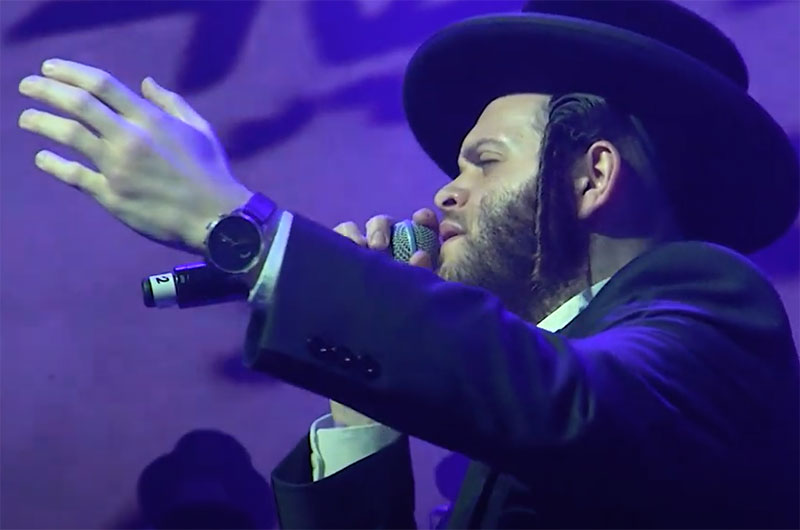
Over the years, other singers and musicians have performed “Ki HaMitzvah.” A quick search on Google will give you a few results. One of the performances I really like is the one by rising star Zanvil Weinberger at the Siyum HaShas of Dirshu. You don’t want to miss this one. (Search “Zanvil Weinberger – Ki HaMitzvah – Dirshu Siyum.” You’ll thank me after.)
Speaking of Zanvil Weinberger, here’s another beautiful song performed by him and the Malchus Choir, also at Dirshu, with lyrics from Selichot and from Tefillat Ne’ilah of Yom Kippur. The song is “Shaarei Shomayim,” and I highly recommend listening to it to get into the mood for the Yamim Nora’im. Tip: Increase the sound on your speakers before you play this one. You’ll understand when you hear it.
This is the time to wish you all a Shana Tova U’metuka, a Happy Sweet New Year and a K’tiva V’chatima Tova.
Keep writing to me! I really enjoy getting your emails with your feedback. I try to answer every email I get from readers. Besides feedback, you can also send me requests. If you want me to write about something – a singer, song, band, or whatever – feel free to suggest it. I’ve already gotten some requests for future columns.