יום ראשון, ט׳ תשרי תשפ״זSunday, September 20, 2026



Follow Us



“I wanted you to have a taste of the cold,” answered Rav Chaim. “This way, you too can feel the intense cold and realize the suffering of this man and his wife, who are now residing in a bitterly cold house.”
“Don’t worry,” said the king, “what could it be worth, two or three talents of gold? I’ll give you ten talents of gold, so you can forget about it.”
Shmuel HaKatan shook his head and said: “No, what happened here today is a sign not of great love. On the contrary, it is a bad omen.”
The arguments, however, could never appease his wife and one Thursday she came to him for money to purchase food for Shabbos.
He walked out of the room, making sure to leave the door ajar so that the two litigants could hear his voice.
Don’t you know Avraham, the famous dry goods merchant, who lives near the lake in a big mansion?
“What could I do? Your wife is hard of hearing,” whispered the poor woman barely able to talk.
“I would appreciate if you could give me some pointers on how to improve my wine,” said the wine merchant eagerly.
“And what was your grandfather’s name?” asked the visitor. “The same as my name,” replied the child.
The trial was the next day and he hadn’t as yet told the family what he would do.
The man was overjoyed to see his benefactor and gave them food and water besides shelter and safety.
Because of this I wandered about and found friends in similar situations who were also unhappy and I began to hang out with them.
While he slept, he dreamed of Eliyahu HaNavi, who was trying to awaken him from his sleep.
He lacked for nothing materialistic and could have lived the rest of his life, had he chosen to, in the luxury and laziness that dominated the Roman upper class life.
When the soldiers heard this they exclaimed happily: “You mean this is the sacred Jewish fruit? Hurry, get on the horse. You are coming with us to the palace.”
Dug out beneath his bunk was a little chest which he guarded with his very life. It contained a small Sefer Torah, miniature size, but kosher, and a shofar.
“You can have your choice,” said the wise king. “You can choose to take this gold, 100 pieces each, or I can give you each three pieces of advice.”
He followed her advice and, before departing, the rabbanim offered him a bracha. “Aba Yudin, may the Lord return your wealth, for all the kind deeds you do.”
“When I asked why she cried so much she said she came from a very religious home and feared she would be sold to a non-Jew and forced to convert.
And so the enemy burst into the Sanctuary and set up a stand on the Temple Mount.
When the young man awoke, he did not know where he was. As he looked around, the princess looked out and saw him.
Entering the city he visited the cattle market and saw two parei adumah untouched by any harness.
Every night he would go out in the darkness and dig for hours until the waters began to rise, and watering places for the weary and thirsty came into being.
Do you wonder at times what possible purpose some little insect might have for being?
Twelve years went by until Eliyahu HaNavi came to the entrance of the cave and exclaimed, “The Roman emperor has died and all of his decrees have become void. You are no longer under a death sentence.”
Certainly, the Jewish leader, even more than the layman, must have his answers and explanations ready at all times
“You speak foolishly, daughter, how is it possible for a man who has not eaten for 10 years to live?”
When Bnei Yisrael returned to their homeland they were a poor and weak group of people. Because of the great number of enemies and wild animals that had inhabited the land during their exile, they huddled together in a few areas, like Yerushalayim, in order to find protection.
In the midst of his merrymaking, the king ordered his servants to bring out the golden vessels that were taken from the Beit HaMikdash by his father Nevuchadnezzar. The king and his men drank from them and praised the gods of gold and silver.
Although Daniel was the chief minister in Bavel, he could not eradicate the custom practiced in many provinces of worshipping idols. In the capital city there was a statue of Baal and more and more people began to worship it. Even the king was beginning to believe in its power.
Through the influence of Daniel, one of Nevuchadnezar’s ministers, his three companions, Chananiah, Mishael and Azariah were appointed as governors over various provinces in Bavel.
In the third year of the reign of Yehoyakim, melech Yehuda, Nevuchadnezzar, melech Bavel, lay siege to Yerushalayim and conquered it. He took many treasures from the Beis HaMikdash back with him to the land of Shinar.
In the city of Antioch there lived a man of remarkable generosity by the name of Aba Yehudah. He was a man who gave to all, whenever there was a need. Rabi Yehoshua and several other rabbanim arrived in the city one day on an urgent mission to collect money for the unfortunate needy. They knew that Aba Yehudah always gave a generous contribution so they looked forward to seeing him.
Rav Nechuniah was a modest and exceedingly honest person who did good and kind things at every opportunity, without seeking rewards and honor for those deeds.
Chazal tell the story of a very rich man, who as he grew old began to worry about his future. "What good is all my wealth?" he asked, "if I may soon have to leave it behind me."

The great Shlomo HaMelech, wisest of all men, wrote that there is a time for all things. There is a time to be born and a time to die, a time to cry and a time to laugh, a time to preserve and a time to throw away.
If you were to ask the average Jew who destroyed the Bais HaMikdash and who sent the Jewish people into galus, he would instantly answer, “The Romans.”
Rabi Yochanan said: “What is the meaning of the sentence in scriptures, ‘He does wonders that are immeasurable and miracles that are incomprehensible’? This refers to the miracle of the birth of a child.”
In the days of Shlomo HaMelech, the richest man in the land lived in Yerushalayim. His name was Bavsi and he was known as a wicked miser. He oppressed his servants and his slaves and made their days bitter with toil from dawn until late at night. Because he was so stingy, he did not give them enough food to eat, so they and their children constantly suffered from pangs of hunger.
One of the areas in which even observant Jews sin is in their attitude towards rabbanim. A rav is not just someone whom we have the right to hire and fire; he is not just a man who gives a speech on Shabbos. He is a teacher and a leader. When he rules on a point of halacha, it is not only our right to listen to him; it is our obligation to do so.
The life of our sages was never an easy one. Although persecuted by the Romans, they continued to devote all their efforts to the study of Torah and doing good deeds.
Czar Nicholas was a rabid anti-Semite and constantly sought means and methods to convert the Jews to Christianity. But the harsher the decrees he issued against the Jews, the more tenaciously they adhered to the tenets of their forefathers.
Those who learn the Talmud are forever indebted to a commentary found on the side of the pages which enables the student to find the source of a particular law. This commentary, known as Mesoras HaShas, is the work of one of the most brilliant and erudite Talmudic scholars, Rav Yosef Shmuel of Cracow.
Chazal posed the following questions to Eliyahu HaNavi: “Why are some of our pious people so poverty stricken? Doesn’t G-d answer the prayers of tzadikim?”
Herod or Hordos — as he is known in the Talmud — was a usurper who seized the throne of the Chashmonaim and caused a terrible tragedy to befall the Jewish people.
One day, the great sage Choni HaMagel pondered the meaning of Tehillim 26, “A song of ascent, when Hashem returned the captives of Tzyon, we were like them in that dream.”
If you were to ask the average Jew who destroyed the Beis Hamikdash and who sent Klal Yisrael into galus (exile), he would instantly answer, “The Romans.”
Never mistreat a person, no matter how lowly he may be, for you can never know what the future holds in store for him, our sages warn us. As an example, the following story is told in the Talmud Yerushalmi.
In the chronicles of Jewish history, few men have shown as magnificent a soul as the great Hillel. For in order for a leader to qualify for greatness, he must be more than merely a great scholar — although that is, of course, the most necessary attribute. He must also possess depth of character and the sweetness and gentleness of soul that will enable him to under stand the needs and sufferings of his people. Without this sensitivity, he can never truly be a great leader.
The death penalty in Judaism was seldom invoked because of the requirement for prior warning and two witnesses to the act that called for the penalty. Nevertheless, the Torah solemnly prescribes these penalties and through them one could judge the magnitude of the offense.
Rabi Meir was accustomed to remaining in shul each morning until every person left. He was usually the last person to leave. One day, he davened very fast and left very early. Walking outside, he thought to himself, “Why did I leave early? Is it possible that G-d ordained it so that a miracle may occur through me today?”
“Wisdom is better than rubies, and all things desirable are not to be compared unto her” (Proverbs 8:2). Rabi Aha explained in the name of Rabi Tanchuma ben Rabi Chiya: “My desirable things and your desirable things are not to be compared to her.”
This is the story of a staff, the most miraculous staff that was ever created. It was none other than the staff that Moshe used to perform all the amazing miracles in Egypt.
The story of Bnei Yisrael in the land of Mitzrayim is a tale that has become tragically repetitive in the history of our people. It is the story of a land which allows Jews to enter, and devote their talents and energies to building it up land and making it strong, only to have the ungrateful inhabitants turn on them through jealousy and greed.
The piety of the saint Rabi Chanina ben Dosa was so great that people would often request that he daven on their behalf. Once, the son of Rabban Gamliel became dangerously sick. He sent two talmidim to the home of Rabi Chanina with the message: “Pray to God that my son will get well."
Chazal taught: He who judges his associates (in questionable acts) with favor will be judged with favor from Above.
While Shimon ben Shetach was head of the Sanhedrin a great sage passed away. He came to a disciple in a dream and told him of the great punishments awaiting Rabi Shimon ben Shetach because he permitted 80 witches to continue living in Ashkelon. As these witches were casing the people to sin, he would be punished for allowing them to live.
After the death of Balshazzar, Darius the Medean became king of Babylon. He appointed 120 governors to rule over his provinces and over them he appointed three presidents, and over them he appointed Daniel. The king admired the wisdom of Daniel and this evoked jealousy and enmity among all the ministers who sought to find fault with him. But Daniel was too honest and wise.
Through the influence of Daniel, who was one of the ministers of King Nevuchadnezar, his three companions, Chananiah, Mishael and Azariah were appointed as governors over various provinces in Bavel.
There are many wonderful stories narrated in Scriptures about the experiences of the Navi Daniel. Many of these stories are found in Sefer Daniel, while others are found in the Talmud and Midrash.
Rabba Bar Bar Chana related the following, “Sailors told me that once they were threatened with gigantic waves that could have sunk their ships. These waves appeared with a ray of whitish light at their crest and when they struck it with clubs engraved with the words ‘I will be what I will be, L-rd G-d, King of Hosts, Amen, Amen, Selah,’ the waves subsided.”
Among the great giants of Chassidism were two brothers, Rav Zusha of Hanipoli and Rav Elimelech of Lizhensk. But the apple does not fall far from the tree and the deeds of the father are lessons for the children. These two tzaddikim owed much of their character to their father, Rav Eliezer Lippa.
The great Rabban Yochanan Ben Zakai was once asked by a student, “Rebbe, I have a question which has puzzled me for some time. We find in the Torah a law concerning an eved Ivri, a Hebrew slave. He serves for six years and at the end of that time he may go free. Should he refuse, however, saying that he likes his master and prefers to remain with him, the tribunal takes him and makes a hole in his ear as a punishment.”
Rabi Yehudah Hanasi (the prince) known as Rebbe had an amazingly warm friendship with the Roman Caesar, Antoninus. The friendship began at the birth of the two men and continued until their dying days.
Chazal tell us that Torah is our life and the length of our days. Here is a story that proves this statement quite literally. In Yerushalayim there lived a family in which all the children passed away at an early age. Everything possible was done to protect the children from illness and the slightest danger, however, it was to no avail. Not one child lived past the age of 18.
The Strength Of Suffering Man does not have it easy in this world. Sufferings are often visited upon him tempting him to curse his fate and ask why the Almighty punishes him so. But suffering has great value and serves a vital purpose. Rabi Akiva teaches this a clear and beautiful way. Rabi Eliezer had […]
How often we, even the greatest among us, tend to forget the respect and honor due every single human being. Every one who walks the face of the earth was created in the image of G-d and carries within him the Divine Spark. Therefore, when we insult any human being we are really insulting the Almighty Himself which is the worst of all sins.
How the Sages of the Talmud used to honor Shabbos! Each day of the week was only an introduction to the coming Shabbos and everything was done with an eye towards Shabbos.
In the days of Shmuel Hakatan a terrible drought held the land in its deadly grip. The wheat withered in the field and the grass dried and died. Day after day, the skies remained leaden and no clouds appeared to bring rain and salvation to the parched land.
Rabi Moshe ben Nachman, widely known as the Ramban was born in the year 1194 in the town of Gurunda, Catalina. He became famous as a great scholar and sage and wrote interpretations on the Torah and on many Gemaras, and authored many seforim, which are revered to this day. The Ramban was also a philosopher and a physician and his services were in great demand.
Man is seldom satisfied with his life. Even when he has done great things, amassed vast amounts of wealth and achieved great fame, he still yearns for more and his soul is not fulfilled. "No man dies with even half of his ambition fulfilled," say Chazal.
“Leave me Zemira,” cried Raamyah, “I have shamed you and your family. I have deceived my child whom I love so much. Turn your back on me for I can offer you only tragedy and unhappiness.”
As Zemira threw herself (and her infant), into the path of the king’s carriage, the crowd shrieked. Hastily, the driver reined the horses up sharply, and the hoofs of the lead horse stopped barely inches from where she lay.
No matter what Zemira said and how much she implored Avinadav to tell her what was bothering him, he remained adamant in his silence.
In the days of the Second Beis Hamikdash the Romans ruled over Eretz Yisrael and installed a king by the name of Hordus, or Herod, to enforce their rule. Hordus was an evil and ambitious man, and was quick to do whatever the Romans requested of him, no matter how terrible the decree was. Because of this, the Jewish people hated him, and this in turn caused him to hate them even more.
Lag B’Omer is the yahrzeit (anniversary of the death) of Rabi Shimon bar Yochai. Thousands visit his grave in Meron to pay homage to this tzaddik and leader in Israel.
“You shall not swear in the name of the Lord,” says the Torah. This is true even if what one is saying is the truth.
The inhabitants of Yerushalayim were exceptionally clever. Rabi Chuna said in the name of Rabi Yose, “Wherever this Yerushalmi went in the provinces, they arranged a seat of honor for him to sit upon in order to listen to his wisdom.”
“And Hashem told Moshe, lift up thy rod over the sea and divide it”... And Moshe ordered the sea to divide. But the sea refused. “Why should I obey you,” it said, “You are but a man born of a woman and besides, I am three days older than you, I was established on the third day of creation, and you were created on the sixth day.”
In the land of Midyan there lived a pagan priest, Yisro, who was greatly respected by his people. He worshiped idols of stone and wood and so did his countrymen.
A childless man once pleaded to the Almighty, “Creator of the world! Please send me a son so that I may teach him the Torah.” The Almighty heard the prayer and sent him a son whom the father named Shaul. When Shaul was old enough his father began to teach him Torah and, thus, they continued for many years.
If you were to ask the average Jew who destroyed the Beis Hamikdash and who sent Klal Yisrael into galus (exile), he would instantly answer, “The Romans.”
Once while Rabi Shimon ben Shetach was studying the Torah, a man entered his beis midrash and said, “I have something very important to discuss with you and I would like no one to be present.”
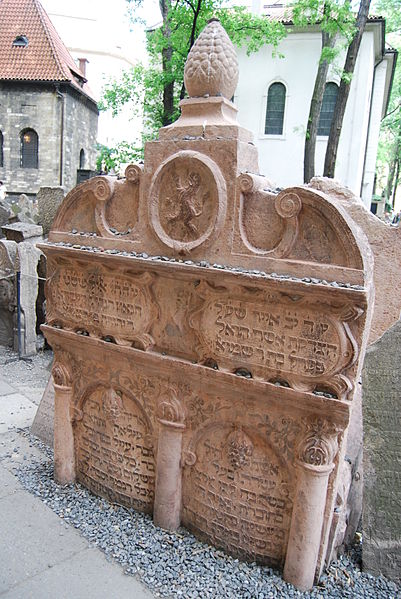
Rabi Yehuda ben Bezalel Lowe, known as the Maharal of Prague, was born in 1525, in Posen. He married Pearl, the only daughter of the wealthy and prominent Reb Shmuel ben Reb Yaakov, but not without the help an anonymous soldier.
The Return Of The Sage When Rabi Simeon ben Shetach saw that he had found favor in the eyes of King Yannai (after he appointed him Nasi of the Sanhedrin), he approached the king and said: “If I have found favor in your eyes will you grant me a wish? Something sorely vexes me that only you can rectify.”
When Alexander Yannai, king of Judea, was prevented by the sages from becoming the high priest, he issued an order that all the sages of Israel be killed. Many were and the remainder fled. Rabi Shimon ben Shetach, considered the greatest of them all, was saved by his sister, Queen Shlomit Alexandra.
After the Chasmonaim defeated the Greeks their descendants assumed the throne of Eretz Yisrael and ruled over Bnei Yisrael. In the first years of their reign, they followed the path of Hashem and He was good to them.
Ptolemy, King of Egypt, had requested of Elazar Kohen Gadol, that he send sages to his country to translate the Torah. Elazar complied by sending 72 sages. They were wined and dined and then the king put to them 72 questions, to test their wisdom.
King Ptolemy of Egypt had heard that the Jews possessed the Torah, the five books of Moshe, which contained much wisdom and excellent laws. He desired to have this Torah translated into Greek so that he, too, might learn its contents.
 September 18, 2026