יום שישי, י״ב חשוון תשפ״זFriday, October 23, 2026



Follow Us


Shares In The Embarrassment Among the famous practitioners of our forefather Abraham’s virtue, hospitality, was Rav Akiva Eger. Naturally, on Pesach, it was “Let all who are hungry come and eat...’’ Once, at the Seder, a guest accidentally overturned his cup. As the red wine stained the fine white tablecloth and the guest’s face […]
In the land of Midyan there lived a pagan priest, Yisro, who was greatly respected by his people. He worshiped idols of stone and wood and so did his countrymen.
Rav Yosef Hochgelanter, the rav of the city of Zamushet, where Rav Akiva Eiger received his early training while still a young boy, was a great scholar and the author of Mishnas Chachamim. At the time he was chosen to be rav of the city he was the son-in-law of a very wealthy man who was very generous with his support.
For weeks before Pesach the people in small towns across Poland, Lithuania and Russia lived only with the Yom Tov in mind. The housewives turned their homes upside down, the matzah bakery became alive, tailors and cobblers prepared to meet the seasonal rush, and the children worked themselves into a pitch of excitement, which they could not have endured had they had to wait for the seder night one day longer than they already did.
A childless man once pleaded to the Almighty, “Creator of the world! Please send me a son so that I may teach him the Torah.” The Almighty heard the prayer and sent him a son whom the father named Shaul. When Shaul was old enough his father began to teach him Torah and, thus, they continued for many years.
One of the great gaonim was Rav Yaakov Berlin, the father of the Netziv (Naftali Tzvi Yehuda of Berlin), the rosh yeshiva of the Volozhin Yeshiva and a leader of European Jewry at the close of the 19th century.
If you were to ask the average Jew who destroyed the Beis Hamikdash and who sent Klal Yisrael into galus (exile), he would instantly answer, “The Romans.”

Almost 450 years ago, in the year 1569, a new Sultan came to power in Damascus. Upon assuming his throne, one of his first acts was to order the destruction of all the Jewish synagogues in the city. The Jews had begun to fear for their lives when on the eve of Purim, a miracle occurred. From a vicious Jew-hater, the Sultan became their friend and during his reign the Jews lived in peace.
Once while Rabi Shimon ben Shetach was studying the Torah, a man entered his beis midrash and said, “I have something very important to discuss with you and I would like no one to be present.”
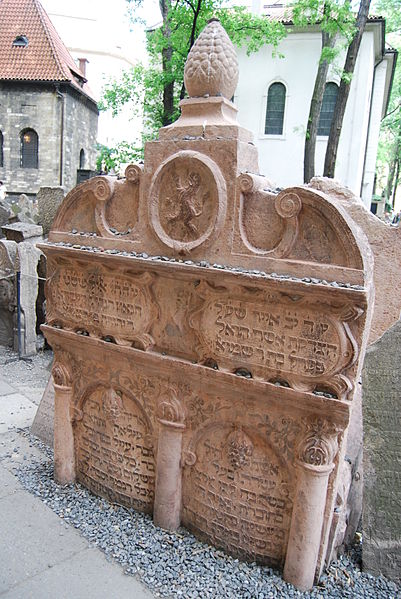
Rabi Yehuda ben Bezalel Lowe, known as the Maharal of Prague, was born in 1525, in Posen. He married Pearl, the only daughter of the wealthy and prominent Reb Shmuel ben Reb Yaakov, but not without the help an anonymous soldier.
The Return Of The Sage When Rabi Simeon ben Shetach saw that he had found favor in the eyes of King Yannai (after he appointed him Nasi of the Sanhedrin), he approached the king and said: “If I have found favor in your eyes will you grant me a wish? Something sorely vexes me that only you can rectify.”
When a person is called a gaon, it is because he is a great scholar, a genius in the Torah. But many of our gaonim, besides their greatness and their scholarly acumen, were also gaonim in their deeds. Their kindness towards their fellow man was unsurpassed.
When Alexander Yannai, king of Judea, was prevented by the sages from becoming the high priest, he issued an order that all the sages of Israel be killed. Many were and the remainder fled. Rabi Shimon ben Shetach, considered the greatest of them all, was saved by his sister, Queen Shlomit Alexandra.
After the Chasmonaim defeated the Greeks their descendants assumed the throne of Eretz Yisrael and ruled over Bnei Yisrael. In the first years of their reign, they followed the path of Hashem and He was good to them.
On the twentieth day of Teves we mark the 808th yahrzeit of Rabeinu Moshe ben Maimon, the Rambam (Maimonides). The Rambam (Maimonides) lived from 1135 to 1204. His scholarly works are world-renowned and it is about him that we say, “From Moses to Moses there never arose so great a person as Moses.”
Ptolemy, King of Egypt, had requested of Elazar Kohen Gadol, that he send sages to his country to translate the Torah. Elazar complied by sending 72 sages. They were wined and dined and then the king put to them 72 questions, to test their wisdom.
King Ptolemy of Egypt had heard that the Jews possessed the Torah, the five books of Moshe, which contained much wisdom and excellent laws. He desired to have this Torah translated into Greek so that he, too, might learn its contents.
 October 23, 2026