 October 9, 2026
 Categories: Halacha & Hashkafa
Knife To Meet You: The Akeidah’s Cutting Insight


Zevachim – Daf 97
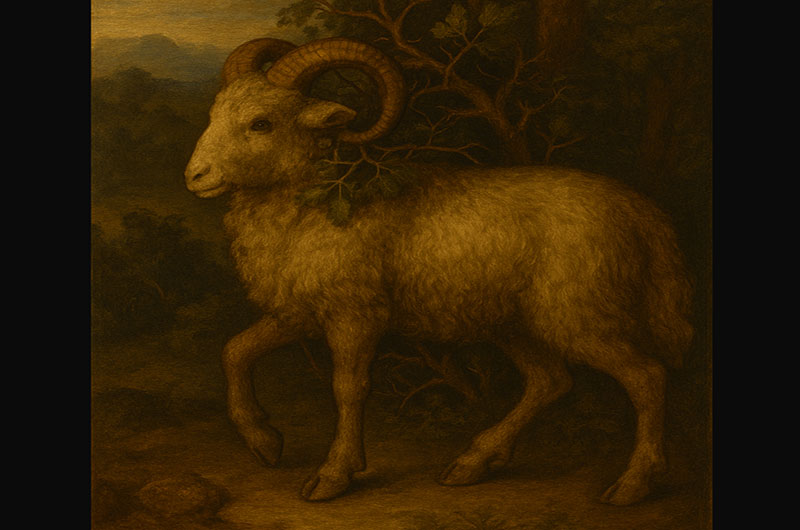
Our Gemara on amud beis quotes a proof text that a knife must be used to slaughter the Olah sacrifice: “Slaughtering may be performed only with a knife and not with a sharp stone or reed. The Gemara asks: And with regard to a burnt offering itself, from where do we derive that it must be slaughtered with a knife? This is learned from that which is written: ‘And Abraham stretched forth his hand and took the knife to slaughter his son’ (Bereishis 22:10); and there Abraham was offering a burnt offering, as it is written: ‘And offered it up for a burnt offering in place of his son’ (22:13).”
The Gemara considers Yitzchak to be an Olah sacrifice, and therefore whatever verse was used to describe his process of offering can also apply to the ram that was brought in his place.
The words “offered it up for a burnt offering in place of his son” seem redundant: Given the storyline, it is obvious that the ram was being brought as an offering in place of Yitzchak. Why does the Torah emphasize “in place of his son?”
Rashi there notes this and quotes the Midrash Rabbah (56:9): “Since it is written that he ‘offered it up for a burnt offering,’ surely nothing is missing in the text; what then is the force of ‘in place of his son’? At every sacrificial act he performed [on it], he prayed, saying, ‘May it be Thy will that this act be regarded as having been done to my son – as though my son is being slain; as though his blood is being sprinkled; as though his skin were being flayed; as though he is being burnt and reduced to ashes.’”
It seems that according to the Midrash and Rashi, an extra degree of piety and devotion is being noted. Instead of being relieved and offering the ram instead of having to sacrifice his son, Avraham worked to feel as if every part of the process was truly the sacrificing of his son to G-d.
Respectfully, I would offer an opposite interpretation of the Torah’s emphasis and underscore a different aspect of piety. The verse states, “offered it up for a burnt offering in place of his son,” but does not state, “In place of his son, he offered it up for a burnt offering.” What is the difference? In the latter, the offering is primarily being brought by Avraham in place of his son in the form of an Olah, while the former and actual sentence structure emphasizes that it is primarily an Olah, which also is taking the place of his son.
If so, the extraordinary piety of Avraham is that he was able to remove his bias and feelings of relief. He offered this Olah purely as a sacrifice, as he would any other sacrifice. This too was a unique mesiras nefesh – to stay on task in simple devotion, with no ulterior motives. He offered it first and foremost as an Olah, which also happened to be in substitution for his son. It is similar to giving charity in order that someone be healed, which is permitted, but it is understood that the wish is to give the charity regardless of whether the miraculous healing occurs or not (see Rosh Hashanah 4a and the implication from Tosafos “beshvil”).
Stain Power: When Subjectivity Soaks Through
Daf 98Our Gemara on amud beis discusses how various stains and substances on clothing cause a disqualification in the purification immersion because they act as a barrier between the water and the garment. While such an issue ought to be factual – i.e., does the water penetrate or not, or how much water must penetrate – instead, they are based on subjective human experience. Therefore, blood and fat stains are considered a barrier, but for a butcher who is used to blood stains, and a fat-seller who is tolerant of fat stains, they are not disqualifying barriers. This is a fascinating and underrated aspect of halacha: the extent to which personal subjectivity affects the ruling.
Then the Gemara goes one more step into the psychological and subjective world. What if a person who is both a fat-seller and a butcher has both fat and blood stains? Do we say he cares about neither, or perhaps he has reached a tipping point and cannot tolerate two kinds of stains, even if each alone is fine?
The discussion implies that it is a given that the butcher would not tolerate the fat-seller’s fat stains, nor would the fat-seller tolerate the butcher’s blood stains.
This is a more literal illustration of the aphorism that no one wants to pick up another person’s “pekaleh.” (Imagine everyone got a chance to dump their problems but could not walk out of the room without taking at least one package. According to the parable, after all is said and done, no one finds the other person’s burden more attractive, so in the end, they just pick up their own package and move on.)
All of this speaks to the idea that objective reality is not necessarily a real thing, and the world and life we live are much more determined by our subjective feelings and states.
The Parts And The Whole
Daf 99Our Gemara on amud beis discusses the principle that an onan (a mourner who has not yet buried a relative and is in the intense early stages of grief and its preoccupations) cannot bring a Shelamim sacrifice.
The Gemara’s proof text is a play on words from Shelamim, which means whole or at peace: “Rabbi Shimon says: The offering is called Shelamim to teach that when a person is whole (shalem), i.e., in a state of contentment, he brings his offering, but he does not bring it when he is an acute mourner.”
Proper service of G-d takes place via emotions of peacefulness, joy, and contentment. For example, we have a tradition that Yaakov could not experience Ruach HaKodesh during the years he had unresolved grief for Yosef (see Rashi on Bereishis 45:27 on Targum). Since G-d is obviously at peace and in a state of wholeness, we certainly cannot connect to Him if our minds and hearts are in bitter and dark places.
Yet sometimes we must cry out to G-d from the depths of pain and suffering, as it says in Tehillim (51:19): “G-d, You will not despise a contrite and crushed heart.” Apparently, this is about breaking arrogance and facing what has been denied. It is a stage in a process, yet ultimately, connection to G-d still comes from wholeness.
Rabbeinu Yonah (Shaarei Teshuvah 4:8-10) explains the mitzvah of eating on Erev Yom Kippur in a similar way, balancing the gravity and solemnity of repentance with joy. Really, Yom Kippur is a Yom Tov, and its mitzvos should be celebrated with a festive meal. However, this is a contradiction of terms, since the mitzvah is to fast. Yet we ought to rejoice in both the mitzvah of repentance and in the recognition of what a great gift it is. Therefore, we celebrate that on Erev Yom Kippur.