 September 25, 2026
 Categories: Halacha & Hashkafa / Torah
Labor of Love


Chulin – Daf 72
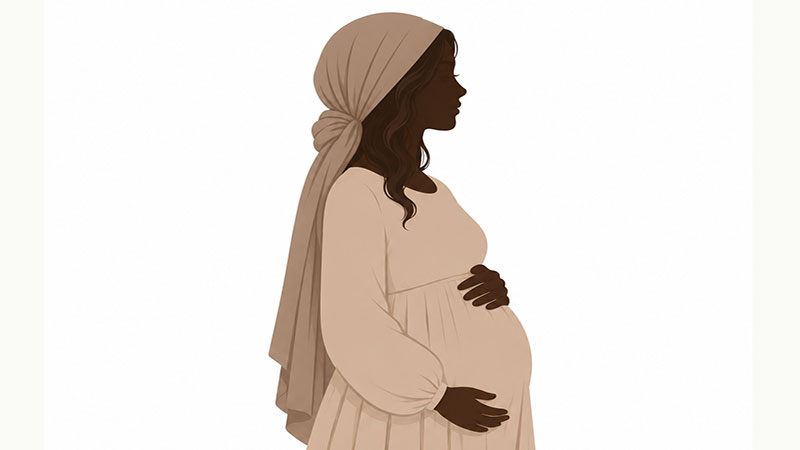
Our Gemara on amud aleph discusses Torah and rabbinic rulings regarding the circumstances under which a midwife would be rendered impure should she come in contact with a dead fetus while it is still within the mother. Technically speaking, according to Torah law, so long as the fetus is within the mother, it does not impart the impurity of a corpse. However, since it is sometimes difficult to ascertain the moment of birth, there is a rabbinic ruling that the midwife will contract this impurity, even if she touches the dead fetus while it is within the womb.
The Gemara questions this logic: “If so, the Sages should also decree that the woman herself, who is carrying the fetus, is impure, since she also might not notice that the fetus’s head emerged.” The Gemara explains that a woman accurately senses with regard to her own body whether the head of the fetus had emerged. But then, asks the Gemara, wouldn’t she have told this to the midwife? Why the need for a decree? The Gemara answers: Since the mother is distracted by the pain of childbirth, she does not have the presence of mind to warn the midwife.
The throes of childbirth represent a different mode of awareness and coping than usual. We do not expect a woman in that state to be a reliable informant for others; she is deeply engaged in her own internal process. The experience of childbirth is powerful and personal, and for a long time has been under assault by the medical community with a particular agenda. From a young age, people are exposed in the media to the supposedly agonizing travails of labor. The power of suggestion lets every woman know that childbirth is a medically complex procedure that can only be performed by the great doctors of the medical establishment. While of course there is more than a grain of truth to that, because labor complications can be life-threatening, at the same time many of the medical procedures are self-fulfilling prophecies.
For example, there is a debate about whether fetal monitoring is a good thing or not. On the one hand, in the rare instance where the fetus is in distress, monitoring the heartbeat can make the difference between saving its life or not. On the other hand, there are many false positives with the readings, which indicate problems with the heartbeat, but might just be due to the ordinary vicissitudes of labor, and the inability of the equipment to obtain accurate readings under the circumstances. This leads to increased medicalization and additional procedures, such as C-sections and other interventions.
Likewise, while labor can be painful, and epidurals no doubt relieve that pain, they may also subdue and slow down the labor process to the point where unfortunately a C-section and other interventions are required. There is a study regarding subjective experiences of labor pain relative to personal narratives and expectations and a sense of empowerment by the woman prior and during the labor. The study indicates that pain is a relative experience. While pain is real, it might be magnified when there are feelings of panic and mitigated when there is a sense of autonomy, acceptance, and mindfulness. In reaction to this, many women are choosing home birth, which of course brings its own risks.
The point that I wish to make is not necessarily to advise one way or the other, but to signal that there is a bias promoted by a particular agenda. Doctors and hospitals will not get sued for “playing it safe” and using fetal monitors and/or jumping to relieve pain through epidurals, and/or moving towards a C-section. However, they will get sued if, in a much less likely scenario, something does go wrong during labor, and the mother or child are mortally wounded. The financial incentive is clearly in the direction of medical intervention, indeed over-reactive intervention, because there is rarely any penalty for that.
That is on the medical and statistical side of things. However, on the individual consumer end, there is less education and more propaganda promoting medical interventions than a belief that overall, it is a natural experience which is not necessarily traumatic and is no worse or better than other developmental difficulties, and part of human experience. Learning how to walk and teething must be very difficult and painful experiences for the baby, and yet they are key to development, and possibly even empowering as the young child learns how to cope or how to do something new. We don’t tranquilize or medicalize these things. Similarly, nobody is going to say that labor isn’t painful or difficult. However, if, in context, it is seen as a normal and healthy process, it might not require the degree of medical intervention and interference that becomes a solution to its own manufactured problems.
Recently, a colleague and I were having a debate about the efficacy of a particular treatment modality. We both used Google and remarkably got different results. Google fed me results that were biased toward my opinion, and my colleague was given different results, citing different literature, that was biased toward his opinion. This is not a unique circumstance; others report this as well. Therefore, if you are going to study a phenomenon and be an educated consumer, find ways to get past the algorithm that’s feeding you data within your own echo chamber so you can make a truly informed and balanced decision.
Doubles or Nothing: The Twofold Nature of Shabbos
Daf 73
Our Gemara on amud aleph discusses a halachically sophisticated approach toward materials. There is an idea which comes up various times in halacha regarding something that is bound toward separation, with nothing holding it back. In such a scenario, it may already be seen in certain circumstances as separated. In our Gemara’s case, there is a discussion about immersing a utensil with a long handle that is meant to be cut off. There is an argument that since this part is going to be cut off, it is already seen as removed and not a barrier. The particulars are debated by Rishonim and have many implications in practical halacha, such as if hair or fingernails that are to be removed present a barrier to immersion or not.
Regardless, the Gemara asserts that with certain materials, there is a unanimous opinion that they are considered separated immediately. For example, food which is meant to be cut up and divided is already considered separate, even when in contact with its parts. There is also a practical halachic manifestation of this regarding the requirement that, on Shabbos, a blessing is to be recited over two whole loaves. What if one loaf has a portion that is completely charred? Right now, it is still attached, and so technically the loaf is whole. However, since that part is to be detached, since it is burnt and unconsumable, perhaps the loaf is not considered whole. This is debated halachically (see Mishna Berurah 274:2 and Shaarei Teshuva, ibid. 274:1). In general, many seemingly irrelevant and technical aspects of halachic discussion in the Gemara which seem to be anachronistic often end up being used as a precedent for much more practical and everyday situations.
While on this topic, let us take a closer look at this requirement for a double loaf (lechem mishneh). The source is a Gemara (Shabbos 117a): “On Shabbos, a person is obligated to break bread in his meal over two loaves of bread, as it is written: ‘And it happened on the sixth day, they collected double the bread, two omer for each one’ (Exodus 16:22).” It would seem that the requirement of two loaves is to memorialize and relive the experience of the double portion of manna in the wilderness. Going deeper, the experience of the double portion in the wilderness has its own implications for the state of mind and experience of Shabbos. The preparations must be done the day before; we then experience the benefit on Shabbos. This is symbolic of having completed all work prior to Shabbos, and now, after adequately preparing, being able to enter into the meditative and tranquil state of Shabbos.
Yet there is a question here. The manna was collected on Friday. If so, there ought to be an obligation specifically on Friday to prepare the two loaves. We don’t find that mentioned anywhere. The simple answer is that on a practical level, the hustle and bustle of everyday life does not allow for that focus. So, while technically the double loaves commemorate the fact that they came on Friday, we do not enact it specifically on Friday, but rather reflect on it over Shabbos by making the blessing over the double loaves.
It is interesting that the section of the Gemara immediately prior to the description of the double loaves talks about the importance of preparing for Shabbos on Friday. It states, “A person should always rise early on Friday in order to prepare all of the expenditures for Shabbos, as it is written with regard to the collection of the manna: ‘And it shall be on the sixth day, and they will prepare that which they have brought’ (Exodus 16:5), indicating that the children of Israel would begin preparing the food for Shabbos immediately upon collecting the manna in the morning.” If not an actual requirement to prepare the double loaves on Friday, it does show a connection between the two ideas of preparing for Shabbos in advance and the double loaves on Shabbos.
Midrash Tehillim (92) notices that there are a number of doubles that occur on Shabbos. There are the double loaves, but there are also the two lambs brought as a sacrifice, the dual words “Zachor” and “Shamor” used in the first and second presentations of the Ten Commandments, implying equal importance of preserving the Shabbos and actively commemorating it (Shavuos 20b), and a few other doubles cited in that midrash. The Maharal (Gur Aryeh, Devarim 5:12) notes that this duality represents something about the essence of Shabbos. It is an integration of the material and the physical, an experience of the World to Come being brought down into the present world. When we present these double loaves at our table, we are also experiencing the integration of the Divine, non-material, non-physical world being brought into our physical world. The essence of Shabbos represented by the cessation of human labor and activity is to cultivate and channel a supernatural state that is about the World to Come. It is a world where we do not have to engage in the physical, and which is purely experienced by the intellect and soul.
However, in this world, there is always a duality. There always has to be the labor and preparation beforehand in order to achieve that state. While the seventh day may be the most important and perhaps the pinnacle, we must have the six days first.