October 2, 2026
 Categories: Headline / Features / In Memoriam
Painting Their Faces, Remembering Their Lives


Three Years After October 7, a Beit Shemesh Artist
Honors the City’s Fallen Through Portraits
From her home in Beit Shemesh, the 150,000-strong central Israeli city known for its large charedi and Anglo communities, illustrator and portrait artist Dena Ackerman sometimes feels disconnected from it all. A mother to five children, Ackerman spends her days taking care of them and working from home. Though she wishes this could have been different, she often feels that in the three years since October 7, she hasn’t been so connected to the tragedies that have touched the Beit Shemesh community.
In the last three years, Beit Shemesh has lost 31 residents to terrorism: 17 soldiers, 4 people at the Nova festival, and 10 others to missile fire. “I just wanted to do something to be part of it,” Ackerman said.

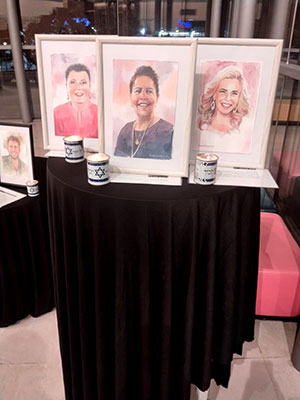
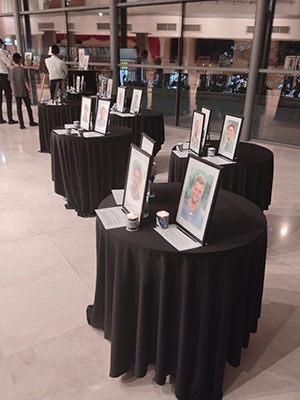
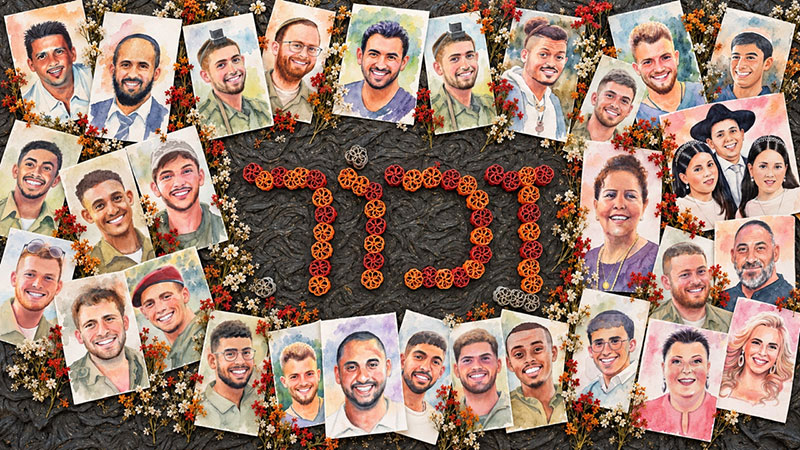
Then, as the third anniversary of the October 7 massacre approached, an opportunity presented itself. Beit Shemesh was holding its official municipal memorial gathering, and Ackerman saw a call for relevant artwork that could be displayed in an exhibit. As it turns out, she had already been working on a similar project. She was creating portraits of the soldiers who serve in her son’s platoon in the IDF’s newly formed Haredi Hashmonaim Brigade, as a fundraiser to get them better gear.
Already in a portrait-painting mode, painting the Beit Shemesh residents who have been killed in the last three years felt like a meaningful project to her. Ackerman responded to the submission call. “I honestly thought it would be a smaller project,” she said. “I didn’t have any idea how many people it would be.”
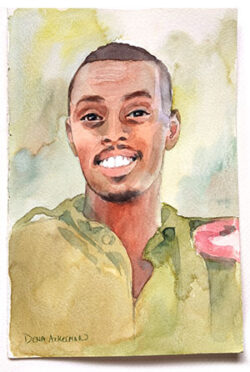
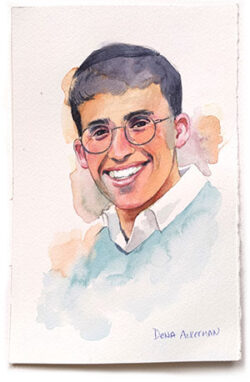
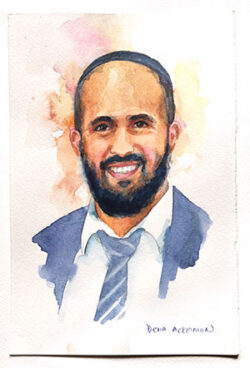
Beit Shemesh’s fallen are as diverse as the city itself. There are reservists, who said goodbye to wives and children to head into danger over and over again. And there are soldiers who were barely out of high school themselves, yet who knew from a young age that they would be combat soldiers. They were born in Israel and the United States and Ethiopia, and they cover the spectrum of religious observance.

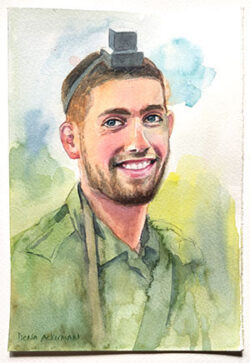
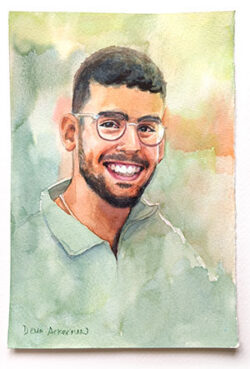
“We know each person is incredible. All of us are unique and special,” said Ackerman. “But when you read about each person and what their family had to say about them and things that they had accomplished in their lives… Some of them were very young, but it’s really incredible. It’s very inspiring.”
Beit Shemesh’s memorial event, held on October 5, the State of Israel’s official memorial day for October 7, aimed to celebrate the diversity and individuality of its residents, the fallen and the communities of which they were a part. “Beit Shemesh is a diverse city, home to people and communities from various backgrounds,” Avivit Ganon, an event manager for the Beit Shemesh Municipality, told The Jewish Press in a Hebrew statement. “During this difficult time, that diversity has often become a source of strength.”
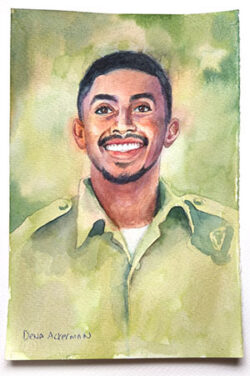
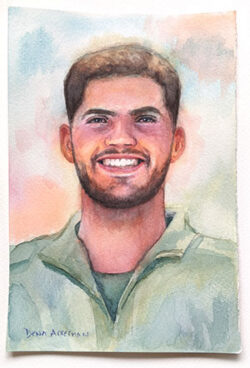

Ackerman began by researching the individuals she would paint, reading about their lives and finding as many pictures as possible. “Some of them are really nice photos, and some of them are kind of just, you could tell they grabbed a picture and cropped off the other people, or it’s a little blurry, or it’s not a good angle, or whatever,” she said. “So I really wanted to present everybody in the best light.”

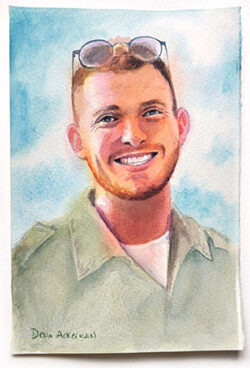
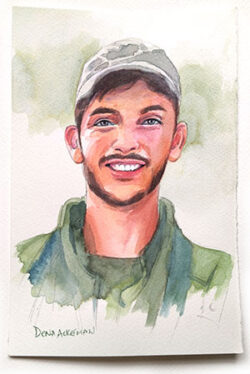
Her goal, she said, was to “make each person shine.”
There are the soldiers, including Master Sgt. (res.) Binyamin Destaw Negose, a soldier who fell in Lebanon whose middle name means “joy”in the Ethiopian language Amharic. Those who knew him called that his defining characteristic. Israel Amar, a reservist and father of three, would sit with the children at Shabbat meals, entertaining them with stories when the adults became engrossed in their own conversations. Sgt. Eliyahu Moshe Zimbalist, a young soldier who fell in Gaza nicknamed “Eli Mo,” is remembered by his woodwork. Almost every home in his neighborhood features something he crafted. His guiding principle was simple: “Don’t wait to be asked. Just help.”

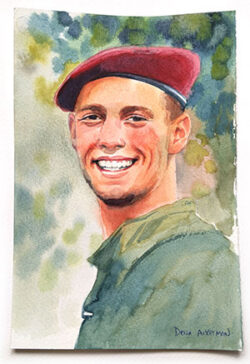
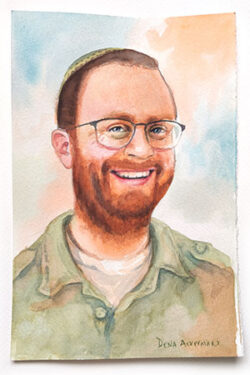
“Enjoy life and keep living,” Sgt. First Class (res.) Shimon Yehoshua Asulin, who was killed in February 2024, wrote to his family before he fell. “I’m happy up here and will enjoy seeing you happy, and I’ll drop by now and then to celebrate with you.” He asked his family to buy his friends a good karaoke machine with his money. Sgt. Binyamin Airley’s father remembered him as humble, saying he would have hated all of the honor and attention he received after he fell in battle a month into the war.

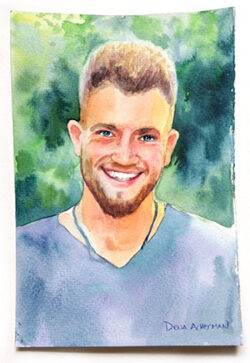
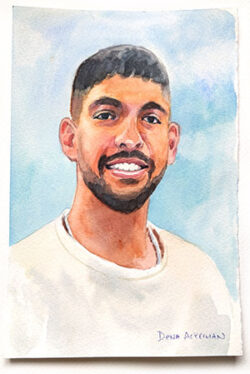
There are the lives lost at the Nova festival. After he was murdered there, a video of Yehuda Becher singing in his car a few days before went viral. The song was the prayer “Elokai Neshama”: “The soul which you bestowed in me is pure – you created it, you formed it, you breathed it into me and you preserve it within me. You will eventually take it from me.”
In a missile strike on a bomb shelter in Beit Shemesh, nine more of its residents were killed, including a mother and daughter, a mother and son, and three teenage siblings.


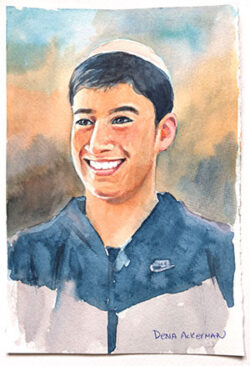
These stories impacted Ackerman deeply. She thinks of a song she discovered, created by Israeli singer-songwriter Adir Getz, whose lyrics are the final text messages between Master Sgt. Daniel Kastiel, killed battling terrorists on Zikim Beach on October 11, and his girlfriend, Maya. “Our nation is the most beautiful in the world,” he wrote to her. “So many good people, the salt of the earth, are dying in battle, it’s unbelievable.”

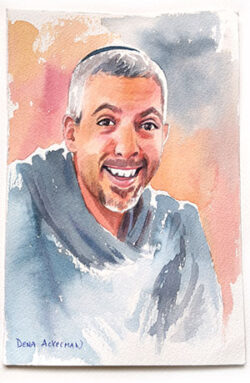
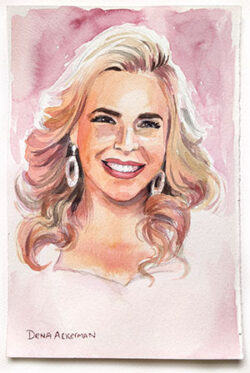
“It’s funny, because when I’m painting them and looking at their pictures and seeing their smile, they feel very alive,” Ackerman continued. “And then just to remember that all these people have been taken away, it’s really really very sad.”
Each painting is a small watercolor portrait: a head and shoulders, a smiling face, and a gentle background. The uniformity of the style is meant to remove any distraction created by a low-quality or oddly-angled image, anything that might take the viewer away from the person’s face. “You could see each person just looks beautiful and special, alive. It’s crazy, and to realize the magnitude of loss,” Ackerman said. That magnitude, she said, has made her “appreciate the people we do have in our lives.”

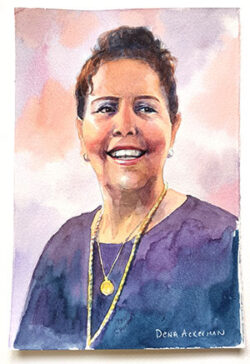
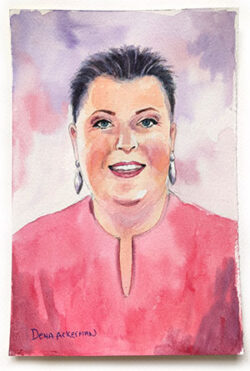
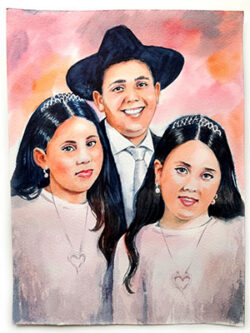
At the memorial event – which also featured a short film, speeches by residents touched by loss, and a youth choir – Ackerman was able to meet a few of the parents of the fallen she painted. She said it was nice to know they appreciated the project.
That human connection is the whole point. “Even the backgrounds being all the same, I think, allows you to focus on just the face, the smile, the neshama of each person,” said Ackerman. “That's how I feel.”