 September 4, 2026
 Categories: Reflecting with Rabbi Reichman
Parshas Va’eira: Which One Will You Feed?
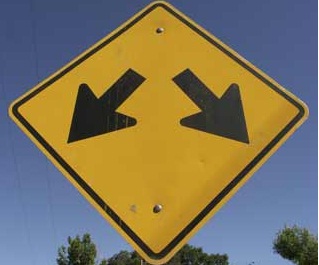


An old man sat with his grandson by the campfire, gazing into the dancing flames. With a sparkle in his eye, the old man looked at the young boy and began telling him a story. "Legend has it that there is a fight going on inside each of us between two wolves. One wolf is evil, filled with anger, envy, sorrow, regret, greed, arrogance, self-pity, guilt, resentment, inferiority, lies, false pride, superiority, and ego. The other wolf is good - he is joy, peace, love, hope, serenity, humility, kindness, benevolence, empathy, generosity, truth, compassion, and faith. These wolves are constantly at war, a war that rages on within each of us.” The grandson thought about this quietly for a minute and then asked his grandfather: “Which wolf wins?” The old man looked at his grandson and replied, “The one you feed.”
The Mateh: Good or Evil?
There is a principle in Jewish thought that many of the most fundamental aspects of Torah are expressed in the most deceptively simple manner. Our job is to delve into these seemingly mundane topics and reveal their inner depth and meaning. One such example is Moshe's mateh-his staff. It plays a pivotal role within the story of Yetzias Mitzrayim (Exodus from Egypt), and yet how often do we ponder its paramount significance?
The mateh first appears at the sneh (burning bush), where it turns into a snake (Shemos 4:3). When Moshe confronts Pharaoh's court, the mateh once again turns into a snake (Shemos 7:12). In Jewish thought, the snake represents evil and the yetzer hara (evil inclination), so it would appear as if the mateh represents evil.
However, the mateh is also used to perform all the makkos in Mitzrayim (Shemos 4:17), as well as Krias Yam Suf (the splitting of the Red Sea)- the pinnacle of the miraculous, transcendent experience of Yetzias Mitzrayim. Additionally, the midrash explains that Hashem's name was crystalized into the mateh itself. It therefore appears that the mateh is a very spiritual object, the exact opposite of the evil it seems to represent. What, then, is the true nature of the mateh?
Everything is Potential
In order to understand the meaning of the mateh, we must first develop a fundamental principle. The Maharal explains that nothing in the physical world is objectively good or evil. Rather everything has the potential to be used for either good or evil. The choice is solely up to us. This can be illustrated by a number of examples:
- Electricity is neither good nor bad. An outlet can be used to charge your appliances, but it can also give you an electric shock.
- The same applies to money: it can be used to enable Torah learning, but it can also be used to fund destruction and chaos.
- A charismatic personality can be used to inspire others to grow or to seduce them down the wrong path.
- A 220-watt outlet can either charge your phone or give you a small electric shock.
- But 20,000 watts can either light up your neighborhood or electrocute you.