 October 23, 2026
 Q & A: Additional Synagogues Overtaxing the Community
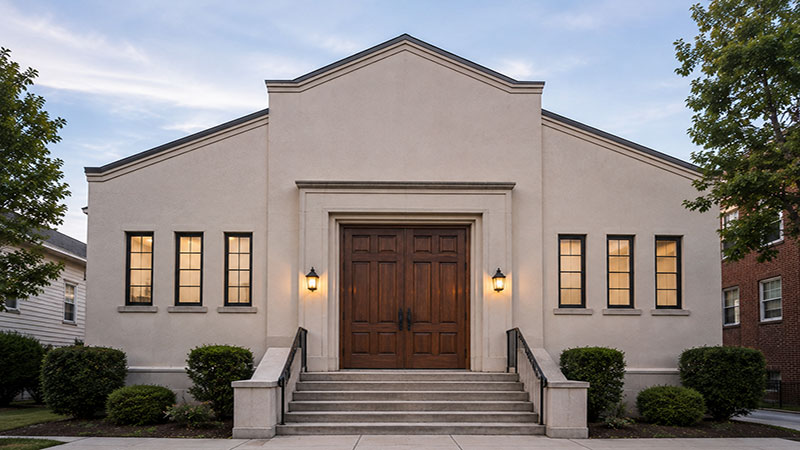


Question: As we mourn the destruction of the Holy Temple in Jerusalem, we remind ourselves of the divisions among our people that caused the destruction. I therefore question: Why are people allowed to establish a new synagogue when there is already one in operation in a neighborhood, and available funds are already overtaxed?
Joel Grosz
Via Email
Answer: The Mishna (Megillah 23b) teaches us, among other details, that we need ten men to form a minyan. The Gemara asks: From where do we derive these rules? R. Hiyya bar Abba said in the name of R. Yohanan: Because we have a verse stating (Leviticus 22:32), “But I will be hallowed among the Children of Israel,” and every act of sanctification requires not less than ten people. The Gemara concludes with an exegesis of two other verses. We see that ten constitute a complete unit and may form their own minyan.
When questions of the kind you raise came before Rabbi Moshe Feinstein (Igrot Moshe, Orach Chayyim Chelek 4 Siman 33), he specifically allowed, in certain circumstances, leaving one congregation and joining another, and obviously even forming another congregation if this would enhance the conduct of prayer.
The Talmud (Baba Batra 21b) states: “R. Joseph said: R. Huna agrees that a teacher cannot prevent [another teacher from setting up a school in the same alley] for the reason mentioned, ‘that the jealousy of scribes increases wisdom’ [as they strive to outdo each other in spreading the knowledge of the Torah].” This situation also existed in times of old, in the era of the Beit HaMikdash. The Talmud (Ketubot 105a) tells us that there were 394 synagogues and an equal number of houses of study as well as schools for children in Jerusalem alone. The Maharsha, quoting Rashi on Isaiah, states that the prophet refers to more than 481 synagogues.
However, it would seem that it is preferable to complain about too few synagogues than too many
The Talmud (Sanhedrin 99a) notes that R. Hillel referred to the era of King Hezekiah as the Messianic period. How can we explain that statement? In King Hezekiah’s time, everyone studied the Torah – men, women, boys, and girls – and synagogues and schools dotted every street in the land.
Commenting on the verse in Isaiah (10:27), “And it shall come to pass on that day that his burden shall be taken off from your shoulder, and his yoke from off your neck, and the yoke shall be destroyed because of the oil,” the Talmud (op. cit. 94b) cites the words of R. Yitzhak Naph’cha (R. Isaac, the smith): “[It is now understood that] the yoke of Sennacherib was destroyed on account of the oil of Hezekiah, which burned in the synagogues and schools. What did [Hezekiah] do? He planted a sword by the door of the schoolhouse and proclaimed, ‘He who will not study the Torah will be pierced with the sword.’
“A search was made from Dan to Beer Sheba, and no ignoramus was found; from Gabbath unto Antipris, and no boy or girl, man or woman was found who was not thoroughly versed in the laws of cleanliness and uncleanliness (tum’ah v’tahara).” (This is a particularly difficult subject.)
The Maharsha (ibid.) also points out that G-d rewarded them with the spoils of Sennacherib to sustain them, because they didn’t have time to earn a living since they were all busy studying the Torah.
May it come to pass that Moshiach will arrive in our time, and as a sign we shall witness all of Israel become scholars, including our wives and daughters, as in the days of King Hezekiah. Surely, we will then all rejoice as we see the rebuilding of the Beit HaMikdash.