October 2, 2026
Categories: Ask the Rabbi / Torah
Q & A: Etrog Jelly


Question: May one eat etrog jelly on Simchat Torah?
A Reader
Miami, Fl.
Answer: Simply put, it would seem that the answer should be yes, that one may prepare a marmalade delicacy to enjoy on Simchat Torah, especially after one has no further need for the etrog on Hoshanah Rabba following its last use. The problem is that the etrog that is used for the mitzvah is set aside for all seven days, including Hoshanah Rabba, the seventh day of the chag. However, there might be some leniencies, as we shall see further.
The Mechaber (Orach Chayyim 503:1, based on a Baraita, Betza 17a) states: “One is forbidden to bake, cook, or slaughter on Yom Tov for the needs of the following day, even if it be for the Sabbath or Yom Tov [the second day in the Diaspora] and even on the two days of Rosh Hashanah [for we may not bake, cook, and prepare on one day for the following day].”
As regards Rosh Hashana, the Aruch HaShulchan (Orach Chayyim ad loc.) explains that though our Sages (Betza 6a; see Rashi s.v. “Mi amar”) consider the two days as one long day (with one sanctity), this applies only to stringencies, but not to leniencies.
We assume that you refer to Simchat Torah in the Diaspora – that is, the day after Shemini Atzeret. Shemini Atzeret, as its name indicates, is “the eighth day of assembly” which immediately follows the seven days of the Sukkot festival. (In EretzYisrael, Shemini Atzeret and Simchat Torah are celebrated on the same day, and that entails some halachic differences.)
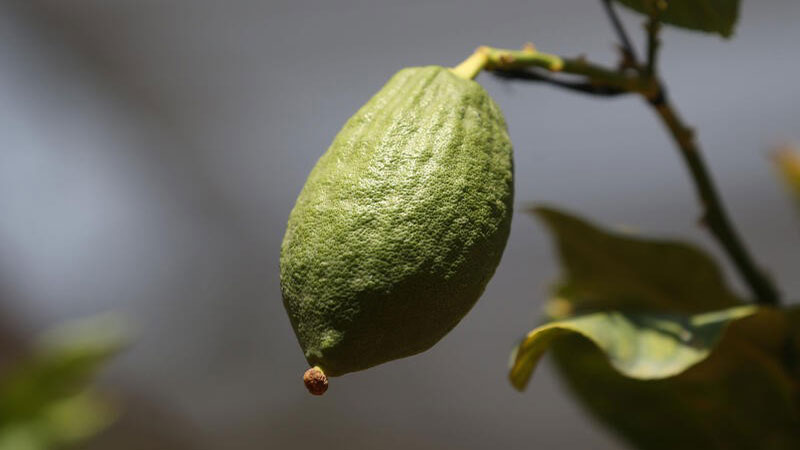
Regarding Sukkot, we read in Parshat Emor (Vayikra 23:40,42), “U’lekachtem lachem bayom harishon pri etz hadar kapot temarim va’anaf etz avot ve’arvei nachal u’semachtem lifnei Hashem Elokeichem shiv’at yamim... Ba’sukkot teshvu shiv’at yamim, kol ha’ezrach b’Yisrael yeshvu ba’sukkot” – You shall take unto yourselves on the first day the fruit of a citron (lit., a beautiful) tree, branches of date palms, myrtle branches (lit., branches of a plaited tree) and brook willows; and you shall rejoice before Hashem your G-d for seven days... You shall dwell in booths for seven days; all who are part of Israel shall dwell in booths. The Talmud (Sukkah 35a, Lulav Hagazul) concludes, through a process of elimination, that “pri etz hadar,” the fruit of a beautiful tree, is indeed our etrog (referred to in English as a citron). R. Avahu explains that hadar refers to the fact that the etrog dar – resides – on the tree from year to year, and Ben Azzai points out that idur (hydor) means water in Greek, and the etrog is a fruit that grows near every water source.
A Mishna further on in that chapter (ibid. 41a) states: “Formerly [in Temple times], the lulav [together with the etrog and the other Species] was taken in the Temple all seven days, and only one day in the provinces [Rashi: including the city of Jerusalem outside the Temple area]. When the Temple was destroyed, R. Yochanan b. Zakkai ordained that in remembrance of the Temple, the lulav [and the other three Species] be taken seven days in the provinces as well…” The practice in the Temple era was based on the literal interpretation of the beginning of the verse, “You shall take unto yourselves on the first day…” But the conclusion of the verse, “And you shall rejoice before Hashem your G-d for seven days,” allows the interpretation that it should be taken for seven days, that is, all the days that we were commanded to rejoice in the Temple on that Festival (as R. Yochanan b. Zakkai later on ordained).
Accordingly, R. Yosef Caro (Shulchan Aruch, Orach Chayyim 665, Etrog asur le’echol ba’shevi’i) states that it is forbidden to eat the etrog on the seventh day since it is muktzeh, i.e., it was set apart for all seven days for mitzvah purposes. Even if it becomes invalid (due to some defect) after it was used for the performance of the mitzvah, it nevertheless remains forbidden for the remainder of those seven days. On Shemini Atzeret (the eighth day), it is permitted; but in the Diaspora, where we observe two days of Yom Tov, it is also forbidden on the eighth day (Shemini Atzeret) and permitted on the ninth day (Simchat Torah) even if the latter falls on a Sunday. However, there are some who prohibit it when Simchat Torah falls on a Sunday.
The Mishna Berura (ad loc.) explains the ruling of the Mechaber regarding an etrog on the seventh day, but notes that if one had, for example, as many as seven etrogim, with a different etrog set apart for each day, each etrog would remain forbidden only for that day, until nightfall.
The Mechaber’s ruling that the etrog remains forbidden even on the eighth day in the Diaspora is derived from the fact that we are dealing with sefeika de’yoma (a doubt regarding the day), and we follow the instruction that the Sages of Eretz Yisrael sent to the Babylonian communities (Betza 4b): “Hizaharu beminhag avoteichem” – Give heed to the customs of your ancestors (although there was already an established calendar).
The Mishna Berura adds that if Simchat Torah occurs on a Sunday, we do not abide by the constraint of hachana (preparation). The Torah teaches us regarding the manna (Shemot 16:5), “Ve’haya bayom hashishi ve’hechinu et asher yavi’u, ve’haya mishneh al asher yilketu yom yom” – And it shall be that on the sixth day [Friday], when they prepare that which they bring in, it will be twice as much as what they gather daily. We apply the concept of preparation to something that is not yet in existence – such as an egg that has not yet been laid – but the etrog already exists. The opposing view maintains that it is prohibited nevertheless, and the Mishna Berura explains that opinion with the argument that the very fact that it was prohibited on the eighth day implies the concept of hachana.
The Mishna Berura also advises us that Eliyahu Rabba, although he subscribes to the stricter opinion, is more lenient in times of need since most authorities permit it.
Partaking of an etrog, whether in the form of a jelly or a liqueur, does require some form of preparation. Preparing liqueur requires soaking the whole fruit, and what is familiarly known as “etrog jelly” is actually a marmalade which consists of both the fruit and its peel. Since the fleshy part of the etrog is scant in relation to the peel, there would be little left if the peel is not used, and therefore the etrog is sliced and soaked before preparing the jelly. This year especially, when Shemini Atzeret is on Shabbos, there would be no time to prepare this jelly so that it could be eaten on Simchat Torah.
Considering the hypothetical case referred to by the Mishna Berura, there is also the problem that most people do not have access to several etrogim. Thus, we might ask whether eating this delicacy on Simchat Torah, even if it was prepared before Sukkot, creates a situation of mar’it ayin (lit., appearance to the eye) – an unseemly appearance. Some actions, although permitted, might be mistaken as prohibited, thus leading people to mistakenly suspect someone of transgressing, or alternatively, to incorrectly infer that a forbidden action is permissible. The Rabbis rule that actions prohibited because of mar’it ayin are forbidden even in private (see Tractate Shabbos 146b).
We might look for a possible solution to the problem of mar’it ayin in the Aruch HaShulchan’s discussion (Yoreh De’ah 97:1) of the Rabbinic prohibition (Pesachim 36a) to knead dough with milk. The prohibition was instituted because of the worry that dough kneaded with milk might mistakenly be eaten with meat (which is a much more severe violation than mar’it ayin). And yet Rambam permits it if the shape of the dough is significantly altered, to indicate that the baked item may not be eaten with meat. And the Aruch HaShulchan points out that items baked with milk or butter are easily discernible as such (speaking of local bakeries in Eastern Europe at the time). Today, one can leave the original printed wrapping of the baked item on the table, thus making it possible to ascertain the ingredients.
Similarly, we can look for ways to make it clear that the etrog jelly eaten on Simchat Torah was made before the holiday of Sukkot, or that it was made from etrogim that were never used to fulfill the mitzvah of the Four Species. One could leave the etrog that was used on Sukkot in full sight, on display as it were, together with the other Species.
Of course, this problem would not arise in an area where there is a glut of etrogim. Indeed, I am reminded of a conversation I had with my late dear friend, Rav Gershon Tannenbaum, director of Igud HaRabbonim, who told me that in Yemen, they eat etrogim all year round. In such places, one assumes that the marmalade was made from etrogim that were reserved for eating.
In our society, however, great care must be taken not to arouse suspicion in any manner, and to follow the advice Moshe Rabbenu gave to the tribes of Reuven and Gad (Bamidbar 32:22), “Vih’yitem nekiyim me’Hashem u’mi’Yisrael” – You shall be guiltless before G-d and before Israel [i.e., your fellow Jews].