September 11, 2026
 Categories: Headline / Perspectives / Op-Eds
Shushhhhhhh!
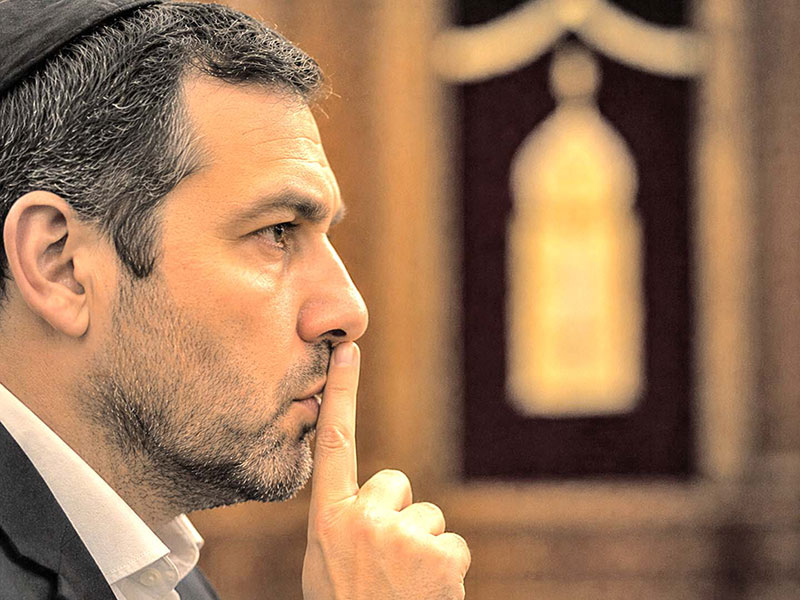


One of the hidden skeletons of irreverence emblematic of Modern Orthodox shuls are those people who, rather than observe the appropriate synagogue posture to respectfully pray and follow the reading of the Torah, elect instead to chatter, talk, gab, jabber, gossip and prattle. By doing so, they subvert and undermine the sacrosanct concept of prayer. The systemic nature of talking has become so prevalent that a shul’s most pressing concerns are no longer political divisions, membership dues, or ritual disputes, but rather the tepid condemnation of conversation during prayer – and the unsettling question of whether one even has the right to ask a fellow congregant for silence.
The dynamic of talking in shul during prayer or the reading of the Torah is, when all is said and done, a conscious willingness by many congregants to pervert the fundamentals of spiritual decorum. Dialogue about the latest news, fiduciary opportunities, political climate, and, of course, the number one source of conversation, gossip – itself a no-no – apparently takes precedence over “Know before Whom you stand” (Berachot 28b). There are those who attend services on Shabbos, week after week, to ascertain the medley of answers to the age-old query: “What’s new?” Spiritual apathy, masquerading as social civility, has compromised the sacredness of prayer.
For me, the dissemination of conversation during services had not, in the past, been so much a violation of halachic decorum, but an annoying impediment to clearly hear the ba’al tefillah and ba’al koreh enunciate each and every word. Gravely serious, talking during davening in and of itself is punishable by tzara’at and is as sinful as avodah zarah (Drush Chasam Sofer, volume 2). The “frum” seemingly are unconcerned with or indifferent to the catastrophic consequences brought about by idle conversation. I have also since learned that one who talks during chazaras haShatz is in direct violation of halacha (Shulchan Aruch, Orach Chaim 124:7).
What resonated with me most, however, were the dire repercussions of ignoring the Talmudic prohibition against talking in shul. In a riveting speech by Rav Yitzchok Sorotzkin on the topic of kedushas beis ha’knesses, the rav told of a 17-year-old girl who was diagnosed with inoperable liver cancer. Inconsolably unnerved by this news, the father of the girl sought spiritual help and was told that if his prayers were to be meaningful, all talking must cease during services, not merely his but, as importantly, everyone else’s. This girl who happily triumphed over her illness is but one of the many accounts not only of the indomitable power of prayer, but of the nature of how it is to be performed; there is a reason that tefillah – the supplication of thanks, forgiveness, and the petition of blessings – is frequently referred to as silent devotion.
Even in the more stringently conducted services where ritual etiquette is esteemed, there is often the idle chatter between the aliyahs, during the repetition of the Amidah, when the ba’al tefillah walks around the synagogue’s perimeters affording congregants the chance to pay homage to the Torah, or sadly, during the rabbi’s sermon, which is also inexcusable. Where I pray, or more accurately, vainly attempt to do so, conversation compromises the concept of kavanah and takes precedence over prayer so much so that on the way to services one day, my friend quipped, “Do you want to go daven or go to shul?” While I have shushed my fellow congregants for years now, angry responses have resulted in my being excoriated, which has, in effect, defeated the whole purpose of my efforts: that the decorum during the silent recitation of the Amidah – ideally blissfully quiet – be reflective of the character of the services.
The best approach to a quieter synagogue is simply support from others who are uncomfortable with noisy prayer and also seek change. There are others at my synagogue who share my want of uncompromising fidelity to halacha and, by extension, spiritual serenity. When I shush someone, however, there is little demonstrable support from other congregants and even friends who painfully say nothing to echo my plea for quiet, thereby sending the wrong message that disruption of the service is OK. Etched in my psyche forever is the time when I once asked some congregants to quiet down so that I was able to discern the Torah reading, and one person shouted, “If you want it so quiet, then go to church.”
If more people would speak up (pun unintended) and immediately support the shusher, so that in essence, you would then have a unity of shushers, I profoundly believe that over time the ethos of the Orthodox constituency would be heard loud and clear: zero tolerance for those who attend services for the wrong reasons. If the current dynamic of behavioral debasement of tefillah in synagogues remains status quo and the behaviorally challenged triumph, then we need to place a cautionary warning on the synagogue’s bulletin board, à la Dante: “Abandon all hope, ye who enter here.”