 October 23, 2026
 Categories: Arts
Special Chazzanut Series 2026: The Maestro
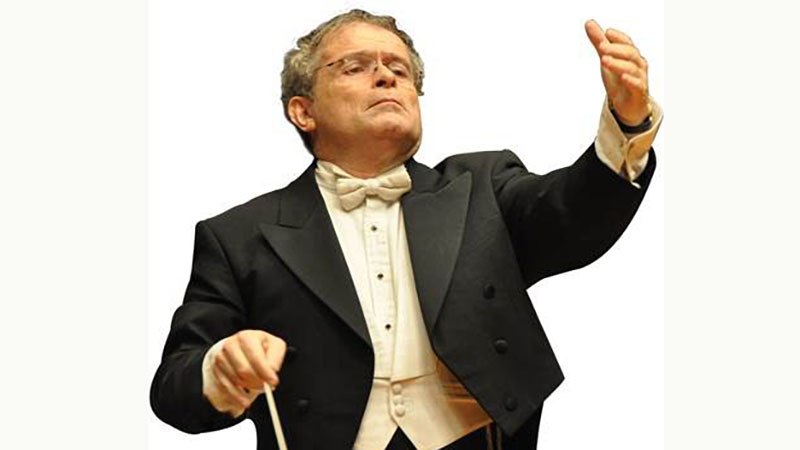


Many of the chazzanim I’ve interviewed for this special chazzanut series have mentioned Elli Jaffe as their great mentor. And there is a good reason for this. Jaffe is a world-renowned figure in the field of Jewish liturgical music, best known as the legendary maestro of the choir at the Great Synagogue in Jerusalem, as well as a prolific conductor, composer, and teacher.
I knew I needed to speak with him, so I reached out and we scheduled a time to talk. Prior to our conversation, I spoke with my friend, Cantor Shlomo Agatstein, who served as a chazzan in South Africa and as chief cantor at the Great Synagogue of Tel Aviv, and today resides in Lakewood, to gather some background on Jaffe. Agatstein also contributed a question for Jaffe (we’ll get to that shortly).
I began the interview with a question I was curious about: Where is the center of the cantorial world today? New York? Miami? Canada? Israel?
“Ki miTzion teitzei Torah,” Jaffe answered. “Jerusalem. There is a major cantorial school in Jerusalem covering both Sephardic and Ashkenazic chazzanut... In both of the main synagogues in Jerusalem, you find cantors of the highest caliber: Yitzchak Meir Helfgot recently moved from Park East to the Yeshurun Central Synagogue, and Cantor Zvi Weiss together with Cantor Nissim Saal serve at the Great Synagogue. Now Yeshurun has a choir as well.”
Hearing that Yeshurun now boasts a choir took me by surprise; I don’t recall there being one when I used to pray there. Jaffe stressed the vital role a choir plays in liturgical music. He shared that the manager of the Paris Opera once told him: If you want a truly exceptional opera, it isn’t just about the soloists – it’s about the choir and the orchestra. Jaffe noted that the legendary Cantor Moshe Stern refused to perform without a choir, and Cantor Moshe Koussevitzky always held the same standard and had a choir. As the verse says, “B’makhelot Barchu Hashem” – In assemblies, bless G-d.
He highlighted the choral liturgical style, pointing to the Spanish and Portuguese tradition as a prime example of the entire service being deeply driven by harmonic, ensemble singing.
Shlomo ben Azaria Min HaAdumim, also known as Salamone Rossi, was a pioneer in bringing choral singing into the synagogue. His innovative approach sparked a debate among Italy’s rabbis over whether a choir belonged in the sanctuary – did it enhance the prayers or disturb them? Some argued that the choir interrupted the kavanah of the tefillah.
For Jaffe, leading a synagogue choir requires far more than technical skill. A maestro must not only be familiar with the nusach and the text of the tefillah, but deeply understand the prayers. This philosophy traces back to Jaffe’s time studying in a masterclass under the iconic conductor Leonard Bernstein. From Bernstein, Jaffe learned that being familiar with a piece – a Mozart composition, for instance – is only ten percent of the work. Understanding it deeply is the remaining ninety percent. Only when a maestro understands the piece can he bring his own style to it without altering its essence. That is called interpretation.
Bernstein once said that conducting Gustav Mahler’s work requires the maestro to be like a chazzan on Yom Kippur. Though Mahler converted to Catholicism, he never abandoned his Jewish musical heritage – you can hear it in all his music.
“The real music of tefillah possesses an incomprehensible, almost supernatural depth,” Jaffe noted. He went on to explain how Ta’amei HaMikra (the Biblical cantellation tropes) serve as a profound means of interpreting the text itself.
To illustrate, he brought a striking example from Megillat Esther during the dramatic turning point when King Ahasuerus suffers a sleepless night – “Ba’laila hahu nadeda sh’nat hamelech.” Haman arrives, and the king asks him how to honor a man the king wishes to reward. When the king commands him: “Maher!” (“Hurry!”) to carry out the honor for Mordechai, the word “Maher” is set to the trope Tlisha Gedolah. The Tlisha trope consists of six distinct notes. Jaffe pointed out that these six notes correspond precisely to the six specific instructions that follow in the text, which Haman is ordered to do for Mordechai.
Jaffe noted that commentators like the Sforno paid meticulous attention to Ta’amei HaMikra, recognizing that the tropes fulfill three simultaneous roles: musical, grammatical, and interpretative. “In essence,” Jaffe emphasized, “Nusach hatefillah is the Ta’amei HaMikra of the siddur.”
He pointed to another example: “l’taher et’chem mikol chatoteichem” – to cleanse you from all your sins. Here, two distinct movements within the musical phrase mirror the dual nature of atonement – sins between man and G-d and sins between man and his fellow man.
“You must understand music, not just feel it,” Jaffe emphasized, pointing to a verse in Sefer Devarim: “U’mal Hashem Elokecha et levavcha” – And the L-rd your G-d will circumcise your heart”. He noted that the word mal forms an acronym for mo’ach v’lev (brain and heart). “Actually,” he added, “when you [add] the sounds [kolot] in the middle, the word becomes makel (stick, as in the maestro’s baton), which stands for mo’ach, kol, v’lev – brain, voice, and heart.”
We then moved on to discuss the fundamental differences between Eastern and Western European liturgical traditions. Eastern Europe gave rise to the weeping Jewish tenor – the voice of the Jew crying out over the galut, heard so movingly in prayers like Hineni or B’Rosh Hashana Yikatevun. Western Europe, by contrast, adopted a far more classical, structured tone. Jaffe mentioned, for instance, that Franz Schubert himself composed the melody for “Tov L’hodot La’Hashem” (Psalm 92).
What characterized the Western European style was the baritone range and a marked absence of dramatic weeping. Figures like Salomon Sulzer instituted strict regulations for synagogue services; congregational participation and musical improvisation were strictly forbidden.
Eastern Europe, on the other hand, was heavily shaped by Eastern and Middle Eastern influences. Cantors traveling through or originating from Eastern regions brought with them vocal trills (silsulim) and Arabic musical motifs.
This cross-cultural interplay went both ways. Jaffe recalled a well-known response by Rabbi Ovadia Yosef, zt”l, when asked whether non-Jewish melodies could be adapted for synagogue prayer. Maran replied that every melody can be redeemed from its impurity, sharing the famous story of a rabbi who walked past a Coptic church in Egypt, heard a captivating melody, and brought it directly into the synagogue service.
Whether in the East or the West, the local environment always left its mark – and cantors throughout history frequently learned from and worked alongside non-Jewish composers.
* * * * *
To date, Jaffe has written over 150 cantorial compositions, alongside several books on chazzanut.
I asked him what he thinks about the growing trend of mixing contemporary hasidic tunes into the tefillot.
“We have a concept that the nusach is from Sinai, because of its supreme importance. We have to be very precise to know what true nusach is,” he said. “What scales are the tunes based on? We have to guard the nusach just as strictly as we guard the text. There’s room to occasionally bring in a different melody here or there, but first and foremost, stick to the nusach. Always stick to the nusach.”
The authority who truly shaped the prayer nusach was the Maharil (Rabbi Yaakov ben Moshe Levi Moelin), some 500 to 600 years ago. Ba’alei HaTosafot explain that it is precisely through the melody that the congregation understands the tefillah. Jaffe offered as an example the iconic opening prayer of Yom Kippur: Kol Nidrei. What made Kol Nidrei what it is? What made it such a sacred, unforgettable tefillah?
“The melody,” Jaffe stated. “Only because of the melody – not because of the text. After all, people perform Hatarat Nedarim every morning and before Rosh Hashanah. So why is Kol Nidrei so outstanding? It is entirely because of that special melody.”
I asked him about young people and chazzanut:Why doesn’t the younger generation like chazzanut? And how can you connect them to it?
“Actually, there is a lot of revival in chazzanut,” Jaffe said. “In Israel, people come to the synagogue specifically to listen to chazzanut. But you need the right balance. Don’t stretch out the tefillah too much. Don’t bug the congregation. Tefillah shouldn’t be overly long – everything in measure. You can daven a quick nusach, but make it nice. It’s important to be careful with the pronunciation and grammar, and to engage the congregation.”
The service at the Great Synagogue is known for its grandeur, but also for its warmth and popularity. Jaffe shared that sometimes on Friday night, people even start dancing. On Yom Kippur, when they reach Mareh Kohen at the end of Seder Ha’Avodah, they dance as well. “You need to know how to connect with young people,” he said, “but you must be careful not to mix in too many contemporary tunes. As long as you don’t violate the nusach and the halacha – the Shulchan Aruch – it is acceptable to me.”
From time to time, you have to involve the audience – that is, the congregation. You need that balance between majesty and simplicity. Jaffe recalled a time when a baby started crying during Kol Nidrei, and the mother tried to take the child outside. Jaffe signaled to her with his hand: Don’t leave. “That baby is opening the gates of Heaven,” he said. With all the majesty of the Great Synagogue, you still have to remember: It’s a synagogue, not a concert hall.
* * * * *
My friend Cantor Shlomo Agatstein suggested I ask Jaffe how he first got into music. He shared that Jaffe’s father, Rabbi Dr. Moshe Avraham (Maurice) Jaffe, was the founder of Heichal Shlomo in Jerusalem – the iconic building adjacent to the Great Synagogue. While one of his brothers went on to manage Heichal Shlomo, Elli chose the path of music.
“My father established Heichal Shlomo,” Jaffe confirmed, “along with roughly 50 other synagogues across Israel.” As a child, young Elli sang in the Heichal Shlomo choir under Zvi Talmon. Later, after watching Zubin Mehta conduct an orchestra, his mind was set: He wanted to dedicate his life to music.
He began his formal musical journey at age 19 during his army service. He later attended the Jerusalem Academy of Music and Dance, took masterclasses, and eventually conducted prestigious orchestras in London, Prague, and beyond. When he was first approached to take over the Great Synagogue choir, he initially turned the job down. But when asked to build the choir at Heichal Shlomo from the ground up, he agreed, realizing there was a shortage of conductors capable of elevating the choir to the required level. Prominent rabbis also appealed to his father, stressing the importance of having a religious Jew lead the ensemble.
In 1979, Jaffe officially took the reins of the Great Synagogue choir. He then brought Cantor Naftali Herstik from London to Jerusalem, laying the groundwork for what was to come. After their father passed away, Jaffe’s brother took over management of the Great Synagogue, while Elli remained focused entirely on the musical side.
Over the years, Jaffe received major offers to manage and conduct top international ensembles, but turned them down due to the sanctity of Shabbat. For instance, he was offered the position of directing a leading orchestra in Mexico, but declined because it required Sabbath travel. He consulted Rabbi Chaim Kanievsky, zt”l, who told him, “You are missing out on nothing.” Looking back, Jaffe sees just how right Rav Chaim was.
His career in musical education was equally dynamic. He established the original Cantorial School in Jerusalem. It was his father-in-law’s idea to open the school in Jerusalem. Soon after, Chaim Weiner, z”l, a major patron of chazzanut, joined forces with Shlomo Lahat, the legendary mayor of Tel Aviv, and asked that the school be relocated to Tel Aviv. With encouragement from Cantor Moshe Stern who also introduced him to Weiner, Jaffe moved the school to Tel Aviv, and later managed the Cantorial School in Petah Tikva. Today, he directs the Cantorial School in Jerusalem in partnership with the Renanot Institute.
His ultimate vision was to build a synagogue choir that could stand shoulder-to-shoulder with professional classical choirs.
“The Jewish people gave the world two fundamental gifts,” Jaffe says. “One is the Bible, and the second is music as an integral part of sacred service (Avodat HaKodesh).” That is why, when he performs in concert, he often begins with chazzanut before moving to classical pieces. It is vital to him to demonstrate that Judaism gave the world the foundation of serving G-d through music.
He built a choir with a unique sound – one rooted not just in singing the notes, but in a deep understanding of the tefillah itself and the sacred intent (kavanah) behind every phrase. He made it his personal mission to create and distribute a distinct niche of Jewish liturgical music worldwide.
* * * * *
“How do you prepare for the High Holidays?” I asked Jaffe.
“With endless rehearsals,” he answered. “But beyond rehearsals, I try to inject real passion and emotion into the tefillah, so that both the choir and the cantors express it fully. We strive to elevate the prayer to a sublime level.”
On Yom Kippur, Jaffe observes a total silence (Ta’anit Dibbur) from the beginning of Tefillah Zakah all the way through the end of Ne’ilah. “It requires far more focus and kavanah from the choir, but it elevates the quality of the service dramatically.” On Rosh Hashanah as well, he avoids speaking during Musaf due to the shofar blasts, and refrains from talking during other parts of the service unless strictly necessary for the prayer.
He recently wrote fresh choir arrangements to welcome Cantor Nissim Saal, who joined Chief Cantor Zvi Weiss. “Every year we renew, so every year requires new arrangements. As Rosh Chodesh Elul approaches, I work on new settings to ensure the experience remains dynamic, powerful, and deeply emotional.”
And who is his favorite cantor? “I have favorites,” Jaffe smiled, “but I prefer not to mention names so as not to hurt anyone.”
Favorite piece? “There are many. Whichever piece I am conducting at that exact moment – that is my favorite,” he said.
There are many challenges facing chazzanut today, and I asked Jaffe what he thinks is the biggest one. The main problem, he said, is that too many modern cantors focus solely on replicating the masters of the Golden Age. While there is much to learn from them, it creates a situation where fewer cantors are actively creating or composing new works. Though Jaffe himself is a conductor and composer rather than a cantor, he has written dozens of liturgical pieces.
“In chasidic music, you see a lot of new creators,” he said. “I would love to see more creation and originality in chazzanut as well – more personal interpretation from cantors rather than pure imitation. I don’t mean changing a single note of Yossele Rosenblatt, G-d forbid! We must continue singing Yossele, Koussevitzky, and Stern. But I want to see cantors bring their own unique artistic voice to the art form. Some do it, but we need more.”
As our conversation drew to a close, Jaffe offered this heartfelt message to readers: “I want people to truly appreciate our culture – the sacred synagogue music that is so deep, so lofty, and so rich. We have absolutely nothing to feel ashamed of when compared to any other world culture. We possess treasures of our own – lofty, immortal treasures.”