יום שני, י״ז תשרי תשפ״זMonday, September 28, 2026



Follow Us


It all started at an art and education conference at the Yeshiva University Museum. When one of the speakers misidentified a Goya painting at the Frick Collection, both the gentleman sitting next to me and I turned to each other and corrected the error simultaneously.

One of my favorite places when I was growing up in Boston was the used bookstore on Beacon and St. Mary’s streets. Boston Book Annex could play a used bookshop on television; it was dimly lit and cavernous, crawling with cats, and packed with a dizzying array of books, many of which sold three for a dollar. But used bookstores of this sort, however picturesque and inviting, are a relatively modern phenomena. In the Middle Ages, for example, I would never have been able to afford even a single used book unless I had been born into an aristocratic family. (Full disclosure, I was not.)

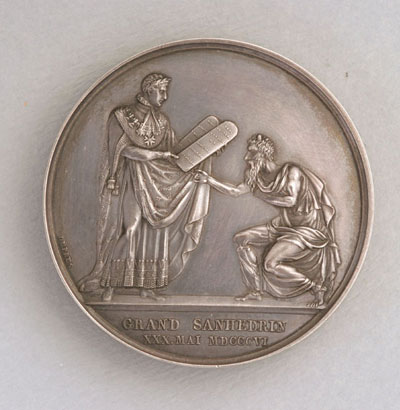
Jewish medals, several with Hebrew inscriptions and provocative imagery, were among the gems at The European Art Fair (TEFAF) in Maastricht, Netherlands, as I wrote in these pages two weeks ago. Another mini-trend at the fair, which will interest Jewish art aficionados, was an abundance of works by Marc Chagall.
It’s virtually impossible to ignore the financial aspects of TEFAF Maastricht, the annual arts and antiques fair in the historic city about two hours south of Amsterdam. More than 250 dealers from nearly 20 countries sell their wares—which span from Greek and Roman antiquities to contemporary sculptures—in the halls of the Maastricht Exhibition and Congress Centre, whose corridors are adorned by nearly 65,000 tulips.
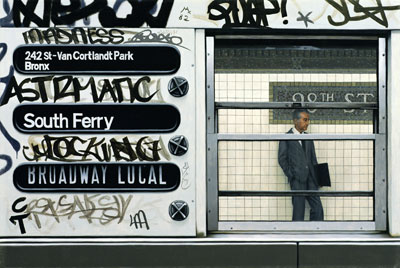
Max Ferguson’s 1993 painting Katz’s may be the second most iconic representation of the kosher-style delicatessen after the 1989 Billy Crystal and Meg Ryan film, When Harry Met Sally. Ferguson’s photorealistic painting depicts the deli from an interesting perspective, which is simultaneously inviting and hostile—in short, the dichotomy of deli culture.
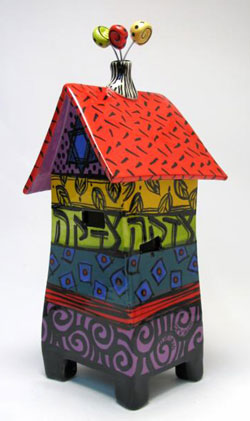
The whole idea of an artful pushka (tzeddakah or charity box) is almost a tease, if not an outright mockery. Isn’t there something pretty backward about investing time and money in an ornate container to hold alms for the poor?

Located about nine miles north of Madrid, the Palacio Real de El Pardo (Pardo Palace) dates back to the early 15th century. Devastated by a March 13, 1604 fire that claimed many works from its priceless art collection, the Pardo Palace and its vast gardens were used as a hunting ground by the Spanish monarchs.

Red By John Logan; directed by Robert Falls; starring Edward Gero and Patrick Andrews Jan. 20 – March 11, 2012 Arena Stage, 1101 6th Street, SW, Washington, D.C. http://www.arenastage.org One morning, Ken, Mark Rothko’s studio assistant, comes into the studio to fulfill his daily duties of stretching and priming his employer’s canvases. When he […]
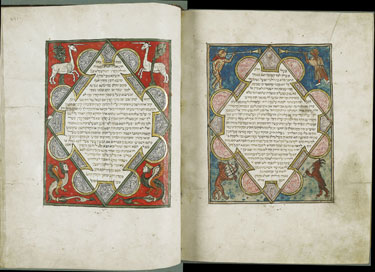
Within Shakespeare’s worldview, an assassination like Macbeth’s of King Duncan upset the so-called Great Chain of Being, or the cosmological organizational chart, in which power structures that were clearly articulated could only be disrupted at a cost.
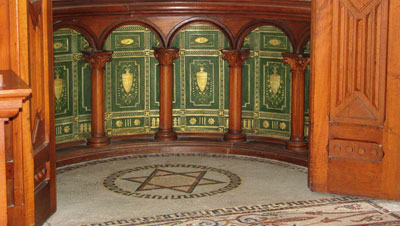
I went to the South African Jewish Museum in Cape Town with high hopes of seeing how South African Jews uniquely approached the fine arts and Jewish ritual objects.
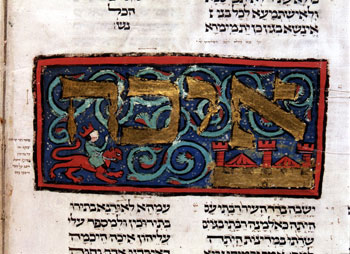
“Despite the fateful part he played in Judah’s history, Nebuchadrezzar [Nebuchadnezzer is sometimes referred to this way] is seen in Jewish tradition in a predominantly favorable light,” wrote Henry W. F. Saggs, the late Assyriologist, toward the end of his Encyclopedia Britannica entry on Nebuchadrezzar II (c. 630—c. 561).
 September 25, 2026