 October 23, 2026
 Categories: Headline / Perspectives
The Conversation at the Heart of a Shul


There is a perspective on Judaism that I have always appreciated deeply, which is that more than a religion, a creed, or a set of rules, Judaism is a relationship. The very things that we yearn to nurture in our human relationships are also things that we yearn to create in our relationship with G-d.
Perhaps one of the most foundational sources for this idea is the entire premise of Shir HaShirim. Shlomo HaMelech writes an entire book which, on the surface, is a conversation between two lovers. In fact, Chazal preserve a debate over the sacred status of Shir HaShirim and its place among the books of Tanach. Rabbi Akiva responded not merely by defending its holiness, but by declaring that Shir HaShirim is the “Holy of Holies.” Chazal understood that beyond the love story on the surface is a description of the relationship between the Jewish people and G-d.
The teaching is profound. Judaism certainly has rules, beliefs, a shared history, and a shared destiny, but it cannot be reduced to any of those things. At its core is the national and personal yearning of the Jewish people to build a relationship with G-d.
Perhaps this is also why, on Rosh Hashanah and Yom Kippur, we so often relate to G-d as “our Father.” The liturgy intentionally speaks in the language of human relationships because that language reminds us what we are ultimately trying to accomplish during these important days. We are not simply trying to correct a list of mistakes or improve our religious performance. We are trying to become closer.
With this perspective in place, every mitzvah begins to look different. A mitzvah is certainly a commandment, but it is also an opportunity to build and nurture closeness. When a Jew misses a mitzvah opportunity, there is something about it that is not so different from failing to mark an anniversary or the birthday of someone we love. The problem is not merely that a box went unchecked. We missed an opportunity to invest in a relationship that matters deeply to us.
It is therefore so appropriate that one of the most famous references to the month of Elul comes from Shir HaShirim itself: Ani l’dodi v’dodi li – “I am for my beloved and my beloved is for me.” In the lofty days of Elul, as we were preparing for and building toward Rosh Hashanah and Yom Kippur, the language of Elul reminds us to keep the relationship at the center of everything we are doing.
If Judaism is fundamentally a relationship, the question becomes how is that relationship built? Like every relationship, it is built through communication, and communication has two directions: speaking and listening.
This brings me to something fascinating about the institution that sits at the center of Jewish communal life: the shul.
In today’s lexicon, we have a precious building in each community that we call a shul. It is a home away from home where we experience community, connection, celebration, and comfort during difficult moments. So much of Jewish life happens inside its walls. At its core, though, the shul is where we come together primarily to do two things: to daven and to learn Torah.
Historically, these two functions are reflected in two different terms. Chazal speak about the Beit Knesset, the house of gathering and prayer, and the Beit Midrash, the house of Torah study. Today, we commonly experience both functions within the same building. Interestingly, even the word “shul” reflects the educational dimension of that building. The Yiddish word comes from the German word “schule,” meaning school.
If we put these two core functions of the shul into the framework of relationship, I think we discover something incredible.
Every meaningful relationship depends on communication. We need to be able to express what we are thinking and feeling, and we also need to be able to hear what the other person is saying. Communication cannot exist in only one direction. A healthy conversation requires both speaking and listening.
Those are precisely the two core functions of a shul. Tefillah is how we speak to G-d, and Torah is how we listen to G-d.
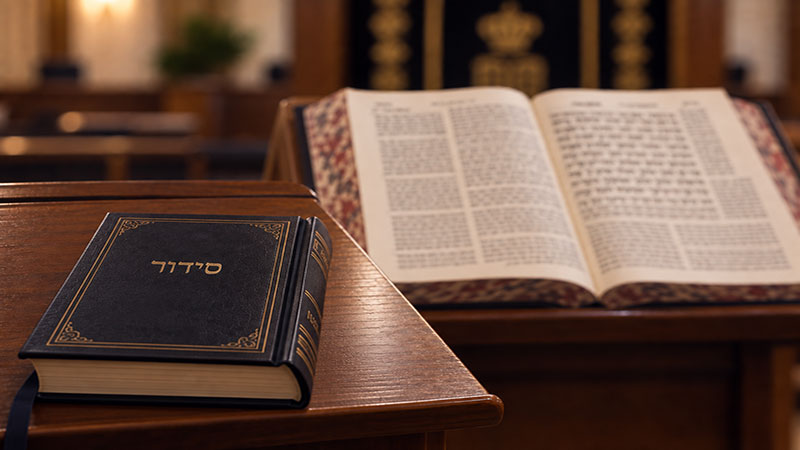
When we pray, we have the opportunity to express the full range of what we carry inside of us. We express appreciation and gratitude, but we also bring our concerns, anxieties, fears, hopes, disappointments, and even our anger. The siddur gives us the language for much of that conversation, while also creating space for the deeply personal prayers that only we can articulate.
Then we close the siddur and open the Torah to learn from, and the direction of the conversation changes. We listen. Through Torah, we encounter Hashem’s values, expectations, wisdom, and timeless lessons. We try to understand them, internalize them, and allow them to change us.
I find it interesting that many people naturally relate more deeply to one of these two sides. Some people love learning Torah but find prayer difficult to access. Others take naturally to prayer but have never found Torah study to speak to them in quite the same way. I think our interpersonal relationships often work similarly. Some people are naturally better at expressing themselves, while others are much better listeners. A real relationship, however, asks us to develop both.
Perhaps that is part of the beauty of the modern shul. Under one roof we have created a home for both sides of our conversation with G-d. We come together to speak, and we come together to listen.
Our shuls are precious communal homes where Jews come together, where the personal becomes communal, and where we nurture both sides of our relationship with G-d.