October 2, 2026
 Categories: In Print / Featured / Book Reviews
The Human Holiness of Rav Yehuda Amital, zt”l
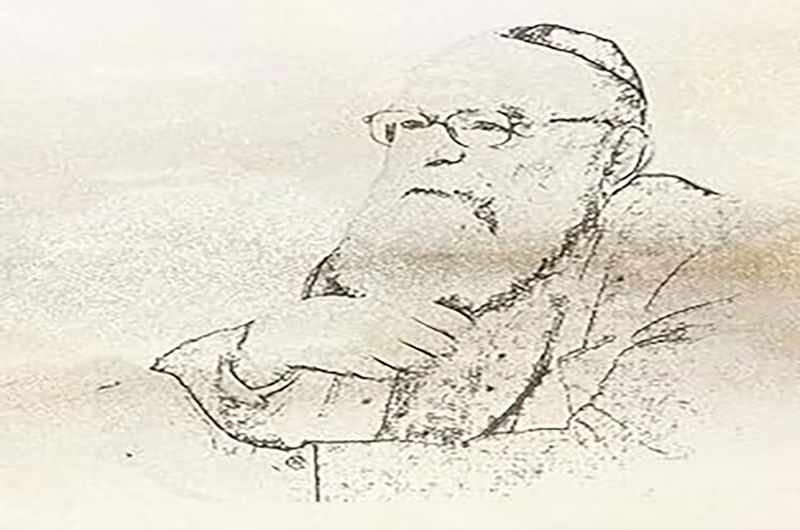


Title: To Be Holy But Human By: Rav Moshe Taragin Kodesh Press 369 pages
Rav Yehuda Amital, zt”l, was, by all accounts, one of the most influential rabbis in Religious Zionist history. Indeed, the very concept of a hesder yeshiva is accredited to him. To Be Holy But Human (Kodesh Press, 2025) presents a collection of reflections from Rav Moshe Taragin of Yeshivat Har Etzion on his rebbe and an inspiring glimpse into what we can achieve with the right mentality.
In R. Taragin’s words, Rav Amital “helped us navigate the tension that religious commitment often produces. As we tried to soar as angels, he always reminded us that we will eventually fall like humans. He wanted religion and religious drive to be healthy, rather than unrealistically ambitious. He taught us to laugh… Laughing at ourselves and our inherent limitations allowed us to embrace our humanity, rather than denying it.” Thus Rav Amital, who survived the Holocaust, never let his students “fall into a religion dominated by fear and anxiety.” He rather “embodied the serene strength and inner joy of a life lived with faith, standing before Hashem who understands our human limitations.”
As we find ourselves between Rosh Hashanah and Yom Kippur, Rav Amital is the perfect figure to reflect upon. To Be Holy But Human is split into two parts: twenty-three stories and twenty-nine essays based on a series of shiurim delivered by R. Taragin. In publishing the book for an English-speaking audience, R. Tagarin “aspires to illuminate Rav Amital’s profound legacy while offering a glimpse into how his life and thought continue to shape my own” (and hopefully his readers). While every chapter contains something worthwhile, this review will reflect on only two highly relevant ideas, one from each section.
Rav Amital, R. Taragin notes, did not take kindly to the idea of shortcuts. “In the context of spiritual growth, Rav Amital cautioned against seeking easy, quick solutions… True spiritual depth comes not from shortcuts, but from sustained, honest effort, step by step, without trying to circumvent the journey.” This requires not only taking time to develop our own sense of intentionality in what we do, but to prioritize doing so authentically to who we are. This is especially important in prayer, and the prayers of the Yomim Noraim present us with a remarkable opportunity to embrace this notion. In fact, R. Taragin reflects that during Ne’ilah itself Rav Amital would remind his students of the idea that Hashem is closest to those who call to him with emet, truth. “But Rav Amital cautioned us: Who can really possess emet? Emet is beyond any human being.” Nevertheless, “even if you don’t have emet, at least be brokenhearted about it… If you’re brokenhearted, Hashem will be close to you even if you struggle, as we all do, to find emet.”
It’s important to keep this in mind as we prepare for Yom Kippur and the long hours of davening on this day. R. Taragin, channeling Rav Amital, reminds us that “Tefillah doesn’t provide a ritual or maaseh mitzvah to ‘hide behind,’ no cognitive process like talmud Torah. We’re simply talking to Hashem. And it’s incredibly difficult to speak to Hashem with a clear mind. So, we can either punish ourselves, pretending that we have kavanah when we don’t, or we can accept the struggle.”
This message may seem like a downer, but it’s actually one of the most important things we can remind ourselves of as we seek teshuvah within the contexts of our lives. It’s of the utmost importance to embrace who we are and not allow ourselves to get lost in believing ourselves to be holier than we are. As the title of the book suggests, we should strive to be holy while recalling that, at the end of the day, we are still human. Rav Amital warned: “Whenever you try to pray beyond your level, attempting to be someone you’re not – trying to act like a greater tzaddik than you are – that’s when the foreign thoughts of machshavot zarot begin to invade your mind.” We can avoid that by remembering who we are and striving to be the best version of ourselves we can be rather than a worse version of someone else.
Of course, this doesn’t mean that our religious experiences should be filled with sadness. To the contrary, “Rav Amital believed that religion need not be defined by grimness and sternness. He drew upon the rich traditions of Hungarian chassidut which viewed sadness and melancholy as not only undesirable but dangerous. For him, religion was meant to uplift, to inspire joy and calm, even amidst the weight of spiritual responsibility.” R. Taragin emphasizes that, for Rav Amital, “a vibrant and joyous approach to mitzvot isn’t just preferable – it’s essential. Joy anchors religious practice, fostering resilience and genuine connection to Hashem, free from the paralyzing grip of fear or compulsion.”
This is where humor comes into the religious experience. R. Taragin reflects on how Rav Amital was known to tell jokes in the form of small, amusing stories. The reason for this was because Rav Amital understood that “humor plays an essential role in life. It’s not just for entertainment; it’s a way to break tension, to humanize us, and to make the serious moments feel a little bit more grounded.” Rav Amital saw humor, in other words, as “a vital tool for balance, a reminder that even in the most sacred moments, we can find a bit of lightness and joy.” Furthermore, it provides a much-needed perspective, reminding us that “in the grand scheme of things, we are all navigating the same imperfect world, and this shared understanding brings us closer.”
This message from Rav Amital is incredibly important: “Yes, religion demands serious effort, but it shouldn’t leave you constantly on edge. Yes, there is a place for healthy tension and concern, but not for a perpetual state of stress.” That approach is what separated one of Rav Taragin’s rebbeim from the other. For Rav Aharon Lichtenstein, he writes, “the path to joy came from the intensity and struggle of avodat Hashem. Joy for him was rooted in that deep, focused commitment.” On the other hand, “Rav Amital brought warmth, and a smile that was always present. His presence offered a sweetness, a sense of ease that balanced the weight of religious life. Where Rav Lichtenstein emphasized fierce dedication, Rav Amital embodied serene acceptance – a warmth that softened the journey.”
Of course, the religious experience requires both of these perspectives – especially during this time of year when we ought to be working on ourselves most. My Modern/Centrist Orthodox community, however, tends to prioritize one over the other. In a community that more often than not hyper focuses on the approach of Rav Lichtenstein, it’s important to keep Rav Amital’s way of thinking in our minds as well. We can pray to Hashem in our own voices. We can experience religious tension without taking ourselves too seriously. We must strive to be holy, while still being human.
As we prepare to meet with HaKadosh Baruch Hu during the Yomim Noraim and Aseret Yemei Teshuvah, there will be something for everyone to find helpful in R. Taragin’s reflections on his rebbe.