September 11, 2026
 Categories: Headline / Perspectives / Op-Eds
The Legacy of Forty Years


I first started to think about my mother-in-law’s upcoming yahrzeit the week before Shavuos while I was carefully separating egg whites from yolks in order to “macht a shnai” (make a snow).
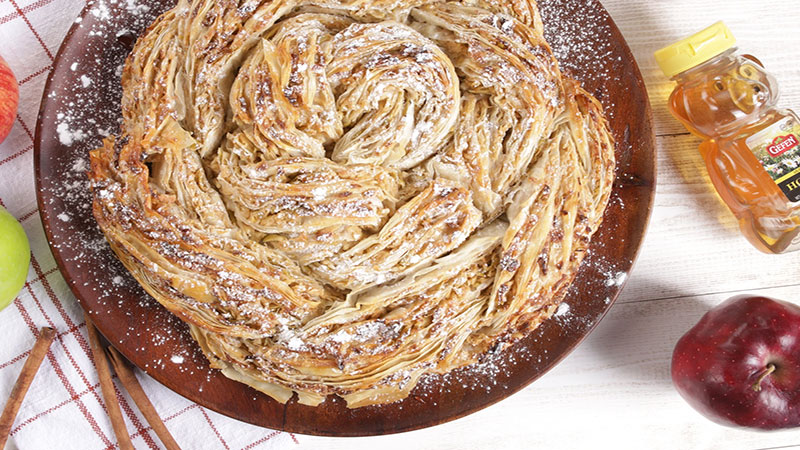
Like other families, our menus are comprised of a potpourri of recipes – a combination of old favorites, new possibilities, and beloved hand-me-downs from prior generations. I was making my mother-in-law’s cheesecake, which technically isn’t a cheesecake but rather a cheese pie with an exaggerated sense of self, due to the egg whites that are beaten, fluffed, and frothed until they rise and glisten like the first snowfall of the season. Invariably, every year, I almost forget this step, one that my kids rightfully call “so extra,” one that totally gives away my husband’s Hungarian ancestry – because really, what other kind of recipe would require you to separate and whip two measly eggs in order for a cake to rise an extra millimeter?
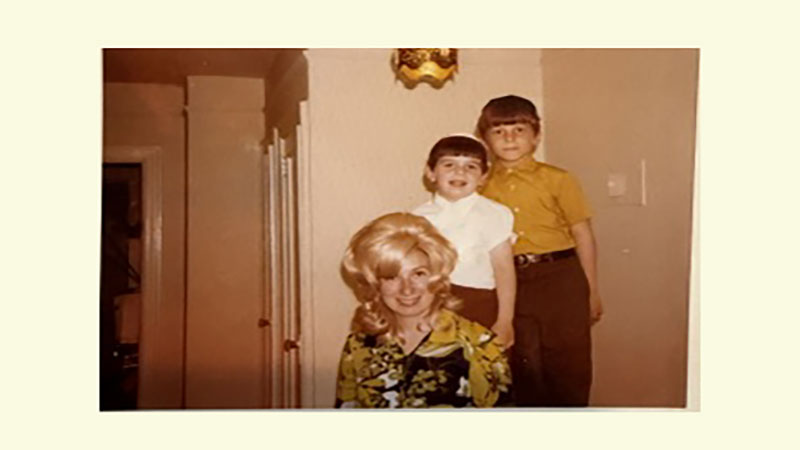
As I whipped and frothed and not so patiently waited for the egg whites to do their thing, I reflected upon my mother-in-law’s 40th yahrzeit – my mother-in-law who bears this title in name only, whose premature petirah robbed her of the chance to become anything beyond a daughter, wife, and mother.
There is a unique grief that belongs to an in-law child. It sits quietly in the back seat, in the shadows; it knows its place. I only met my husband’s mother once, maybe twice. At the time, my husband and I were college classmates and I went to his house to pick up… a book? an assignment? Or something else for class. We were nothing to each other at that point – maybe not nothing, but also, not quite something. His mother invited me in and fed me, and we talked, but I don’t remember the details, for if I had known then what I knew six months later (that she would no longer be alive, and that I would marry her son), I would have committed each word, each gesture, each feature to memory. All I have are the wispy threads of that encounter that live alongside everything else I’ve absorbed about her from being in the family for so many years.
After 40 years, sorrow’s sharp edges have worn away, and what remains is the pervasiveness of her absence. Sons without a mother, granddaughters inheriting the legacy of a grandmother they never met, the painful joy of having named a child after a parent who never became a grandparent. Often, I think about what could have been – the hypotheticals: Would we have been close, like the archetypal Naomi and Rus, or would we have harbored the stereotypical petty grievances that I often see in other families? I like to imagine that I would have been the daughter she never had, that I could have filled that space not only with myself but with my daughters, my sparkly little girls who would have played with her jewelry and maybe learned how to make a decent potato kugel, a skill I have yet to master. Every time I reach a new stage in life, I experience it through a double prism; one side contains gratefulness that my husband and I have both lived to experience this milestone moment, while the other side mourns what could have been but will never be.
In Judaism, the number 40 has multiple layers of significance, particularly this time of year. During the spring and summer, we travel through the parshios with the Bnei Yisrael as they traverse the desert for 40 years led by the Ananei HaKavod, the Clouds of Glory that surrounded and protected the Jews throughout their long and arduous journey. On Shabbos Parshas Behaaloscha, I heard a beautiful D’var Torah that contained a mashal with a stunning connection to the upcoming yahrzeit. In Sichos Mussar, Rav Chaim Shmuelevitz discusses that the heavenly clouds functioned in two dimensions – as a protection against the elements but also as a living embrace. He compares the Bnei Yisrael within the Ananim to a baby swaddled in his mother’s arms, for a baby who is being carried by his mother has no idea where his mother’s next steps will take him and yet he feels totally secure within his mother’s warm nest; so too, the Bnei Yisrael had no idea where they were going or how long they were going to be there, only that Hashem was leading them and that they were enveloped in His constant care and protection.
Although my mother-in-law died young, she left behind a strong mesorah which, together with the memories of her love, her values, and her character traits, created a spiritual cloud for her children to follow, and our family that exists today emerged from that cloud. Although she never got to hold her grandchildren in her arms, in a profound sense she carried them long before they were born.
When my father-in-law and his second wife moved out of the house, we inherited two very large framed needlepoints that my mother-in-law had stitched during the summers the family had spent in the bungalow colony. Back then, almost everyone used the continental stitch exclusively, a stitch that is simple and easy, but is also the most time-consuming as well as being mind-numbingly boring, particularly on large pieces. I am told that my mother-in-law did not love being in the Catskills, that she only went up so the kids would have a good summer; and indeed, some of my husband’s fondest memories and best stories revolve around his days in the bungalow colony. Once the stitching was completed, the canvases were set into the type of frame that was popular back then – a thick, highly textured antique gold with a one-inch rim of velvet on the inner edge, the type of frame that is evocative of museum-quality art. Aside from conferring an air of both Old World splendor and gravitas upon my living room, the needlepoints are a testament to the multiple ways mothers sacrifice little pieces of themselves for their children. Every time I watch my daughter interact with her rambunctious toddler son, I am in awe of her soft tone and gentle patience, as well as the way she balances her work responsibilities with uncompromised motherhood, leaving her with very little time for herself. Clearly, this is a quality that is deeply stitched into her DNA, inherited from the grandmother she never met, the grandmother whose name she also inherited.
This year, the cheesecakes came out perfectly – better than perfect. For some reason, the whites whipped up extra high this time, perhaps the weather, perhaps the eggs, perhaps a little magic from the tears that seeped into the batter while I was thinking about this milestone yahrzeit. Forty years is a long time, long enough that many of my mother-in-law’s friends have already passed away, long enough that it is almost equivalent to the amount of time she lived. I’ve thought about writing an article like this many times over the years, but the time never seemed right. While the cheesecake was baking, I opened my computer and scribbled some notes, but once the cake came out of the oven, other demands beckoned, and my half-formed thoughts slipped into the ether.
A few days later, my grandson came over for a playdate and got chicken nugget crumbs all over the couch. Eager to help with the cleanup, he sharply yanked on the vacuum hose, which then knocked into the kitchen stepstool and almost fell on him. As I reached out to prevent the collision of grandson and stepstool, I noticed a well-worn index card on the floor near the bookcase, blinking up at me. After getting over the shock of seeing the cheesecake recipe staring at me from a space that I could have sworn was empty two minutes prior, I assumed that it must have slipped out of my recipe book as I was putting it away three days ago. The fact that it remained undetected in this heavily trafficked location for so long remains a mystery, but its startling appearance gently nudged me back to my computer.
We learn in Gemara (Avoda Zara 5b) that a person does not fully understand the “daas” of his teacher until 40 years have passed, a teaching that Rabba concluded based on the pasuk in Parshas Nitzavim 29:4, where Moshe says to the Bnei Yisrael: “Va’olech eschem arba’im shana bamidbar” – And I have led you for 40 years in the desert. It was only after 40 years had passed that the Bnei Yisrael were fully able to grasp Moshe Rabbeinu’s wisdom and perspective, and at the end of those 40 years, Moshe’s tachlis was complete; he would not be accompanying the Bnei Yisrael on the next step of their journey.
My mother-in-law built a future that she herself never entered, and perhaps this is the deepest, most poignant meaning of a legacy – to shape the tomorrows that we will never see.
L’iluy nishmas Rochel bas Menachem, Rochelle (Riki) Miller