 October 16, 2026
 Categories: Columns / Headline
The Old Path and the New Trail
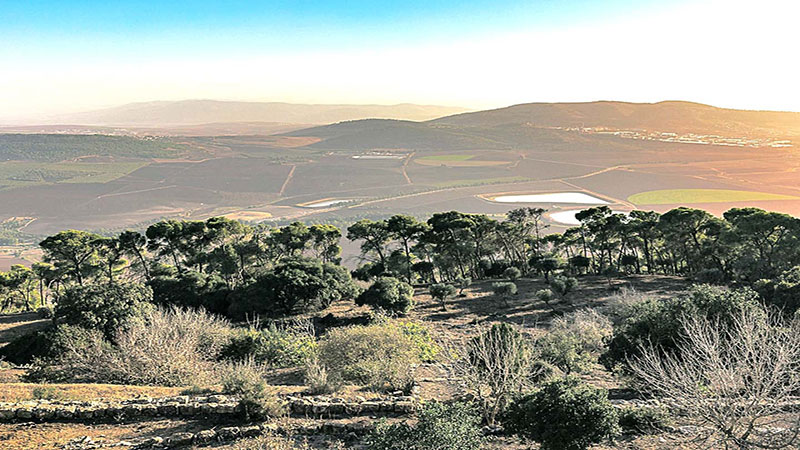


Israel is the rare country in which antiquity is not a tourism department; it is under the shoe. A person can walk from a ridge named in Scripture to a lab that did not exist when their grandparents were born, and the walk is not a contradiction. It is the local habit of time.
Rabbi Jonathan Sacks wrote, “In Israel, and only there, Jews can walk where the prophets walked, climb the mountains Avraham climbed, lift their eyes to the hills that David saw, and continue the story their ancestors began.” Continue is the verb that matters. Pilgrimage looks backward. Continuity looks forward with the same eyes. The hills are not a backdrop for photographs. They are the next sentence of a story that began before we had a word for history.
Psalm 48 already saw the landscape as more than scenery: “Beautiful in landscape, the joy of the whole earth, is Mount Zion peak of Tzaphon the city of the great King.” Beauty here is not an aesthetic hobby; it is joy with a geography. Zion is named as the world’s delight because it is the city of a King, which is to say a place where meaning and mountain occupy the same ground. Aliyah is a way of letting that verse become an address rather than a motif.
Yossi Klein HaLevi, explaining why this national movement did not collapse with the other nineteenth-century ideologies, said, “The reason I think Israel may be the only 19th century ‘ism’ that hasn’t failed is because it isn’t only a 19th century ‘ism.’ It’s also the expression of a 3,500-year-old faith and story.” Political programs age. A faith and a story can recruit the program and outlive it. Zionism worked because it was older than Zionism. The modern tools, parties, charters, laboratories, were placed in the service of a memory that already knew the roads.
Prime Minister Benjamin Netanyahu told the same truth in civic language: “In Israel, we walk the same paths tread by our patriarchs Abraham, Isaac and Jacob. But we blaze new trails in science, technology, medicine, and agriculture. In Israel, the past and the future find common ground.” Common ground is a careful phrase. It does not drown the future in relics. It does not evict the patriarchs to make room for patents. The country is the argument between them, held in one landscape.
A positive case for living here does not require a traveler’s romance. Many residents pass the old stones on the way to work and think about invoices. That is allowed, because the continuation of the story includes invoices. What aliyah offers is the chance for a life in which the invoice and the psalm share a horizon. Children raised between those poles learn that Jewish time is not divided into “heritage” and “career,” as if one were a museum and the other were the real world.
There are Jews who love the story and keep it in books. Books are a glory of the exile and of the return alike. But a story that can be walked behaves differently from a story that can only be cited. Abraham’s mountains teach the legs. David’s hills teach the eyes. The new trails in medicine and water teach the hands that the covenant was never a refusal of craft.
I have stood with visitors who treat every layer of Jerusalem as a sermon. I have also bought fruit a few minutes away and talked about nothing in particular. Both hours belong to the same city of the great King. The psalm’s joy is large enough for the sermon and the fruit. Rabbi Sacks named the privilege of walking and continuing. HaLevi named the depth that keeps the modern project from becoming a relic of Europe’s ideologies. Prime Minister Netanyahu named the double motion, same paths, new trails.
Aliyah is not an escape into the past. It is permission to live where the past still has work to do. The faith and the story are not exhibits. They are a people planting, healing, coding, arguing, and climbing. The joy of the whole earth, if the psalm is believed even a little, is not a metaphor to be admired. It is a place that can be reached.
Come for the hills if the hills call you. Stay for the ordinary genius of a society that refuses to choose between Abraham and agronomy. That refusal is the common ground. It is still being laid, stone and circuit together.