 October 9, 2026
 Categories: In Print / Headline / Features
The Shabbat Project Reports a Surge in Participation on College Campuses


The Shabbat Project, a worldwide movement started 12 years ago by Rabbi Dr. Warren Goldstein, the Chief Rabbi of South Africa and his wife, Gina, begins this Shabbat, Nov. 7 and 8. This year’s theme is “Switch off your screens. Switch on your life,” to encourage people to disconnect from the cares and distractions of everyday life, and find peace in reconnecting with Hashem and loved ones.
In a Shabbat Project video, Goldstein noted that this year’s Shabbat Project arrives “at a historic moment as we offer gratitude for the final release of all our hostages and for a fragile ceasefire that has emerged from the great victories Israel has achieved, baruch Hashem, on the battlefields across the region in Iran, Lebanon, Syria, Yemen and ultimately in Gaza.”
He described how our beloved hostages kept Shabbat. Agam Berger, 20, whispered Shabbat prayers to herself and kept Shabbat while in the tunnels of Gaza; and Omer Shem Tov, 23, fashioned a kippah from scrap paper and saved a few drops of grape juice for each Shabbat throughout 505 days of captivity. Back home, his mother, once avowedly secular, started lighting candles every week, revealing in a Facebook post, “Shabbat kept me.”
Soldiers also kept Shabbat by lighting candles, singing Shalom Aleichem and making Kiddush as rockets fired.

Rabbi Goldstein told The Jewish Press, “These are acts of inspiring heroism, done in the face of unimaginable cruelty.” He added that this year’s Shabbat Project is “dedicated to the heroes of our people and to the Divine gift of Shabbat, which has sustained us through everything.”
Since Oct. 7, many secular Jewish college students have started exploring their Jewish roots and observing Shabbat. They emulate and are inspired by the incredible stories of faith of these released hostages, many of whom are around their age. In Crown Heights, Brooklyn, Rabbi, Efraim Merovitch will be hosting a large scale shabbaton for 700 college students who represent Chabad on Campus to learn about Shabbat based on a university curriculum they’ve created. A Jewish middle school in Scottsdale, Arizona, along with elementary and high schools in Israel, will also be participating in The Shabbat Project. In Spain, 50 male Spanish speaking college students will join 50 English speaking students to turn off their devices and observe Shabbat together. Olami and Beit Chabad, Jewish educational organizations, are also reportedly seeing an unprecedented surge in the number of college students in French speaking countries who are participating in one way or another.
Robin Meyerson, director of the North American Shabbat Project, will be offering her home in Arizona for Shabbat to 10 college students from the University of Arizona and Arizona State University who are part of a Jewish learning program with Olami. Some of her neighbors will be following suit by inviting a few students they have never met before into their homes, many of whom will be observing this holiday for the first time. She told The Jewish Press that her own special experience having Shabbat with a family who welcomed her to their home “was so beautiful that I’d want to share the gift of Shabbat with all Jews in the world, if I had more bedrooms.” She encourages Jewish families to open their doors on Shabbat and make this a new tradition.
Rabbi Avrohom Loketch, regional director of the Boston branch of the Jewish educational organization, MEOR, will be bringing together about 550 students from Boston University, Northeastern, Harvard, Brandeis, and other regional colleges for an immersive Shabbat experience at Young Israel of Brookline’s banquet hall. He said he anticipates the evening of November 7 will be “a night of energy and connection and inspiration.”
Students will begin cooking and baking challah two days prior to the event. “It will be [like] a wedding. Fresh flowers, tablecloths, homemade food, buffets. It's going to be spectacular!”
When describing the atmosphere of Boston University, which MEOR is in close proximity to, Loketch said there is “a lot of antisemitism… it’s very uncomfortable to be a Jew on campus…it’s very, very isolating.” He relayed how a mezuzah was ripped off the MEOR center, and how the rise in antisemitism has led Jewish students to feel compelled to connect with their Jewish brothers and sisters and “strengthen one another with community.”

MEOR hosts Shabbat dinners every week for over 150 students, which Loketch notes is a marked increase from before Oct. 7. MEOR also started a new Shabbat day program this semester, where students put away their phones on Saturday morning, and “it’s like they’re observing Shabbat,” Loketch said. He hopes this will unify the Jewish community and “send around a ripple effect of positivity and energy and light and will inspire others to get involved…hopefully together we will change the Jewish future.”
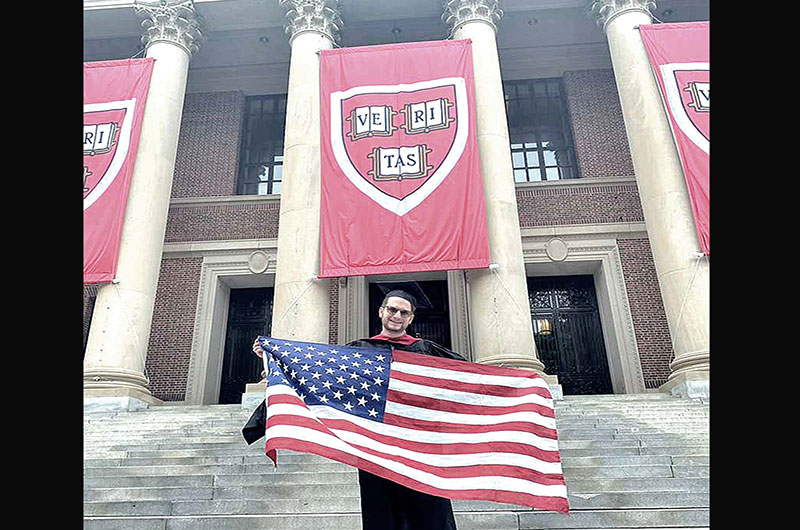
Shabbos Kestenbaum, 26, an Orthodox Harvard Divinity graduate and outspoken advocate against antisemitism on college campuses, is excited to get involved in The Shabbat Project events in Los Angeles this year. His name itself is in honor of Shabbat because it’s the day when he was born. For people observing Shabbat for the first time, he advises, “Any one act you do has significance and meaning.”
Quiet self-reflection on Shabbat inspires us to become better people and perform acts of kindness, which Kestenbaum did when he donated a kidney to a stranger earlier this year through the Jewish organization, Renewal.
Leah Goldin’s son, Hadar, a lieutenant in the Givati Brigade, was 23, around college age, when he was kidnapped and killed by Hamas terrorists in the Gaza war on August 1, 2014. She has been waiting 11 years for her son’s body to be returned home. Goldin made a video for Rabbi Goldstein’s initiative, where she stated how meaningful it is that people are bringing her son into their homes by thinking of him on Shabbat. Goldin said, “I like people to be happy and not to be sad when they read about Hadar…. We will bring my son home. There is no other alternative.”
Goldin grew up observant, and said that her faith has been strong “since I was born. It’s just my way of living.” She added, “I’m second generation to Holocaust survivors. I was taught by my mother always to look forward, not backward.” Goldin described how she has convinced others to appreciate Shabbat. “With all the goodies of Shabbat, a lot of eating and resting and reading, it's the best day of the week,” she said.
For more information, visit www.theshabbosproject.org.
Leah Goldin thanking The Shabbat Project participants for enhancing their Shabbat in the merit of bringing her son Hadar home for burial. (Courtesy: Leah Goldin)