 October 23, 2026
 Categories: Columns
The Speech of Ordinary Days
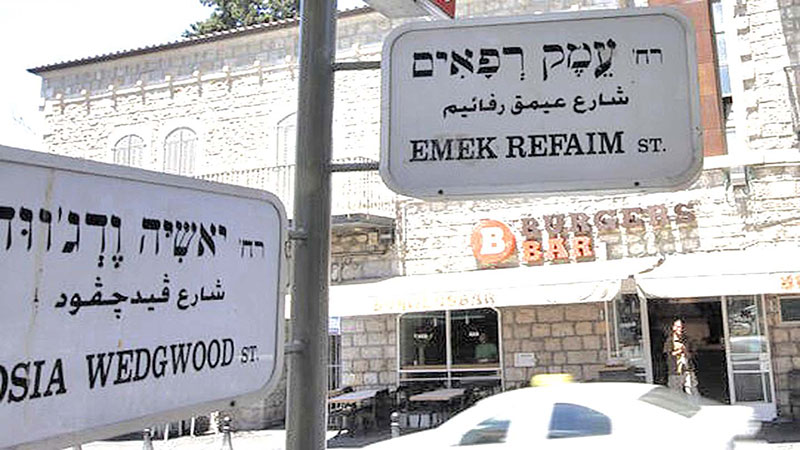


A language returns the way a people returns, first in prayer, then in argument, then in the unremarkable sentence that buys bread. Hebrew did not wait for scholars to finish their debates. It went back to work. Street signs, report cards, radio traffic, a nurse’s instruction at dawn – these are not decorations on a national project. They are the project speaking.
Rabbi Jonathan Sacks wrote, “Only in Israel can Jews today speak the Hebrew of the Bible as the language of everyday speech.” The force of the line is the last two words. Everyday and not ceremonial. Not reserved for the bimah and the academy. The verbs of Genesis and Deuteronomy now move through kitchens and courtrooms. A child learns that a sacred tongue can also be impatient, funny, and tired. That is not a cheapening of Scripture; it is Scripture allowed to inhabit a whole life.
The land that holds that speech was never praised in the Torah as an abstraction. It was named by taste and sufficiency: “A land flowing with milk and honey.” The phrase is agricultural and moral at once. It promises that the place given to this people is not a shrine to be admired from a distance. It is a place meant to feed those who dwell in it. Milk and honey are ordinary riches. They belong to flocks, hives, and seasons. Aliyah is, among other things, the decision to live where the old blessing is asked to become a harvest again.
Prime Minister David Ben-Gurion understood the duty as a debt owed in two directions. “I believed then, as I do today, that we held a clear title to this country. Not the right to take it away from others (there were no others), but the right and the duty to fill its emptiness, restore life to its barrenness, to re-create a modern version of our ancient nation. And I felt we owed this effort not only to ourselves but to the land as well.” Title without labor is a slogan. Labor without memory is only development. He wanted both, a modern nation and a land no longer left empty of the people who named it.
Secretary Marco Rubio, telling the same story from the outside, said that “Israel’s wealth lay not under the ground, but in its people,” “exiles, pilgrims, and dreamers from around the world” who “made the desert bloom into a hi-tech superpower.” The bloom is no longer only citrus. It is code, water technology, medicine, and the restless skill of people who arrived with little and refused to treat scarcity as a fate. The biblical honey and the modern laboratory are not rivals. They are chapters of one stubborn fertility.
A family considering aliyah often lists what will be lost, ease of language, a career ladder already climbed, the familiar aisle in a supermarket. Those losses are real. What is gained is harder to put on a spreadsheet. It is the sound of Jewish time spoken without translation. It is a child who does not need a special school in order to inhabit the calendar. It is the quiet knowledge that the words of the morning blessings and the words on the bus are cousins.
None of this requires a claim that Israeli Hebrew is always beautiful. It is a living language, which means it is sometimes crude. Living languages earn that right. The alternative is a Hebrew that remains perfect because it is unused. Rabbi Sacks was pointing at use. Prime Minister Ben-Gurion was pointing at the soil that use requires. The Torah was pointing at abundance that is meant to be eaten, not framed. Senator Rubio was pointing at people who took emptiness as an assignment.
The call home is heard in grammar as much as in ideology. When a people can argue about parking and poetry in the language of the prophets, the exile of speech has ended even if individual Jews still live elsewhere. Aliyah completes the circle for those who can come. It lets the mouth and the map agree.
There is a tenderness in watching a new oleh struggle through a form at the clinic and then, months later, snap at a clerk with fluent irritation. That irritation is a kind of arrival. Ancestors who guarded Hebrew like a flame would have smiled at the ingratitude of it. They wanted the language in the market. They wanted the land to work. They wanted children who would take both for granted and then, if they were lucky, remember.
Milk and honey were never a promise that life would be effortless. They were a promise that the effort would belong to this place. Filling emptiness, restoring barrenness, speaking the old words on ordinary days – that is the positive work still open. Aliyah is how a household joins the work with its own voice.