 October 16, 2026
 Categories: Op-Eds
Time for a Reality Check on Israeli Coexistence and Change


But the maelstrom surrounding Cassif’s slap of a police officer is no more than a veil, and an efficient one at that, for the government’s other problems. Cassif is the same Cassif, and Tibi is the same Tibi—both of them are at the far end of the opposition and are well known for their constant and flagrant provocations against the core values of Israeli statehood. The very same statehood that the “government of change” swore to rehabilitate.
Yamina MK Nir Orbach immediately responded, “The fundamental error is in the word ‘occupation,’” and added, “enough of this mendacious terminology.” This led his coalition colleague Meretz MK Mossi Raz to suggest that he look up “the definition of the term ‘occupation’ before claiming it does not exist.” While it’s nice that the opportunity has been found to conduct a symposium on the semantics of the Israeli-Arab conflict, occupation or not, the key phrase in Taha’s statement was “murdered in cold blood.”
Taha may have attributed the “murder” of the journalist to an abstract—“the damned occupation”—but it often happens that abstract markers have concrete significance. What his statement is really saying is that the occupation is the State of Israel and its executors are security forces. They, in an inference that even a child could understand, play the role of the murderers. One has to admit that this is a far stronger slap in the face because it was the Chairman of the Internal Affairs Committee of the Knesset whose palm slapped our collective cheek.
The damage in terms of public diplomacy is marginal. The government of Israel has taken a position that is somewhat ambivalent in regard to Abu Akleh’s death. What is more troubling is that Walid Taha comes from somewhere that is in essence no different from where Cassif and Tibi come from.
The fact that it is Cassif and Tibi, and not Taha, who upset the serenity of the coalition’s leaders hints at something deeper. We can tell ourselves some kind of Orientalist story about “bad Arabs” and “good Arabs,” but the reality is that the current coalition partnership with an Arab party has not brought about the expected historic change.
Just as during Oslo, political leaders wax poetic about their acceptance of the narrative of the “other” and pat each other on the back for their “courage” in creating change, but here on the ground, the tensions between sectors of Israeli society are only getting worse, and the violence of recent months has deepened suspicion. Incitement in the mosques, marches of rage and T-shirts with a rifle insignia, and as a society, we haven’t even begun to digest the significance of the terrorist attacks that emanated from Hura and Umm al-Fahm.
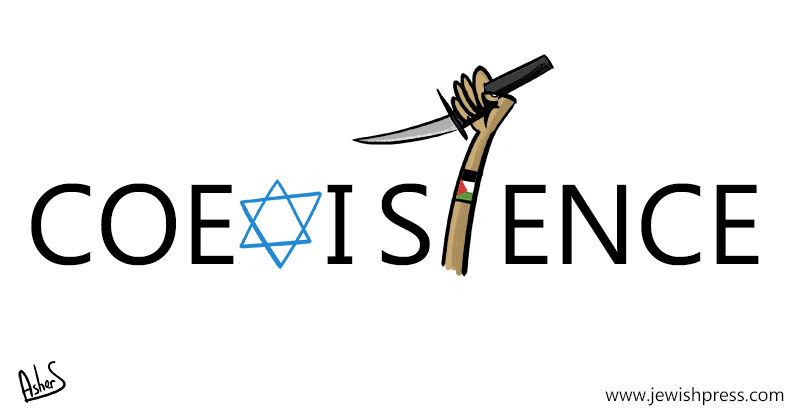
Mansour Abbas is a courageous leader. He knocks on the coalition’s door, but we can’t feel it here on the ground. The government’s dependence on Ra’am just adds insult to injury: When the coalition gives in to Ra’am’s budgetary demands just to gain another temporary advantage in the plenum, it paints Israel’s Arabs, perhaps against their will, as those who have sent their representatives as a cynical pressure and extortion group that identifies weakness, and not as a group determined to fight for coexistence. Is that what this partnership is about? Avoiding poisonous rhetoric and passing budgets?
The government of change is destroying the vision of a partnership between Jews and Arabs, and gives it a bad name. Just as Ehud Barak destroyed the left with the Oslo process, do not be surprised if, like Barak, the government of change ends up claiming the credit for proving that is no partner.
(Dr. Eithan Orkibi is a senior sociology and anthropology lecturer at Ariel University)
{Reposted from the JNS site}