 August 14, 2026
 Categories: In Print / Headline / Halacha & Hashkafa
To what extent are individuals responsible for getting a flu shot to protect others during cold season?



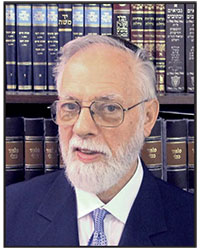 Rabbi Yaakov Klass
The Torah is very clear as to how we are to interact with our fellow man, as it states in Parshas Acharei Mos (Leviticus 19:18) “…V’ahavta l’re’acha kamocha, Ani Hashem – You shall love your fellow as yourself, I am the Eternal L-rd.” The fact that Hashem connects Himself to this admonition should give us pause as to the severity in Hashem’s eyes that any such negative interaction will cause.
In fact, according to Rabbi Akiva (Jerusalem Talmud, Nedarim 9:4) this verse denotes a klal gadol baTorah – a major tenet of the Torah. Who are we to be careless in its regard, especially when our action or non-action might be the cause of unintended pain and suffering to others.
Indeed, society these last numbers of years, especially during the Covid pandemic, has been dealt much pain, anguish and even death – as well as being forced to grapple with the Covid vaccines and on top of that the yearly flu shot (which has become the recurring yearly norm).
Now, not to receive the flu shot would seem to violate the Torah’s admonition. Yet there are those individuals who, due to their weak immune systems, may not tolerate that shot.
It is therefore ever so crucial that one consult with his/her physician, who has all his/her medical records and knows his/her tolerance level to the strains that are included in this year’s doses, and finally put any qualms to rest.
Rabbi Yaakov Klass, rav of Congregation K’hal Bnei Matisyahu, Flatbush, Brooklyn; is Torah Editor of The Jewish Press; he also serves as chairman of the Presidium of the Rabbinical Alliance of America. He can be contacted at yklass@jewishpress.com and Rabbi@igud.us.
* * * * *
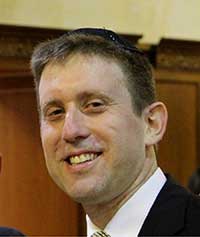 Rabbi Jonathan Muskat
Halacha places strong emphasis on preventing harm to others, and this principle applies directly to the question of getting a flu shot during cold season. The Torah commands, “Lo ta’amod al dam re’echa – Do not stand idly by while your fellow’s blood is shed” (Vayikra 19:16), which obligates individuals to take proactive steps to prevent foreseeable danger to others. Similarly, the mitzvah of ma’akeh (building a fence on a roof, Devarim 22:8) teaches that one must remove potential hazards even when the risk is uncertain.
The Shulchan Aruch (Choshen Mishpat 427:8) requires a person to avoid situations of possible danger and not rely on miracles. Rabbi Moshe Feinstein likewise ruled that even when the likelihood of harm is statistically low, halacha still treats the situation as dangerous and requires one to act accordingly (Igrot Moshe, Orach Chayim II:100). These sources establish that protecting oneself and others from preventable illness is not merely advisable – it is a halachic duty rooted in the preservation of life.
Applying these principles, one who forgoes vaccination in a setting where illness can easily spread – such as during flu season – fails to take reasonable precautions to avoid harming others. Even if influenza does not reach epidemic levels, the Rema (Yoreh De’ah 116:5) stresses the need for caution in all matters of potential danger. While there are some individuals for whom vaccination may be medically inadvisable, such cases require consultation with a competent physician; the default halachic and medical position is that vaccination is safe and therefore obligatory.
Rabbi Jonathan Muskat is the rabbi of the Young Israel of Oceanside, a rebbe at Shulamith High School, and a pastoral health care liaison at Mount Sinai South Nassau.
* * * * *
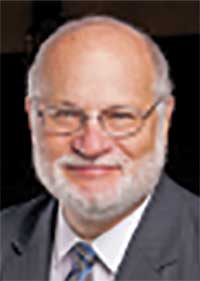 Rav Steven Pruzansky
This is a personal decision, not even between patients and doctors because doctors will almost always recommend a flu shot. I am not a vaccine skeptic in general, and to the extent that some in our community have revived measles, for example, it is shameful and appalling. All vaccines carry risks, some quite small. I know people who have taken the flu shot and become violently ill for three days with flu-like symptoms (OK, it was me). That happens in a certain number of cases because injecting tiny doses of the virus is bound to have an adverse reaction in some people.
Full disclosure: I haven’t taken a flu shot since and, baruch Hashem, I have not become sick since then. Which means that, at least in my case, it is either unnecessary or the vaccine I took was so powerful and efficacious it has lasted well over a decade. It is worth noting that there are so many strains of influenza that not every vaccine will work in every case, but consult your physician on that.
Note this as well. When I was sick for those three days, I did not go to work, to shul, leave my house, or even my bed. And this is the critical point: it is forbidden to be a mazik, to walk around with the flu or any infectious disease and knowingly (really, even unwittingly), potentially infecting other people. Adam mu’ad l’olam, a person is always considered forewarned (Bava Kama 3b). We are responsible for all our actions and must take appropriate measures to prevent harming others.
Whether those measures include a flu shot or absolute home confinement if a person is ill (no excuses accepted) depends on the individual. May we all merit Hashem’s blessings for a healthy winter!
Rav Steven Pruzansky is Rabbi Emeritus of Congregation Bnai Yeshurun (Teaneck, NJ), Senior Research Associate at the Jerusalem Center for Applied Policy (JCAP.ngo), and author of the Chumash commentary “The Jewish Ethic of Personal Responsibility” (Geffen).
* * * * *

Rabbi Ben Zion Shafier
While I’m certainly not equipped to have an opinion about the efficacy or the wisdom of taking a flu shot, I can say that if one does have the flu, it would be considered a serious breach of bein adam lechavairo to expose others to it. One has an obligation to be concerned for the good of others, and therefore not to expose others to the potential of their being sick, even if it would not lead to a life-threatening situation.
Just the fact that the other person would lose time and have discomfort would be reason enough to forbid a person from exposing others to the flu. And especially considering the fact that there are vulnerable parts of the population who might, in fact, be in danger of a life-threatening case of the flu. In that case it would certainly be forbidden.
The bottom line is, one should do whatever he can to avoid the possibility of infecting others with the flu, provided that it’s a healthy, safe method.
Rabbi Ben Zion Shafier is the founder of The Shmuz.