October 2, 2026
 Categories: Unique Sites of Israel
Unique Sites of Israel: Tel Azekah


“The Philistines assembled their camps for war…. They encamped between Socho and Azekah…in the Terebinth Valley…The Philistines were standing…on one side and Israel was standing…On the other side and the valley was between them…A champion went forth…Goliath of Gath (1 Samuel 17: 1-4).”
One of the advantages I have living in Israel is the ability to wake up every morning, look outside my window and see where the world’s most famous battle took place! Of course, I am talking about the clash between David and Goliath. Even if someone is not well versed in the Bible, it is highly unlikely that they haven’t heard of this epic duel. Even today on sports networks when the best team is facing an underdog team, the announcers will compare it to “David vs Goliath”.
Today we are visiting an off the beaten track site, Tel Azekah, an Israelite city from Biblical times which was given by G-d to the tribe of Judah (Joshua 15: 35).After Joshua and his army defeated the city states of Jericho and Ai, the powerful city of Gibeon made an alliance with the Israelites (see previous article on Hazor where I discuss the structure of Canaanite city states Tel Hatzor). Five Canaanite kings attacked Gibeon, to send a message that making peace with the Jews was not in their interest. When they attacked, Joshua felt bound by his oath and came to their rescue. As the armies of the 5 kings saw him coming, G-d put panic into their hearts and they were smitten, with the survivors fleeing all the way until Azekah, where a hail storm then finished off the rest (Joshua 10). According to Jewish sources, this was left over from the plague of hail in Egypt. When Moses asked G-d to stop the plague, the remaining hail was saved for Azekah.
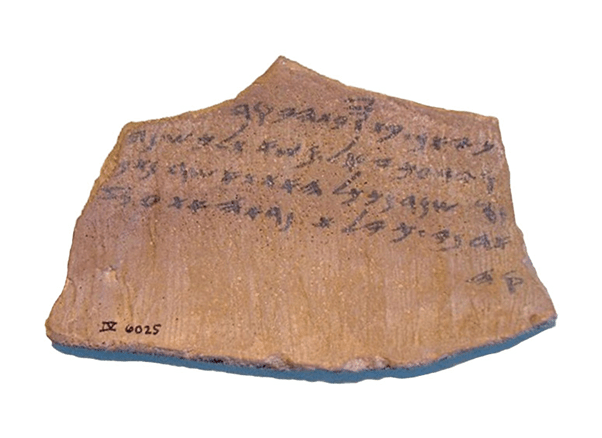
When the Babylonians conquered Israel centuries later, the last three cities to be conquered were the besieged cities of Jerusalem, Lachish and Azekah (Jeremiah 34: 6-7). Indeed, excavators found a letter written by soldiers at Lachish, to be sent as a warning to fighters in Jerusalem, which said “We cannot see any more, the fire-signals of Azekah.” This “Lachish Ostraca” backs up the Biblical narrative which says these were the last three cities conquered.
Who were the Philistines we read so much about in the Bible?
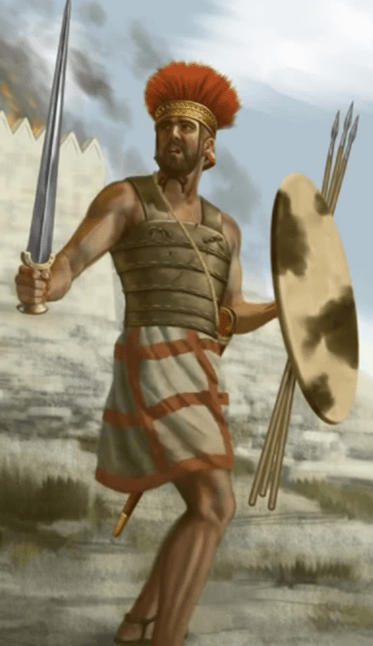
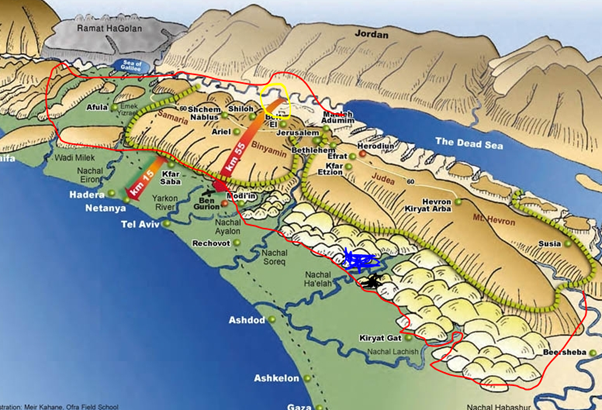
The Philistines oddly entered into Judean territory to wage war with confidence, even though they had just suffered a crushing defeat at the hands of King Saul (1 Samuel: 14). Just as strange, Saul and his men were too frightened to fight. According to one Jewish source, G-d made it this way in order to bring King David into the picture, putting him in a position to succeed the throne. G-d had just told Saul the kingship would be taken from him (1 Samuel 16).
The Philistines mobilized at Socho (see above map with black scribble) and the Jews at Azeka (blue scribble above) and the Terebinth valley, which gets its name from the trees growing there in abundance, was between them.

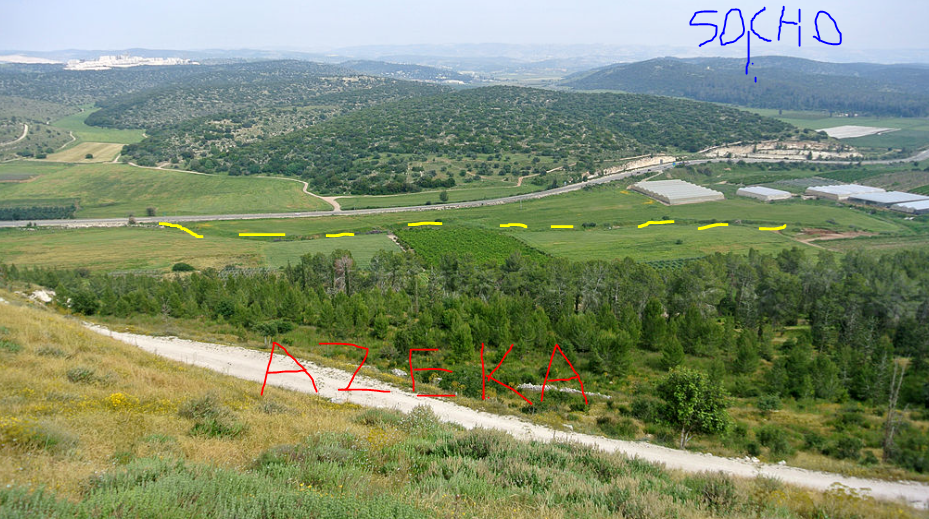
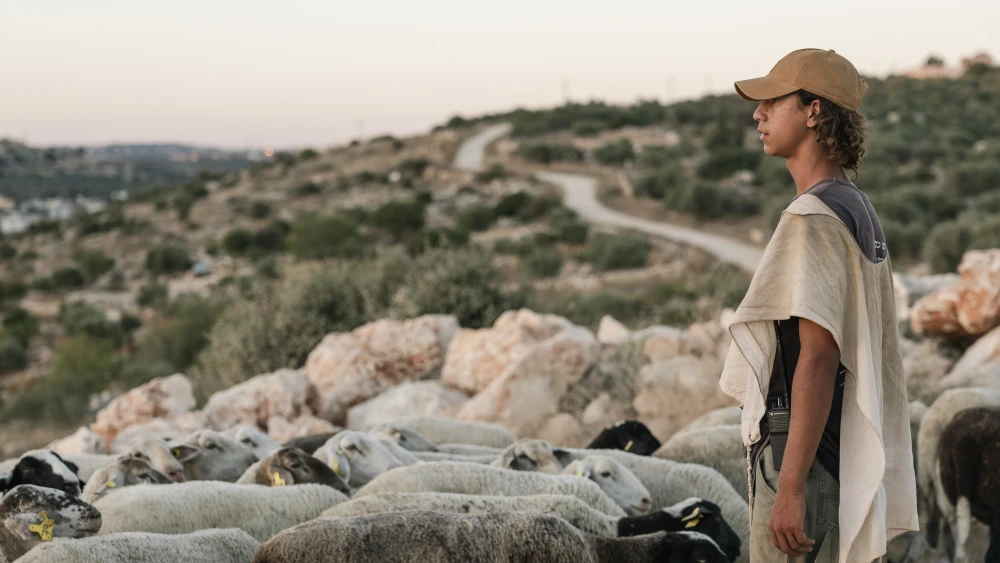
While this was happening, Jesse asked his son David, who was shepherding his sheep in Bethlehem, to check on three of his older brothers on the battle field and bring them provisions (In ancient armies, it wasn’t uncommon for soldiers to supply their own weapons, clothes, food, etc.). When David arrived, he saw a frightened army. The situation was so dire, that Saul promised anyone who could slay Goliath his daughter’s hand in marriage (which meant wealth and a royal court position). When David heard Goliath disgracing “The battalions of The Living G-d”, he was disgusted and wanted to take down the Giant himself. He began inquiring as to what the reward from the King would be for slaying the giant. He already knew the answer, but wanted to engage people in discussion, hoping that word would travel back to the King that David wanted to fight.
Word did travel back to Saul and he summoned David. He said “You cannot go forth…to fight with him, for you are a lad, while he is a warrior from his youth (1 Samuel: 17:33)” In ancient times to be in this type of battle, one was expected to have at least a decade or two of war experience, while he had none. David answered “G-d…will rescue me from this Philistine.” When Saul heard this level of faith, he said “Go, and may G-d be with you (Ibid 17:37).”
David went to the valley’s brook and picked 5 “smooth” stones.

I highly recommend visiting Azekah and the Terebinth valley on your next trip. In addition to being historic and biblical, it offers some of Israel’s best panoramic views and wildflowers. On the way we can even stop at the brook, where you can pick up one of the stones and take it home with you!
Please visit the author’s site: https://guidedtoursofisrael.com
All images used are either free usage or licensed by the author for commercial use.