 October 9, 2026
 Weddings and More: The Latest Jewish Music Trends


Lag BaOmer usually marks the beginning of the wedding season. And as I did last year, I wanted to find out and write about what the biggest trends in Jewish music are this year. What type of music do young couples want to have at their weddings these days? What styles are trending?
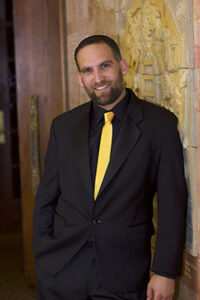
So, I reached out to one of the leading wedding orchestras in the Jewish music world today: Shir Soul, led by David Ross.
The field of wedding bands is crowded. There are many in the marketplace. But Shir Soul stands out because of the high standards Ross maintains for the band.
I had actually reached out to Ross last year when I was working on the music trends column and he got back to me quickly, but since I also reached out to other musicians, by the time I got back to him, I had already interviewed Mordy Weinstein and cantor and singer Yossi Schwartz, so I told Ross I would be in touch the next time I wanted to write about Jewish music trends. So, a few weeks ago, I reached out again and here we are! We had a conversation about his band, trends in music, and Jewish music in general.
First, what’s behind the name Shir Soul?
Ross loved the meaning of the name Shir Soul. It translates as the song of soul. He wanted a catchy and memorable name for the band, something that is easy to say. He was always into rock, soul, and R&B. It was part of his upbringing before becoming frum. He listened a lot to Stevie Wonder and guitarists such as Eric Clapton and Stevie Ray Vaughan.
Then we spoke about how he started with the band.
Ross has always done music, ever since he was a baby. He loved to sing and play, and he had a band in high school. He never had money to take actual classes, so he learned on his own. In college, though, he studied music. Since then, he has conducted orchestras in Carnegie Hall and Avery Fisher Hall and written classical music.
Before forming Shir Soul, Ross was the musical director of the Kaskeset Jewish a cappella group while in college at Binghamton University. His experiences and performances with Kaskeset developed his great love for a cappella music, eventually leading him to form Shir Soul. Since then, Shir Soul Jewish a cappella has performed live in concert internationally, amassing over 4 million views on YouTube and across their social media platforms.
I asked him to tell me what the current trends in music are. What do couples ask him to play at their weddings?
“Mi Sheberach for the IDF Soldiers” is very popular. It’s much more incorporated into chuppahs than it used to be, he said.
The band does 50/50, which means 50% Jewish music and 50% American music. Many Modern Orthodox couples want American music in the later part of the evening.
One of the unique things about Shir Soul is that Ross does not use the regular players who perform every night in other bands – he has his own Shir Soul musicians. Some of them have been playing together for more than ten years. All the guys studied music and are professional musicians.
The band has a very big repertoire, from oldies to contemporary. They’ll start with the classics, but people request different songs for different times.
As you already know, I’m a keyboardist, and one of the things I’m personally obsessed with as a musician is always trying to be as close as possible to the original sound, whether of the intros, the beats I use on my keyboard, or the instruments – strings, brass, etc. Therefore, as a musician to musician, I was curious, how does Shir Soul do things? Over the years, I’ve noticed that some wedding bands do not stick to the original intros and transitions.
Ross answered that he’s very particular about getting the exact original sound or very close to it, yet he gives it a twist so that it sounds different and interesting.
Ross mentioned another trend: Many couples will start with a band and then move to a DJ. He sees that more than he ever did in the past.
Sometimes people want the classical songs; sometimes they want contemporary; and sometimes a mix. He always tries to make the arrangement unique so that even when they hear a familiar song, it will sound different. Sometimes, at the shmorg or cocktail reception, the band plays jazz.
I asked him another question that I always enjoy asking musicians: What is Jewish music?
Ross did not disappoint – he gave an astonishing answer that by itself made the whole interview worthwhile.
He said that if a person creates music about a connection with Hashem or Yiddishkeit, that is Jewish music. If it’s about Ahavat Israel or achdut – even without using those words directly – it’s Jewish music. The instruments do not define the music, he says. It’s the message of the song. A song can have a simple arrangement – just a guitar, for example – and still be Jewish music.
As someone who has done big arrangements in his career, he said that it’s not the arrangement or the instruments – it’s the message.
And if you rearrange a song and spin it in a different way, it’s still Jewish.
Which takes me to the next question I like to ask musicians – about electronic music and dance and trance beats. Here too, Ross’s answer was interesting.
In short, he thinks it’s cool.
To explain, Ross brings an idea which is based on the Alter Rebbe’s Tanya. EDM is klipat nogah, he said. One can elevate it to good or to bad. (For my readers, I asked AI to summarize in English what klipat nogah means: “Klipah of Nogah (literally: ‘Shell of Brightness’) is a Kabbalistic term for the ‘Intermediate Shell.’ Unlike other spiritual ‘shells’ (klipot) that represent pure negativity or evil, nogah is a neutral realm that contains both darkness and sparks of holiness. It represents the physical world and mundane human activities – things that aren't inherently holy but can be ‘elevated’ to holiness based on how we use them.”) Back to EDM: Ross said it can elevate the music or bring it down to a lower level. If you make it sound like a club, you take it down; if you add more simcha, you elevate it.
The question is, what is the intention? To get the rabbis who are present to leave, or to elevate the simcha?
Ross told me that sometimes he will do EDM, but in a way that the rabbis will stay. He draws a very clear line: no inappropriate language.
What about Israeli music? I asked him. Are American audiences even familiar with it?
They want a lot of it, he said. And he immediately gave me examples – “Mi SheMaamin Lo Mefached,” “Halev Sheli,” and “Mahapecha Shel Simcha.” Because of the demand, at Shir Soul they learned Israeli songs and tried to give them a fresh interpretation. He mentioned that in the last two to three years, couples have wanted more Israeli music, such as Yishai Ribo. But every wedding is different, he pointed out.
I asked him if he also composes his own original music.
Ross put out three original albums before Shir Soul, under his own name. The first came out in 2006. (Original solo album entitled “The Power to Be” can be found on YouTube and Spotify.)
It’s hard to make a living from original music only. There is more business playing at smachot.
When he mentioned that, I asked him what it’s like to work in this field – in terms of stability, income, etc. It is very seasonal, he said – it’s the seasonal nature of the music business. Every day he works hard, getting up early and working late hours. He’s always pushing. Baruch Hashem, he makes a parnassah.
The people who come to Shir Soul to hire them for their simcha are not shopping around – they come to them because they want them.
Besides weddings, during the year the band sometimes performs around the world – in South Africa, England, Israel, etc. In the U.S., they have clients everywhere from the tri-state area to Florida and California.
You can find out more about Shir Soul on their YouTube channel (Shir Soul Music) or their website, https://www.shirsoul.com. Or reach Ross by email: david@ShirSoul.com.