 October 9, 2026
 Categories: Headline / Perspectives / Op-Eds
Why I Wrote My Father's Story – And You Should Write Your Family Story, Too
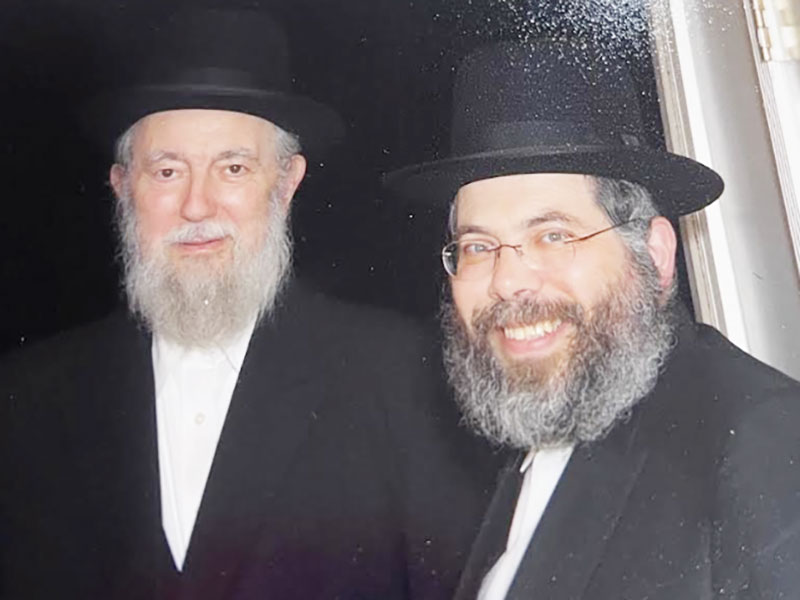


The year was 2018. We were holding a memorial for my late father, Rabbi Aryeh Leibish Gottesman, of blessed memory, and I was asked to speak about my memories of him. I expected that everyone there knew what I was going to say, and this was just going to be a review.
However, after I spoke, one by one, several people came up to me and said, “I never knew that about your father.”
I was surprised not only by this comment, but also by their overwhelming demand to hear more.
Many of our family members knew a little bit about my father from their short visits to his home; after all, he has hundreds of descendants (over 600 and counting at this point) and didn’t have much time to visit everyone. And, for the last 30 years of his life, he was sick and frail, so the younger generation didn’t get to know him very well. They didn’t know how special their grandfather really was.
After I spoke at my father’s memorial and received that feedback, I knew what I had to do: I was going to write his biography. Then, I could show my family members and future generations the full picture of who their Zaidy was. They would be able to learn from him and emulate his ways.
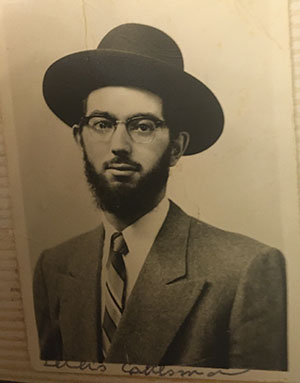
I could also tell the inspiring story of a Holocaust survivor. My father, who was called Reb Leibish, was 16 years old when the Nazis abducted him and his family. Both of his parents and all but one of his siblings were murdered. He suffered through the horrors of Auschwitz, Dachau, and other Nazi atrocities. He experienced many miracles along the way.
After liberation in 1945, he went back to the Serdeheli Yeshiva under the auspices of his first cousin, Rabbi Moshe Neushluss, zt”l. To fill the void of the yeshiva years he had lost during the war, he threw himself into a dedicated learning schedule of 18 hours a day, in addition to davening, eating, and sleeping.
A short while later, he emigrated to America and enrolled in the Nitra Yeshiva in Mount Kisco under the auspices of Rabbi Michel Ber Weismandel, zt”l. He became one of the top students and developed a very close relationship with Rav Weismandel. In 1956, he married my mother, Rikel, also a Holocaust survivor who had lost both of her parents at six years old. He worked as a diamond cutter for two decades and then devoted his life to learning Torah full-time, delivering daily shiurim for working people. My father fulfilled many functions of a dayan or rav but humbly refused to officially adopt this title. His level of bitachon was indescribable.
When I started to write about my father’s incredible life, I looked through the manuscripts and documents he had left behind. I was astonished to find so much priceless information.
Like other Torah leaders of yesteryear, my father would rewrite the letters he sent to others. This way, he could save a copy for himself for future reference. These letters, rich with content, gave me a much broader picture of his extraordinary perspective. Although he was humble and would hide his qualities from the wider public, he anticipated that his children and grandchildren would follow in his path.
It took me three years to write my book, and now, well over 1,000 members of my family – as well as many people in my community – have read it.
One gentleman in his late 70s who read the book came to me crying. He told me how he always wanted to communicate his parents’ Holocaust story to his children, but they refused to talk about it. Their refusal caused a void, so their children, grandchildren, and future generations didn’t know anything.
Recently, a Jewish girls’ high school held an event where students were supposed to speak about the Holocaust. In the entire school, only three girls participated; one was my nephew’s daughter, because she had read my book.
It’s critical to tell your story – as well as the stories of your parents and ancestors – and give it to your children. Then they can follow in the footsteps of their family members and ancestors who had meaningful lives. They can learn from them and apply their values and lessons to their own lives.
While you might think that you have nothing to write about, once you start, you’ll realize you have plenty to give over to your children – and perhaps to the world at large as well.