 September 25, 2026
 2026 Chazzanut Special – The Once-in-a-Generation Nissim Saal
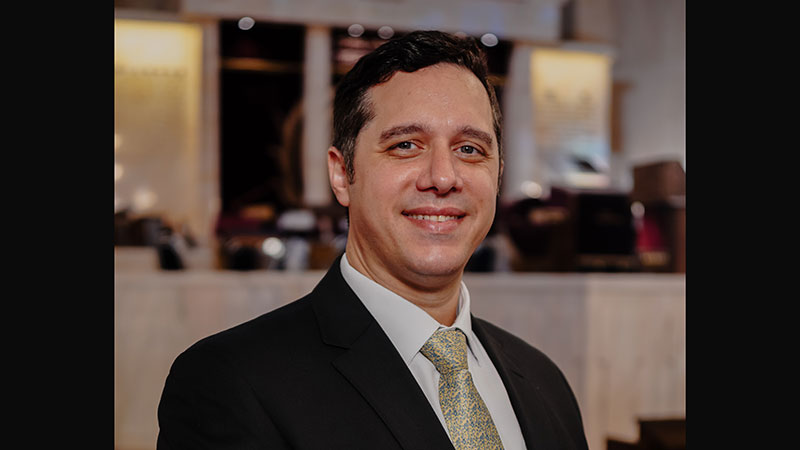


He is considered one of the greatest cantors working today – some would say the greatest. What makes his rise even more remarkable is that his career only began about six years ago. Audiences and critics often describe his voice as a once-in-a-generation phenomenon. His breakthrough was meteoric, rapidly propelling him straight to the top of the cantorial world. Musicians frequently highlight his extraordinary vocal ability, particularly how he reaches high notes effortlessly without any sign of strain.
Nissim Saal, 42, has loved chazzanut since childhood. At eight years old, he began listening to records of legendary cantors like Yossele Rosenblatt, Zavel Kwartin, Yehoshua Vider, and Pierre Pinchik. His mother, who shared a deep love for chazzanut and especially for Rosenblatt, played a key role in nurturing his passion. One day, after hearing a recording of a child singing Rosenblatt’s “Rachem Na,” he asked her, “What is this music?” She explained that it was Yossele Rosenblatt and that she would buy him some cassettes. She did, and he listened to them constantly.
Recognizing his talent, passion, and love for this music, his mother encouraged him to perform a Rosenblatt piece at a family Chanukah party.
That Chanukah performance at age eight marked his very first time “on stage.” He began to listen to other cantors as well. Over the following years, as he discovered many more, his father encouraged him to sing cantorial pieces at family events and gatherings. He continued performing occasionally until around age 18, when he entered the workforce and cantorial music took a back seat in his life.
It wasn’t until around age 36 that he decided to pursue a professional music career, spurred on by his older children. They asked him, “Daddy, why don’t you become a professional singer? Look at all the singers out there – you’re better than them.”
Encouraged by their words, he decided to give it a try.
His son Shulem, who sang in a children’s choir and was a famous child soloist, brought his father to the recording studio he used. There, Saal recorded “Eishet Chayil,” adapting an old classical Asian melody originally performed by the Kazakh singer Dimash. Saal had heard the tune, loved it, and decided to record his own cover.
He contacted a producer to create a full production, and released the track on a popular YouTube channel. One of the studio musicians who played on the video knew Yochi Briskman and wanted to introduce Saal to him. Saal was hesitant at first, doubting Briskman would be interested, but the musician said, “Let’s try.” He sent the track to Briskman, who was instantly impressed and set up a meeting. He would go on to become Saal’s manager.
Briskman helped finish and publish the track. The response was immediate and overwhelming.
Recognizing the unique qualities of Saal’s voice, Briskman noted that while there are many singers of general music, his voice was exceptionally suited for chazzanut. During their meeting, they sang together, and Briskman told him firmly: “You should do chazzanut.”
Around the time that he produced “Eishet Chayil,” Saal also began taking formal vocal lessons. Soon after, he and Briskman started recording together, and Saal also began performing concerts. They posted new material to YouTube, including an acclaimed recording of Yossele Rosenblatt’s “Amar Rabbi Elazar.”
As his online presence grew, prominent cantors began reaching out to Saal, and he started getting booked for Shabbatot. Briskman connected him with leading figures in Israel’s cantorial scene, such as Rafi Bitton, Ofir Sobol, and Eli Yaffe, all of whom were deeply impressed by his talent. Once his reputation was established, the prestigious Yeshurun Synagogue reached out to hire him.
I ask Saal who was his main musical influence. “Yossele Rosenblatt was number one, along with the entire Golden Age of Cantors,” he answers. He mentions Cantor Vider’s “Mimkom’cha” and “Le’olam Yehei Adam,” Hershman’s “Modim,” Kwartin’s “Tiher” and “Ve’al Yedei Avadecha,” and Pinchik’s “Raza D’Shabbos.”
Rosenblatt wrote music that everyone loved – whether chazzanut lovers or not. That was his talent.
Saal sings everyone’s compositions. If it’s a good composition, he’ll sing it, especially if it’s a challenge. He loves challenges. He’ll take it one step at a time – break it into pieces and practice each one at a time.
How do you prepare for the High Holidays? I ask him.
The first time he led High Holiday prayers, he had to learn the complete nusach as well as a vast repertoire of pieces and compositions. Since then, he has already learned everything, yet he still tries new things every year. He typically begins his preparations two to three months in advance, always looking to introduce something fresh while brushing up on the classics.
I ask him what he thinks about the current trend in which cantors mix in contemporary hasidic songs, non-hasidic melodies, or even secular tunes into the prayer service.
He says he carefully chooses the moments when to do so, as each nusach has its own identity and people connect to it.
“There are a few moments that allow for flexibility, like ‘V’chol Ma’aminim,’ where you can introduce a modern tune,” he explains. “But for the vast majority of the tefillah, I stick to the traditional stuff. When people come to synagogue on Rosh Hashanah and Yom Kippur, they want to hear the real nusach. That is how you get the true feeling of Rosh Hashanah – the way it has always been done.”
He points out that the cantors of the Golden Age composed countless beautiful pieces specifically for the High Holidays. He studied under Cantor Heinowitz and Eli Jaffe, and notes a particular fondness for the traditional Yekkish (German-Jewish) nusach, adding that there are plenty of rich resources available today for anyone looking to learn it properly.
Saal also composes. His compositions draw inspiration from the many compositions he’s learned from the chazzanim who came before him.
He believes that chazzanut is a beautiful genre because it is a Jewish genre – not just a classical show. If you listen to enough good chazzanut pieces, he says, you get into it; everyone can connect to chazzanut if they just give it a real chance. Sometimes he will start with something that everyone can connect to – a very high note or something simple and familiar – in order to “bribe” them into the atmosphere, and only then move on to the more complex pieces.
Saal performs concerts and leads Shabbatot all over the world. One of his favorite shuls in the U.S. is Young Israel Beth El of Boro Park, and this year he will be leading the Selichot there.
Recently, after Passover, he was hired by the Great Synagogue in Jerusalem after three years at Yeshurun. He will now serve as the chazzan for the Yamim Nora’im there together with their current chazzan, Tzvi Weiss, and the Great Synagogue Choir conducted by Eli Jaffe. He will also daven there a few Shabbatot during the year. If you happen to be in Israel for the Chagim, don’t miss it!
You can listen to Nissim Saal on YouTube, Spotify, and all the major platforms.