 November 20, 2026
Categories: Halacha & Hashkafa / Torah
Parking Ticket Penalty
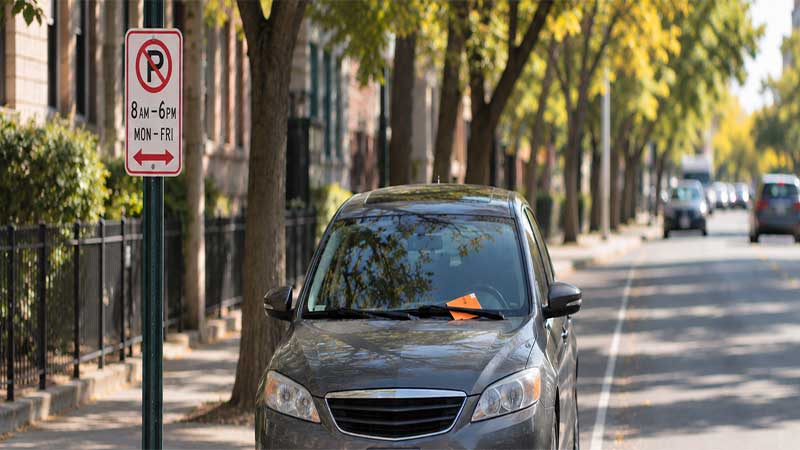


Ari needed to run an errand across town and borrowed Shimon’s car. He parked along a busy street, overlooking a sign indicating restricted parking hours.
When Ari returned the car, Shimon noticed a parking ticket tucked under the windshield wiper.
“What happened here?” he asked Ari.
“Oh, I’m sorry,” Ari replied. “I must have missed the parking sign. Of course, I’ll reimburse you for the ticket.”
“Thanks,” Shimon said. “Please transfer the money to me promptly, so I can pay the ticket.”
Days passed, then weeks, but Ari still hadn’t transferred the money. Shimon reminded him several times, but Ari kept putting it off.
Meanwhile, the ticket remained unpaid. After the payment deadline passed, the municipality added a substantial late-payment penalty.
Shimon was frustrated. He called Ari again.
“I still haven’t received the money for that parking ticket,” he said. “And now there’s an additional penalty because it wasn’t paid on time. You need to reimburse me for both.”
“Wait a minute,” Ari protested. “I agreed to reimburse you for the ticket – I don’t dispute that. But the ticket is legally registered to your car, not to me.”
“But you were the one who received the ticket!” Shimon countered. “Had you transferred the money promptly, I could have paid it on time.”
“You could have paid it regardless, and collected the money from me afterward,” Ari argued. “Why should I be responsible for the penalty that you incurred?”
They decided to bring the question before Rabbi Dayan, and asked:
“Is Ari liable for the late-payment penalty?”
“In almost all jurisdictions, parking tickets (as opposed to driving violations) are assigned to the car and its registered owner,” replied Rabbi Dayan. “Thus, the legal responsibility for the ticket rests on the owner.”
“There are varying rules regarding the possibility of transferring liability for the ticket. In some places in the United States, the owner can submit a notarized affidavit identifying the driver and requesting to transfer liability.
In other places in the United States, though, such as New York, the owner is liable if the car was used with his permission, and there is no option to transfer legal liability.
In Israel, liability can usually be transferred by submitting a request along with a signed affidavit from the driver accepting liability for the event. Often, there is a time limit for transferring liability for the ticket; afterward, it is no longer possible to do so.
Once the ticket is transferred (in places where this is possible), the driver becomes fully responsible for the ticket and any ensuing consequences of delay in payment.
Even where it is not possible to transfer legal liability, or where it was not transferred, the driver is halachically liable to compensate the owner for the ticket.
The halachic framework for the driver’s obligation is rooted in garmi (directly caused damage), arev (guarantor), or the implicit terms of borrowing or renting – the driver implicitly accepts responsibility for tickets resulting from his driving or parking of the car (see Nesivos 176:51; Mishpat Haneheneh 17:5[14-15]).
However, this applies to compensation for the ticket itself. The fine or penalty for delay in payment is imposed upon the car owner, who retains legal liability for the ticket until it is transferred or paid.
Thus, even if the driver delayed in compensating the owner, he is not liable for the additional penalty that the owner incurred. Since the legal liability remains with the car owner, he is responsible for the delay in paying the ticket and for the ensuing penalty, even if the driver delayed in compensating him for the ticket.
“However, if the parties agreed before the penalty was imposed that the driver would pay the ticket directly online, and he then delayed doing so,” concluded Rabbi Dayan, “he would also be liable for the penalty that he caused through his delay, since in that instance, the owner was relying on him to pay.”
Verdict: Legal liability for a parking ticket is imposed upon the car owner, but the driver is halachically required to compensate him. If the owner delayed in paying the ticket, he is responsible for the ensuing fine or penalty. If the ticket was transferred to the driver, or if he explicitly accepted responsibility to pay the ticket directly, then he is responsible for the ensuing penalty.