 October 23, 2026
 Point / Counterpoint: To Mask Or Not To Mask


Editor’s note: We asked two people to write articles on why a frum Jew should or should not wear a mask outdoors (and possibly indoors). We asked both of them not to dispute the available scientific data as neither author is a medical doctor or scientist.
* * * * *
Be A Mench, Wear A Mask
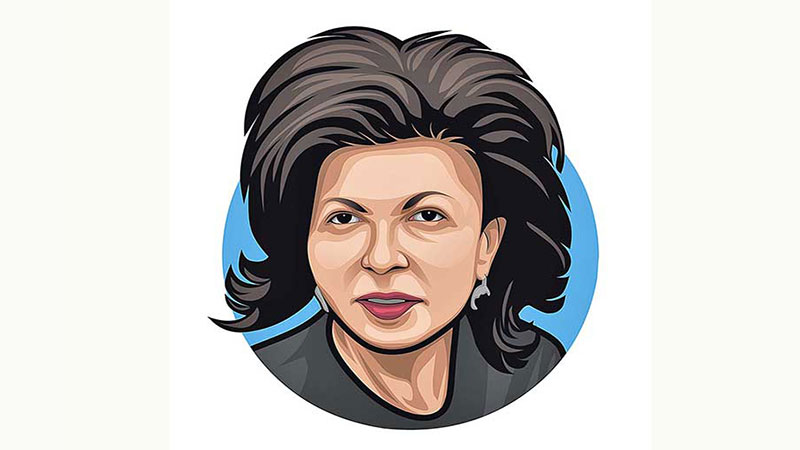
By Shani Bechhofer, PhD
We are living in hyper-partisan times. So many aspects of our lives have been swallowed up by politics and become divisive “issues.” One such issue is wearing masks to contain the spread of Covid-19. People tend to regard masks as symbols of allegiances, loyalties, philosophies, and psychological states.This is most unfortunate. As Orthodox Jews, we should be able to disentangle Torah values from the morass of American political argumentation and rise above the nasty fray. I have been asked to present some arguments for wearing masks in public. Here are a few:
- Nizkei shecheinim: There are numerous halachos pertaining to public safety. To name a few: We are obligated to plant trees away from wells, plant mustard away from others’ beehives, construct thick ceilings for downstairs tenants, not pile thorns on public walkways, and not drain refuse into a public thoroughfare.
- Ke’she’ani la’atzmi, mah ani: Wearing a mask during a pandemic that has already killed hundreds of Jews and hundreds of thousands of Americans – and brought debilitating suffering upon many more – is an act of chesed towards others, protecting them from the droplets we exhale.
- Wearing a mask in public also gives chizuk to others who feel self-conscious about wearing one. Even if you know you aren’t contagious – perhaps you just took an antibody test – your choice to wear a mask is indeed contagious! By wearing a mask, we remind those who see us to be careful. Do it for altruistic reasons. Olam chesed yibaneh.
- Al haTorah, v’al ha’avodah, v’al gemillus chassadim: Universal mask wearing is the best way to prevent the outbreaks that lead to lockdowns and shutdowns. If we want to keep shuls and yeshivos open, we need a way to make sure contagious people don’t inadvertently spread through the community.
N95 masks are ideal, but even homemade masks reduce the risk in the population overall. Wearing a mask is a statement in support of prioritizing limud haTorah and tefillah betzibur. If we want the voices of tinokos shel beis rabban to be heard in our local schools, chedarim, and Bais Yaakovs, we have to commit to doing whatever is needed to keep the virus contained.
- Mipnei darchei shalom: We don’t live in isolation. Outsiders are often outraged when religious communities defy policies meant to protect the general public. When we act as if we prioritize our own comfort over the safety of others, it damages our relationships with our fellow Americans.
Only 12 percent chose “rarely” or “never.” So bear in mind that what may make perfect sense to you actually appears as gross insensitivity, poor hygiene, and a threat to public health to most Americans.
- Keep it consistent and uncomplicated. Wear your mask outside too unless you are in an isolated area. Even if you intend to stay six feet away from friends outdoors, you should wear it as it’s getting harder to stay disciplined after all these months.
- Vehadarta pnei zaken: We believe in the sanctity of life and honoring the elderly. How sad to hear some in our communities echoing foreign anti-Torah ideas that treat older people as expendable, ch”v! When young people or those unconcerned about catching the virus don’t wear a mask, not only are they are failing to protect those who are vulnerable; they are communicating a lack of caring.
- Shenasan mei’chachmaso l’basar v’dam: Our tradition is not anti-rational or anti-expertise. There is nothing heretical about the science of particle spreading. A wise person knows the limits of his own knowledge.
And if the conclusions you draw from the info you happened to come across turn out to have been wrong, will your degree enable you to guide my treatment if I, ch”v, catch the virus from you?
- Ilmalei morah shel malchus, ish es rei’eihu chayim bela’o: It’s the law. New York State currently requires us to wear a mask in public except outdoors when one can maintain a distance of at least six feet from all other people.
If you choose to disobey the law – even on principle – you must be willing to accept the consequences. That is how civil disobedience works. It is a strategy for making change, not permission to do whatever you want and get angry when held accountable.
The rule of law protects us from chaos and violence. If it weren’t for “mora shel malchus,” people would swallow one another alive, says Pirkei Avos. We can also be pretty confident that a breakdown of the rule of wouldn’t be “good for the Jews.”
We’re supposed to be rachmonim, bayshonim, and gomlei chassadim. Wearing a mask around other people is an expression of each of these traits. Brazenly violating safety rules and putting others at risk in order to be comfortable or to express a political opinion is an indulgence that does not reflect the middos expected of a Jew.
* * * * *
Mask Mandates Are Part Of An Anti-Jewish Assault
By Rabbi Michoel Green
There is no halachic obligation for a healthy person to wear a mask outdoors – or anywhere else for that matter (with very few exceptions, like in surgery rooms).The law of “Do not stand over your brother’s blood” is not relevant since the actual risk of not wearing a mask is negligible from a halachic point of view. Alleged statistical risks are not a factor in halacha with regards to prevention. For example, halacha prohibits killing a spider on Shabbos even though there is a 1 in 1,000 chance that someone might be at mortal risk if the spider falls into his food (Shulchan Aruch HaRav 316:23).
The fact that doctors recommend that the population at large wear masks is irrelevant. The principle that “authority was granted to a healer to heal” was stated only regarding a physician who has clinically evaluated an individual patient – not regarding physicians making public policy.
Furthermore, the authority conferred upon doctors is only to heal. With regards to preventative measures, doctors have a vote, but not a veto (this opinion attributed to Rabbi Chaim Brisker). While in some cases it might be wise to heed a doctor’s advice, it is in no way obligatory (see Igros Moshe, Choshen Mishpat 2:76).
One may ask: Even if it’s not obligatory, isn’t it still advisable to heed the recommendation of doctors in regards to preventing llness?
The answer is that it is advisable if the advice is (a) for your own personal benefit; (b) based on empirical evidence; (c) not contested by other expert physicians; and (d) carries no risks of its own.
Doctors’ advice on mask-wearing, though, doesn’t meet any of these four criteria:
(a) Masks are promoted as a means to protect the community – not wearers – most of whom are at low-risk of being harmed by the virus in any case;
(b) There’s no direct evidence that asymptomatic transmission is even a major factor in this disease or that masks prevent transmission in such cases. The belief that they do is based on statistical models, which have no legitimacy in halacha;
(c) There are plenty of medical experts who oppose mask-wearing for healthy individuals (see www.americasfrontlinedoctors.com, for example).
(d) Wearing a mask entails risks that are well-documented by OSHA and numerous expert physicians.
Consequently, the current mask policy is not halachically advisable except possibly for individuals at heightened risk, for whom it might be advisable – although not obligatory – to wear an N-95 mask that might afford them some sort of protection.
In addition to the above considerations, there are actually halachic problems with wearing a mask:
1) It’s inappropriate to stand before a king wearing a mask on one’s face. How much more so to stand before the King of Kings and pray. (See the recent teshuvah by Rabbi Moshe Shternbuch on this topic.)
2) One may not wear a mask while teaching or learning Torah (see Exodus 34:35; Torah Shleimah, vol. 21, pages 179 and 183; Pele Yoetz 341, based on Isaiah 30:20, “Your eyes shall behold your teachers”; and Yahel Ohr on Tehillim 39:7).
3) Wearing masks is not a Jewish practice. Masks are never mentioned in Tanach and only appear in halacha in regards to frightening children. Masks are commonplace in pagan worship and are of polytheistic origin.
There are numerous hashkafic problems with wearing a mask as well:
1) According to Kabbalah, one’s mouth and nose should never be covered. Rabbi Moses Cordovero, for example, writes in Tomer Devorah that one’s mouth and nose should always remain uncovered in resemblance of the Divine.
2) Masks ominously symbolize idolatry, division, and estrangement from G-d (see the Ohr HaChaim on Leviticus 19:4).
3) A human face is tzelem Elokim, a reflection of the divine face. Placing any barrier over it obscures this G-dly distinction and reduces a human being to a faceless droid.
4) Hiding one’s face is reminiscent of G-d hiding His face from us.
It should also be noted that masks are just one element of a broader government Covid-19 policy. This policy in its entirety constitutes an egregious attack on Judaism, akin to a g’zeiras shmad.
According to this policy, religion is “non-essential.” Hundreds of passengers may sit in close contact for a 12-hour flight, but houses of worship may only have 10 worshippers. Black Lives Matter protesters are allowed to congregate and riot by the thousands, but Jews have been banned from communal prayer, visiting the sick, escorting the dead, rejoicing with a bride and groom, and learning Torah in public.
These activities are essential in Judaism and ought to be observed publicly with many participants. Policies that ban or greatly restrict these activities do not comport with our faith.
Our Sages declared that the entire world exists solely in the merit of the breath of children chanting words of Torah. Children studying Torah is an even higher priority than constructing the Beit Hamikdash! Jerusalem was destroyed because children were prevented from attending yeshiva.
A century ago, in the Soviet Union, religion was declared “non-essential.” The Soviets banned all forms of public religion. Jews were permitted to practice Judaism in their homes but not in groups. Yeshivos, synagogues, and houses of study were shut down. Nearly everyone complied. Most rabbis were silent.
One Jew refused to comply. Rabbi Yosef Yitzchak Schneersohn of Lubavitch dared to defy the dictates of the Soviet regime and organized underground yeshivos and inspired his adherents to do the same.
He was arrested and incarcerated. On the day he was released from prison, he declared, “We must proclaim openly and before all that any matter affecting the Jewish religion, Torah, and its mitzvos and customs is not subject to the coercion of others. No one can impose his belief upon us, nor coerce us to conduct ourselves contrary to our beliefs.”
Even those who recognize an element of statistical pikuach nefesh with regards to Covid-19 guidelines should consider the words of the Chazon Ish: “Pikuach nefesh overrides the entire Torah, but it does not uproot the entire Torah.”
A policy that interferes with a Jewish child’s access to a Torah education dangerously seeks to uproot the entire Torah. It cannot be tolerated, even if the policy purports to be about pikuach nefesh.
Jews ought to reject Covid-19 policies that are not supported by halacha.
Finally, chillul Hashem is not a factor here since there is no objective value that obligates a Jew to wear a mask in the first place. The fact that there is a prevalent societal attitude that healthy people who don’t wear masks are somehow perpetuating a pandemic is irrelevant. Judaism doesn’t kowtow to popular opinion or policies that have no actual merit in halacha.
The fact that a Jew shows his face in public does not constitute a chillul Hashem by any halachic definition. If some non-Jews look askance at those who flaunt an unjust state policy, that’s their problem.
In fact, by not wearing a mask in public, one is making a kiddush Hashem. A proud Jew doesn’t bow before dictates of an unjust state policy that perilously threatens the existence of our people. There is absolutely nothing shameful about showing your tzelem Elokim.