 October 23, 2026
 Categories: Featured / Parsha / Torah
A Lesson in Humility


“This man Moshe was exceedingly humble, more so than any person on earth” (Bamidbar 12:3)
The Shlah comments, “How great is the attribute of humility.” Moshe Rabbeinu was superior among creation, master of the prophets. However, he is lauded only for his humility. Why?
Man is charged to be humble to the nth degree, as it says (Avos 4:4), “Be exceedingly humble in spirit.” There were three great humble people in the world: Avraham Avinu said (Bereishis 18:27), “I am dust and ashes”; Dovid HaMelech said (Tehillim 22:7), “I am but a worm.” Moshe and Aharon said (Shemos 16:8), “Of what significance are we?” – i.e. he was nothing, not even a worm or dust.
The Talmud (Pesachim 68b) relates that on Shavuos, Rav Yosef stated that he had a special obligation to rejoice on that day, because “If not for this day on which the Torah was given, how many Yosefs would there be in the market?”
HaGaon R’ Elyashiv asks: R’ Yosef was known to be especially humble, how then could he glorify himself with his knowledge of Torah?
R’ Elyashiv cites the Talmud in Bava Metzia (85b) which tells us that the Beis HaMikdash was destroyed because the Jewish people abandoned the Torah. The Ran notes that it is not meant literally, rather they didn’t make the blessing before they learned Torah, which begins with the words “asher bachar banu – Who selected us from all the people and gave us His Torah.” The Torah wasn’t important in their eyes. A person who does not rejoice in his learning will not make a blessing over it.
Because R’ Yosef learned Torah he felt that he was obligated to publicly display his delight with the Torah, in order to demonstrate to everyone, the great reverence and esteem he had for the Torah. He wanted to proclaim that he was not one of those who did not make the blessings for the Torah. Even though he was very humble, he felt it was imperative to publicize his great happiness in this way.
The Abarbanel and the Maharsha ask why the Minchas HaOmer is an offering of barley, which is considered grain for livestock, as opposed to using wheat as is used in the Korban Mincha.
It is explained that before we received the Torah, we were comparable to animals, so we bring the offering from barley. After we purified ourselves in preparation for receiving the Torah, and accepted the Torah at Har Sinai, we reached the level of man, and even more, we were Bnei Yisrael. Then we could bring wheat – food for people.
This demonstrates to us the difference between an individual who has Torah and one who does not. There is a hierarchy in the existence of the world, and each level serves the level above it. As such, the inanimate (minerals, water, gases) benefit the vegetation, which benefits the animals. The highest tier, man, incorporates all these levels, and when Torah is part of a person’s life, he has the ability to rise even higher than the malachim. On the other hand, when someone does not fulfill the requirement of acting like a human being, and Torah is not part of his life, he can fall even lower than an animal.
This was in essence what R’ Yosef was saying. The only way he was able to rise above the level of an animal was through his learning.
The great Gaon Rav Shlomo Elyashiv (1841-1926), known as the Baal HaLeshem, was considered one of the greatest Torah giants of his generation. Commensurate with his Torah greatness was his exceptional humility. Even after he was universally recognized as having achieved supremacy in all areas including Kabbalah, the following is how he introduced himself in the foreword of his sefer: “Among my many sins, I don’t know Torah, I don’t know Mishna, and I don’t know Gemara. I have no wisdom and little logic. I am like a worm, small and insignificant.”
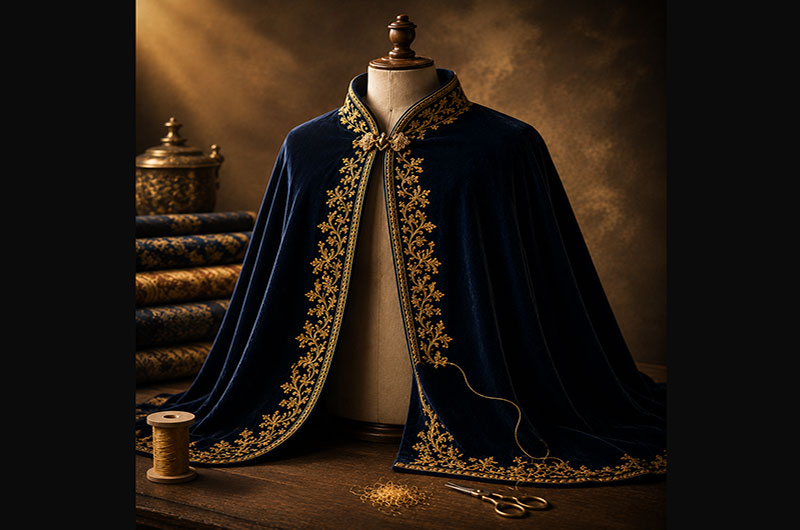
A very skillful and gifted tailor had gained an enviable reputation. All the aristocrats and nobility in the area would retain him to make their clothes, for which he was handsomely compensated. In this way the tailor earned a very comfortable livelihood.
One day the baron summoned the tailor to construct a majestic cloak for him.
“No problem,” promised the tailor. “I will create something beautiful of which you can be proud, a garment the likes of which has never been seen before.”
The baron gave the tailor expensive silk material, and the tailor confidently returned to his shop to create the garment.
A few days later, the tailor came to the baron’s mansion with the beautiful cloak he had prepared. The baron tried it on for size, to ensure that the fit was perfect. However, when his wife saw it, she began to shriek. “This is worthless! It is awful; you cannot wear it!”
Enraged, the baron quickly removed the cloak and threw the tailor out of the manor along with the garment.
News traveled quickly, and people heard that the tailor had fallen out of favor with the baron, because the garment had not met the baron’s standards. Slowly, but surely, the tailor’s clientele decreased, and soon he had hardly any work, and could barely make a living.
Seeking the insight of a tzaddik, the tailor traveled to R’ Simcha Bunim of Psischa and told him what had occurred.
R’ Simcha Bunim told the tailor: When you return to your house, take the cloak you prepared for the baron, and undo the entire garment. When you have taken apart all the pieces, sew them back together the way you did before. Do not change anything.
The tailor could not understand R’ Simcha Bunim’s advice, but he did as he had been instructed.
He then took the cloak back to the baron, and informed him that he had repaired the garment. When the baron tried it on this time, he was delighted. He admired the design and marveled over the precise workmanship. He was so happy that he even gave the tailor a bonus for his work.
The tailor then returned to R’ Simcha Bunim. “What was the difference between the two garments?” he asked, completely puzzled. “There was no discernible difference. It was constructed exactly as it had been the first time, with no imperfections.”
R’ Simcha Bunim explained: When you sewed the cloak the first time you were very arrogant, thinking there was nobody as skilled as you in the land who could create such a beautiful cloak. Accordingly, the garment was detested not only by Hashem but also by man. Now that your arrogance was crushed, you sewed the cloak with humility and it found favor in the eyes of man, as it says (Mishlei 3:34), “If one is drawn to the humble, he finds favor.”