

 November 20, 2026
Categories: Headline / Columns
A Place Among Us
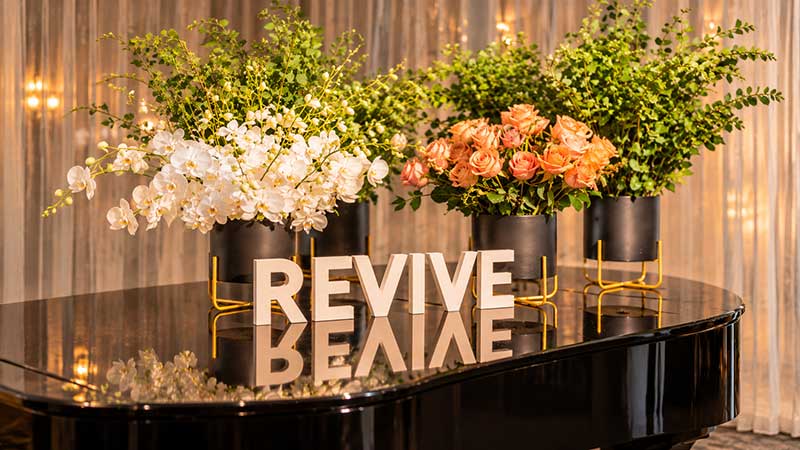


By early Friday afternoon, the hotel lobby is buzzing. It has been made over for the weekend, the Shabbaton's colors carried through from one end to the other, with decorative touches wherever you look. Through the doors, the tables for the Shabbos meals are already set, and lavishly. Every detail a person passes seems to say: this is all for you. Facilitators stand near the door greeting people by name, and everyone who walks in is welcomed like a guest of honor. People have come from all over, some flying in from across the country, and many have already pulled on this year's sweatshirt, in the same colors as the room. Women from the same group spot each other across the room and hurry over. Within minutes there are little clusters everywhere, people hugging, talking over each other, waving someone else in. The toameha buffet is elaborate, and the noise keeps rising. If you didn't know what it was, you might guess a cross between a high school reunion and a Pesach program.
It's Ray of Hope's third annual Revive Shabbaton for women, and the more than 230 members spending Shabbos there are Jewish survivors of childhood sexual abuse. Ray of Hope supports them mostly through professionally facilitated support groups that meet in person and online. I'm privileged to be one of its facilitators, and for the past several years I've participated in the Shabbaton.
Many of the women in that room are successful in their work and respected in their communities, and some are prominent in them. From the outside, they fit in perfectly well. Inside, a lot of them have spent their lives feeling that they don't, in their families, their schools, their shuls. That feeling is one of the most common things childhood abuse leaves behind. For some it began before the abuse did. They had already learned that certain things couldn't be said, or that there was no safe adult to turn to, and that kind of isolation leaves a child more exposed to someone willing to use it. For others it came with the abuse and the secrecy it demanded.
Either way, it tends to last, even when no one ever learns what happened, because the habit of being alone with the most important thing about yourself doesn't end when the abuse does. It shows up decades later, at a simcha where everyone else seems at ease, or in a shul where a woman has belonged for twenty years and still feels like a guest. The stigma comes on top of all that.
The Torah says of Yaakov, on the night he left home, vayifga bamakom, he came upon the place. He gathered stones there and lay down to sleep. The Torah never gives the place a name, but Chazal tell us where it was: Har HaMoriah, the site of the even hashesiya, the stone from which the world was founded, where the Beis HaMikdash would one day stand. It is the one place in the physical world that stays continually rooted in the source of its existence.
Rav Moshe Shapiro, zt"l, taught that makom means more than a location. It is what makes it possible for something to exist and become what it can be. Chazal call Hashem Mekomo shel olam, the Place of the world, because He grants every created thing its kiyum, its existence, at every moment. That was the makom Yaakov came upon that night. Alone, with everything familiar behind him, he found that his existence did not rest on home or family or circumstance. It was being given to him, continually, by Hashem.
A person needs a makom in that sense too. Most survivors have a house and a seat at a table. What many have never had is a place where the truth of their life can exist alongside them, where they don't have to leave part of themselves outside the door. Without one, a great deal of life stays out of reach even when nothing outside is blocking it: trust, closeness, ease in a room full of people, the feeling of being at home in one's own shul. When Yaakov woke, he said, “ein zeh ki im beis Elokim,” this is none other than a house of G-d. The place he had come upon in the dark had become somewhere a person could live. The groups, meeting week after week, begin to make that kind of place. The Shabbaton makes it larger than anything else Ray of Hope does.
What makes the Shabbaton work is less dramatic than people expect. There are sessions, panels and roundtables that take on the heavier subjects, and they matter. Most of the weekend, though, looks like any other Shabbos. People talk about their kids at the seudah and kumzitz, and hang out in the tea room. There is an improv comedy workshop and a breathing session. Motzei Shabbos brings a musical Havdalah, an art activity and an interactive program. The difference is that nobody there has to explain themselves. What would need explaining almost anywhere else doesn't need it in that room, so the conversation is free to be about anything at all, and usually is. None of this replaces therapy or resolves what people will go home to on Sunday. But these are people in the middle of real healing, and at the Shabbaton, you can feel how much they want it.
Nobody has to tell their story, either. Twenty years after that night, Yaakov leaves Lavan's house. When Lavan catches up with him, Yaakov finally says out loud what those years were: “zeh esrim shanah anochi imach,” “twenty years I've toiled for you.” Lavan's answer wipes it all away: “habanos benosai vehabanim banai… vechol asher atah ro'eh li hu,” “the daughters are my daughters, the children are my children, and everything you see is mine.” Yaakov's family, his life and his account of what was done to him are all claimed as Lavan's. Yaakov answers by gathering stones once again. He piles them into a mound he calls Gal Ed, as a witness to what was true between them, and as a boundary neither would cross. His story stays his.
Many survivors have lived with some version of Lavan's claim, with other people deciding what could be said about their own lives. This is a hard story to tell and a hard one to hear. A child may be told never to tell anyone, or may grow up in a family where speaking up was never really possible. Some children did speak, asking to be protected, and were told in harsh terms that they were the problem. Even as adults, many are condemned by their families for having spoken at all, especially when the abuser was a relative, as though saying it were worse than what was done. Others meet a quieter discomfort: why do you have to talk about this? Over time, many come to feel that their own story isn't theirs.
At Ray of Hope – at the Shabbaton and in the groups – it is. Nobody there lays claim to their stories, whether by silencing them or by prying. People can tell it or not, and either way they're witnessed in the present, in how they laugh, hold back, join in or sit quietly. Being seen that way by others makes it easier to see yourself.
The women also notice how many of them there are. They come from every kind of community, and for once there are enough of them to see it. I've heard it said many ways: they are no longer a few scattered people with a secret. They're a community, with friendships that carry over from one year to the next. Over Shabbos they're joined by rabbanim, clinicians and well-known figures from across Orthodox life who come to spend it with them. Those guests don't give anyone belonging, which was already there. Their presence says publicly that it is. What the members are proud of at the Shabbaton is the friendships and the dignity, and the parts of life that have started opening up to them.
On Sunday they go home. Not everyone at the Shabbaton has told the people in their lives about the abuse. Some have young children. Some have parents, siblings or in-laws who don't know, and a few told their families only that they'd be away for Shabbos. That is their right. Silence forced on a child and privacy chosen by an adult are very different things, and each person decides who hears their story and when. Many of them still return to homes and shuls that are not yet a makom for them, where the ease of the weekend isn't so simple to keep. What they bring back is a sense of place they can carry inside, and a group that will meet again in a few days.
Some of us reading this were abused as children, as well. Survivors have always been part of our families and shuls. What has been changing is our willingness to see it and to treat it as ours: preventing abuse, believing people when they tell us, protecting children, holding abusers accountable, and making sure survivors can find good care and a real place among us. Ray of Hope's work outside its groups is part of that change: public campaigns with rabbanim and community leaders, and community events with partners like Amudim and Project Sarah of JFS of Passaic-Clifton. One of those evenings was called simply "Let's Talk About It." The title says what has to happen.
Chazal say that while Yaakov slept that night, Hashem folded the whole of Eretz Yisrael and placed it beneath him. The very next pasuk promises, “ufaratzta yamah vakeidmah vetzafonah vanegbah,” you will spread out to the West and the East, to the North and the South. What was gathered into one place was meant to reach past its borders. This Shabbos, people from communities all over are gathered into one place, and what they find there is meant to go home with them to every one of those communities. It doesn't yet reach nearly far enough.
If you were abused as a child and never told anyone, or told and still feel outside every room you walk into, or aren't part of any group and may never be, nothing in this article is asking you to do anything. What's being made this Shabbos was made with you in mind, and it's larger than one weekend or one organization. You belong to it whether or not you ever come.
All of us can hold that place open, for you and for each other. It happens at our own tables, in how we talk about abuse when it comes up, and in whether the children sitting with us learn that this is something they're allowed to say. A person's place in the world was never ours to give. It is granted continually by HaMakom, the Source of every possibility a life still holds. Our part is to make room for it here.
Ray of Hope can be reached at 845-600-1185.