יום ראשון, י״ד חשוון תשפ״זSunday, October 25, 2026



Follow Us


Dr. Bin Goldman is a psychologist and educator. He treats and evaluates adults and children in his practice in NY and NJ, and he presents to professional and community audiences on mental health, education, and Torah.
Read More

Part of why he could tell me, I think, is that I was nobody to him. My kids weren't in class with his, and I wasn't going to be at the kiddush. There was no role between us for the truth to damage.
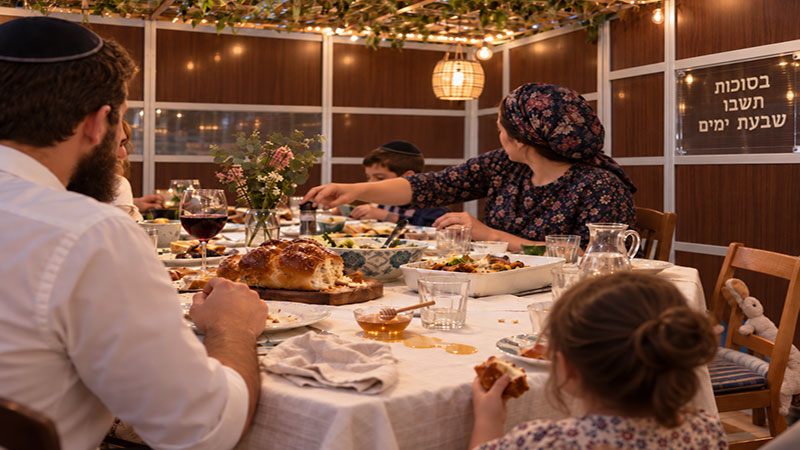
For seven days a person makes the sukkah his keva and his house arai. Meals move outside. So do learning, conversation, sitting around, and, when weather and circumstances allow, sleeping. That is an unusual form for a mitzvah.

There is a kind of shame that can feel morally serious because it refuses to let us off the hook, and we are right to be suspicious of anything that seems to soften responsibility.

Most of us walk into Rosh Hashanah with a list. Be more patient. Put the phone down at dinner. Daven like I mean it... The items are usually accurate. Someone has thought honestly about where his life is lacking. What a list cannot tell you is who will be keeping it in Cheshvan, when the person who wrote it and the person living that particular Tuesday afternoon are barely on speaking terms.

Think of someone who has told you more than once that he will be there, and then wasn't. At some point another passionate assurance does nothing at all.
A real apology asks us to stay for a few moments with an uncomfortable fact: I did something that hurt you.

There are years when something opens. Davening feels different. A shofar blast catches us off guard. We become more reflective, more aware of the gap between who we are and who we want to be.

An hour in which nothing has to be managed, where the worst of it can be said out loud and the person hearing it neither flinches nor leaves, does something no technique accounts for.

In panic we feel sweat and call it threat. In our work we feel sweat and call it mine. Both times the body is simply telling the truth, and both times we paint over it with a meaning it never asked for.
Not every bochur is built to be a talmid chacham in the classic sense, and that’s not a problem to be fixed. The pressure to fit one mold has real costs, making some question who they are and what they’re for.
If you want to give chizuk but feeling uncomfortable, that’s good. That discomfort means you’re resonating. The key is holding that feeling – letting it move you to reach out and care, while not letting your chizuk become about soothing your own distress.
Lazy is the shorthand we use when we don’t want to do that work. It’s ironically the path of least resistance – a way to explain our behavior without actually understanding it.
It insists that sweetness and substance go together. That what delights you also roots you. The juice is only there because the seed is there. The beauty of the moment is carrying something hard, lasting, alive.
Catastrophe disrupts our sense of coherence simultaneously – spiritually, psychologically, neurologically. It fractures how we understand ourselves and the world, overwhelming the nervous system’s need for safety and control.
I've learned to honor my own schlep seasons with self-compassion, when showing up is the highest form of courage I can muster.
When we focus on this healing future that exists beyond time, we bring tomorrow's comfort into today's pain. Our suffering doesn't disappear, but it changes as the light of our destination brightens our difficult journey.
This world is a journey of uncovering that infinite truth of who you actually are. When you align with your divine core, you're not becoming something new – you're revealing what was always there.
The stereotype of the meddling, overbearing shvigger can cause tension even before the relationship has a chance to develop. For many, the fear of not meeting expectations or navigating potential conflicts is significant.
Regret, or charata, is crucial in the process of teshuva. The Alter Rebbe offers a profound insight, linking the word charata with charita (engraving). This suggests that acknowledging our regrets helps engrave lessons learned, preventing repetition of past mistakes.
Just as Hashem opened Himself to be witnessed, we too have the sacred capacity to truly be there for each other. We can create space to hold another's story – their struggles and their greatness – even if we can never fully understand.
To effectively manage anger, it's essential to relinquish the need to control the upsetting event and the subsequent thoughts and feelings.
We really do have no place in this world. Yet our survival defies nature anchored not in military might or the validation of world leaders, but in our transcendent essence.
We often try to bury our vulnerabilities and wounds. The pain or shame can simply feel too great. But when we face them, we can integrate these aspects within ourselves.
When someone comes to meet with me, they or someone close to them recognize that a change is necessary. Yet, they still may not fully believe they can actually make that change.
One of the key lessons that Rivka teaches us about leadership is the importance of balancing confidence and a willingness to push boundaries with considerations of morals and character.
Hashem is pure tov, and He created an entire world just to share His tov – Himself – with us.


 October 23, 2026