 October 23, 2026
Categories: Columns
Who Else Knows?
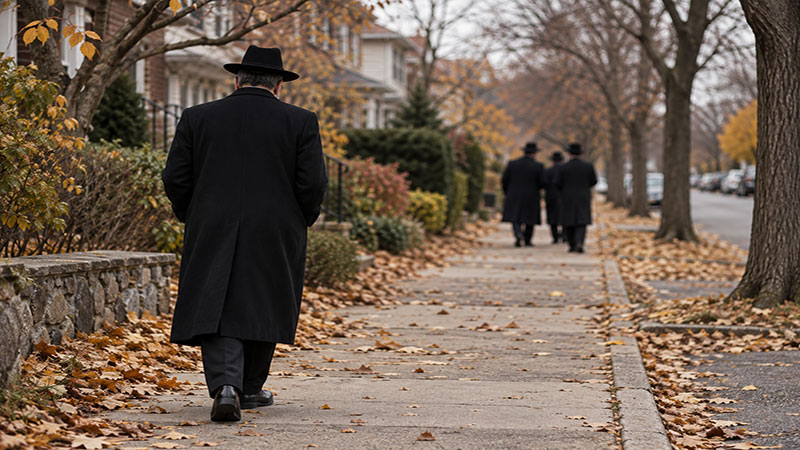


He came in because his wife had made the appointment, and he told me so in the first five minutes, the way a man explains that he's only there as a courtesy. He wasn't sleeping. He'd wake around three and lie there until it was time for Shacharis. He'd also been short with the kids lately, which his wife had noticed before he did.
Nobody would have picked him out as lonely. He'd davened in the same minyan for over twenty years and was the gabbai, so he usually knew whose father was in the hospital and whose son had just gotten engaged before most of the shul did. When they were short for a minyan, he was the one who made the calls. Simchas Torah was his favorite day of the year, even though he hated fighting the bochurim to put back the Torahs, because he got to dance with everyone in the shul.
It was the third session before he mentioned the business. It had been losing money for close to two years, and he'd been borrowing to cover it. The hours between three and Shacharis were when he ran the numbers in his head. He hadn't told his wife the whole of it either, but that was its own conversation, and it came later.
I asked who else knew, and he answered the way people do when nobody has asked them that before, by reaching for names. He started with his chavrusa. They'd been learning together two nights a week for fifteen years, and he said there was nobody whose opinion he trusted more on a difficult Tosafos. Next was his neighbor, who had driven his wife to the hospital the night their youngest was born, when he couldn't get home in time. Then a man from the early minyan he'd known since they were boys in the same yeshiva. He started to name a fourth and stopped. After a while he said that any of them would be at his door within an hour if he needed something, and that he couldn't tell any of them this.
These were real relationships, and he'd have done the same for any of those men. But each of them knew him in a particular role, as chavrusa or neighbor or gabbai, and each was connected to everything else in his life. He was sure that anything he told one of them would be around the shul by Shabbos. His daughter was in shidduchim, and in a community where every family makes inquiries, a man doesn't want it known that his business is in trouble. So, the same closeness that gave him so much belonging made the truth expensive to say.
The roles also made it easy never to try. A few weeks later he mentioned, almost in passing, that when people asked how he was, he said "Baruch Hashem, busy." He'd been giving that answer for so long that he no longer noticed he was choosing it. It was true, and it closed the conversation, and nobody ever asked a second time.
Part of why he could tell me, I think, is that I was nobody to him. My kids weren't in class with his, and I wasn't going to be at the kiddush. There was no role between us for the truth to damage.
The research on men's friendships has been moving in one direction for a while. In 1990, 3 percent of American men said they had no close friends. By 2021 it was 15 percent, and the researchers listed declining religious involvement among the causes. By that measure he should have been one of the best-protected men in the country, and in most ways he was. He had more company than he could keep track of. What he didn't have was one person who knew what he thought about at three in the morning.
If you recognized him, or recognized yourself, there's a way to check. Think of whatever has worried you most this year, and count the people who actually know about it, as opposed to the ones who would help if they knew.
The last time he talked about the man from the early minyan, he said they used to walk home together every Shabbos, years ago, before the kids' schedules took over their afternoons. He was thinking about asking him to walk again. I don't know whether he did.