 October 23, 2026
 Categories: Headline / Columns
When Elul Doesn’t Feel Like Elul
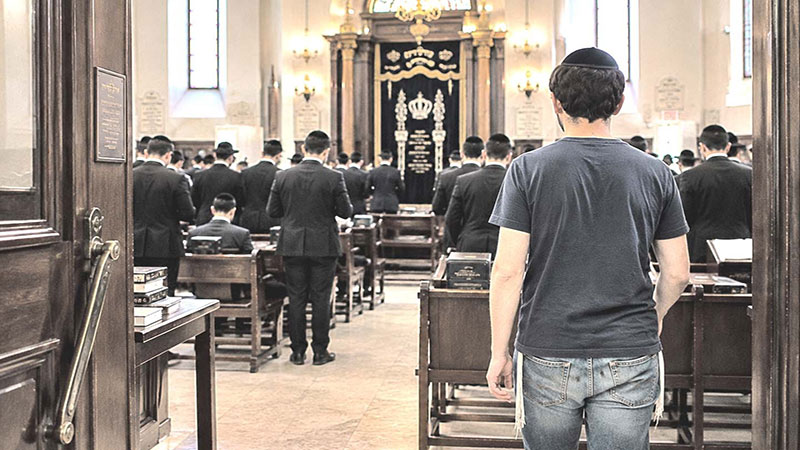


There is a particular kind of pressure that can arrive with Elul.
The shofar begins to sound each morning. We add L’David Hashem Ori. The words Ani l’dodi v’dodi li appear everywhere. People speak about teshuvah, closeness, preparation.
And sometimes we feel it.
There are years when something opens. Davening feels different. A shofar blast catches us off guard. We become more reflective, more aware of the gap between who we are and who we want to be.
And there are years when… not much happens.
We are tired. Distracted. Getting children back to school. Worried about money. Carrying something painful. Or simply not feeling particularly spiritual.
Then a second problem can develop. It isn’t only that I don’t feel Elul. I start wondering what that says about me.
As a therapist, I encounter versions of this in a different language all the time.
People understandably tend to associate change with moments when something feels different. A powerful therapy session feels like progress. Finally crying about something we have held inside for years can be enormously important. So can suddenly understanding why we keep reacting in a particular way.
But an experience of change and lasting change are not quite the same thing.
A person can understand exactly why he becomes defensive with his wife and still become defensive the next evening. Someone can have a breakthrough about her anxiety and still avoid the thing that frightens her two days later. None of that makes the insight false. It means the insight was an opening.
The next question is what becomes possible because of it.
Psychologically, there is a difference between entering a particular state and gradually developing a more enduring capacity. I can feel calm during a good therapy session without yet being able to find that calm when I am under pressure. I can feel tremendous love for someone without yet knowing how to stay connected when I am hurt or irritated.
In fact, much of adult life depends on our ability to remain connected to what matters when the corresponding feeling is less available.
A parent does not feel the sweetness of being a parent every time a child wakes him at 3:00 a.m. A marriage can remain deeply real through a period when warmth is harder to access. Someone recovering from depression may slowly learn that a dark day does not mean everything she discovered during the better days has disappeared.
This may offer another way to think about Elul as it moves toward Rosh Hashanah.
One of the central themes of Rosh Hashanah is Malchus – our relationship with Hashem as King. There is something striking about Malchus: it does not first require a particular emotional state. There is an avodah of Malchus even when the heart is, in the language of the sefarim, “asleep” – before love and awe have awakened.
And in the Rosh Hashanah tefillos we say:
Veyishme’u rechokim veyavo’u, veyitnu lecha keter meluchah.
Those who are far away will hear and come, and place upon You the crown of kingship.
I find those words particularly moving because the people in the sentence are still called rechokim. They do not first have to stop being distant. They hear from where they are. And from there, they come.
Imagine that a king unexpectedly passed your street while you were outside in old work clothes. You would not think, “I’m not dressed appropriately enough to stand for the king. I’ll go home, change, and honor him next time.” You would stand.
Your lack of preparation would not make him any less your king.
Yet spiritually, we often feel that we need to get ourselves dressed first.
I should be more inspired. More focused. Less distracted. I should have used Elul better. I should feel more remorse. I should be a little more like the person who belongs at Rosh Hashanah before I can really approach Rosh Hashanah.
But perhaps there is something very important in coming as a rachok.
Not because distance is the goal. But because turning toward something when I do not already feel close to it tells us something different than being carried toward it by a powerful feeling.
There are therapy sessions when a client feels highly motivated to change. Those moments matter. But I am often at least as interested in what happens on the unremarkable Tuesday when the motivation is gone.
Can he pause for three seconds before reacting?
Can she tolerate the anxiety and do the thing anyway?
Can someone who has worked on becoming less critical notice the familiar judgment arising and choose not to say it?
Those quieter moments are often where something begins to become ours.
Maybe Elul can work that way too.
Perhaps I realize that I have been speaking too sharply to one of my children. The Elul feeling may be the sting of recognizing it. The deeper change shows up three weeks later, at 7:40 in the morning, when everyone is late and I notice the sharpness before it comes out of my mouth.
Perhaps I know that I owe someone an apology. Feeling badly about it matters. Making the phone call matters differently.
Perhaps my davening has become automatic. I may not succeed in generating an inspiring Elul. But I might choose one beracha in Shemoneh Esrei to slow down for. One place to remember Who I am speaking to. Something small enough to remain when the season feels less charged.
This way of thinking can take some of the pressure off an Elul that feels flat.
It does not mean feelings are unimportant. Love, awe, longing, regret and inspiration are precious parts of religious life. When they arrive, we should receive them.
But we do not have to manufacture them in order to be allowed to come.
Veyishme’u rechokim veyavo’u.
There is room in the Rosh Hashanah story for the person who hears the call from far away.
Maybe the question at the end of Elul is not only, “How much did I feel?”
Maybe it is also: What do I notice now that I noticed less before? What matters to me a little more clearly? Where am I able to pause, choose, repair, or return a little sooner?
The shofar is meant to wake us.
But none of us stays forever in the moment of waking. Eventually we get out of bed and live.
And perhaps the measure of Elul is not only how different we feel while we are in it, but what becomes a little more possible in us after the feeling is gone.