 October 9, 2026
 Categories: Judaism / Headline / Perspectives / Op-Eds
A Private Shiva: Continuing the Conversation and Responding to Concerns


I appreciate the thoughtful feedback offered by Rabbi Aaron Reichel, published in the Nov. 21 issue (“The Many Benefits of a Public Shiva”), in response to my recent reflections on the mourning process. I am grateful that he engaged the topic seriously and with evident care for halacha, pastoral sensitivity, and communal well-being.
One impression his letter conveyed is that my article suggested a new norm or alternative template for how shiva should be structured. Let me clarify what was evident from the outset: the classic, open, community-oriented shiva remains the ideal halachic model and an extraordinarily valuable one. We should continue to preserve, support, and promote it.
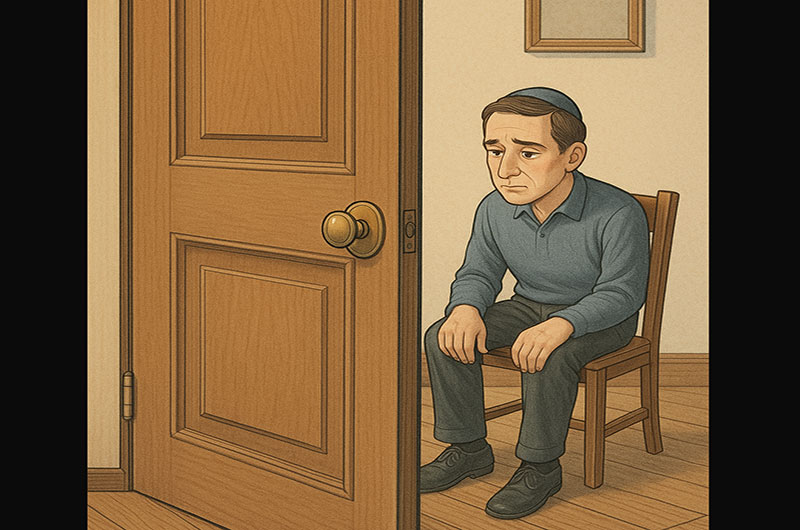
The purpose of the original piece was far narrower. It was to create space for the small but significant subset of situations in which one or more mourners find themselves emotionally, psychologically, or practically unable to participate in a full traditional shiva framework. These cases are not theoretical. They exist quietly in many homes and far more often than we tend to acknowledge. When such circumstances arise, honoring the dignity and emotional reality of the mourner is not a departure from halacha but entirely consistent with it.
The Core Halachic Question
Before addressing the specific concerns raised, it is important to note that the discussion here is not about whether a person is obligated to sit shiva. That obligation may apply in most cases, although halacha does recognize situations in which aspects of aveilus are suspended or modified. The question at hand is altogether different. It concerns whether a mourner is halachically required to receive visitors regardless of that mourner’s emotional readiness. The obligation to observe shiva is not synonymous with a commitment to host a steady flow of visitors. The framework of nichum aveilim is governed by the mourner’s expressed capacity and desire to engage.What follows is an effort to articulate that point with greater clarity, respond directly to the concerns raised, and ground the discussion in halachic and pastoral principles.
- Nichum Aveilim Is for the Subject, Not the Object
The Shulchan Aruch in Yoreh Deah 376 states explicitly that visitors should not initiate conversation and that once the mourner indicates that the interaction has reached its limit, even through a minimal gesture, visitors are no longer permitted to remain. These formulations are not suggestions. They are binding halachic parameters that structure the entire experience.
On this point, I agree with Rabbi Reichel’s statement that the Rabbis knew exactly what they were doing in shaping the mourning process. My argument does not challenge rabbinic wisdom. It applies it. The halachic model does not expect mourners to perform emotional availability. It expects visitors to respect the emotional boundaries that the mourner actually expresses. This is not a contemporary therapeutic insight. It is the halachic framework itself.
For this reason, when a mourner finds conversation overwhelming or when the presence of visitors becomes emotionally difficult, accommodating that reality is not a leniency and not a concession. It is part of the halachic structure of the mitzvah itself.
- Overwhelm, Not Just Withdrawal
For some mourners, an open-door shiva does not alleviate isolation; it increases distress. Contemporary pastoral literature notes that many mourners fulfill and benefit from shiva through quiet presence rather than conversation. Silent companionship is often the most authentic expression of nichum aveilim.
- Alternatives Are Helpful, But Not Always Sufficient
However, they do not address cases in which the flow of visitors itself is destabilizing or emotionally unsafe. Suggesting that a mourner repeatedly exit, redirect, or manage boundaries places the entire burden of emotional regulation on someone already in acute pain.
Halachic authorities caution against overburdening mourners, and many contemporary guides acknowledge the legitimacy of firm visiting hours or limited access based on the mourner’s needs. Yet even these measures do not always suffice. There are situations in which a more structured and private environment is necessary for the mourner’s well-being.
- Shiva Within a Family Is Not a Referendum
Halacha acknowledges that grief is an individual experience, not a collective one. Different family members may have vastly different emotional needs. Accommodations need not be all or nothing. Staggered visiting times, separate spaces, or individualized plans are all possible. The goal is never to close doors for those who seek traditional comfort. It is to avoid forcing someone, often the most emotionally fragile mourner, into an environment that may cause harm.
- The Mitzvah Belongs to the Mourner, Not to the Visitor
Visitors fulfill the mitzvah even in complete silence. Remaining silent until the mourner chooses to speak is part of the halachic structure itself. Silent presence, brief presence, or restricted presence all count fully. The visitor’s desire to offer comfort cannot override a mourner’s emotional boundaries. The mitzvah exists for the mourner.
- Personal Anecdotes Cannot Be Universalized
The point is not to compare stories. Personal anecdotes, no matter how powerful, cannot establish a rule. They illustrate the range of human experience, but they do not determine what should be expected of every mourner in every circumstance. Our responsibility is to meet each mourner where that person truly is, guided by halacha and by genuine sensitivity, not by assumptions drawn from the experiences of others.
- Preserving the Classic Model, Making Space for the Exceptions
My intention was far more modest: to acknowledge that for a minority of mourners, the standard model is not emotionally sustainable and that in those cases, halacha itself provides flexibility, and compassion demands it. A shiva that honors the mourner’s stated needs, whether full, partial, or limited, is not a diminished shiva. It is a faithful one.
Conclusion
Rabbi Reichel concludes with the assertion that “there are no limits to the benefits that accrue from traditional public shiva visits.” I understand the sentiment behind this line, but it is simply not supported by the experience of many mourners. There are, in fact, limits to those benefits, and for some individuals, the limits are quite pronounced. In certain situations, there can even be emotional harm. I was aware of this long before writing the original article, but the responses I received afterward from individuals in a wide range of circumstances only reinforced it. Some described distress, anxiety, or re-traumatization that arose not from their loss but from the nature or volume of the shiva experience itself. These accounts do not detract from the immense value of a traditional shiva for those who find it comforting. They do, however, remind us that its benefits are not universal and that our communal practice must be broad enough to recognize and support those for whom the standard model is not emotionally safe or sustainable.I am grateful to Rabbi Reichel for his engagement and his genuine concern for preserving the integrity and power of the shiva experience. On that goal, we are aligned. My hope is not to alter communal norms but to ensure that within those norms we recognize and dignify the lived reality of all mourners, including those for whom the standard structure is overwhelming.
We honor the mitzvah most fully when we remember that it was designed not to protect a structure but to uplift a human being.