 September 25, 2026
 Categories: Halacha & Hashkafa / Torah
Mission Not Accomplished
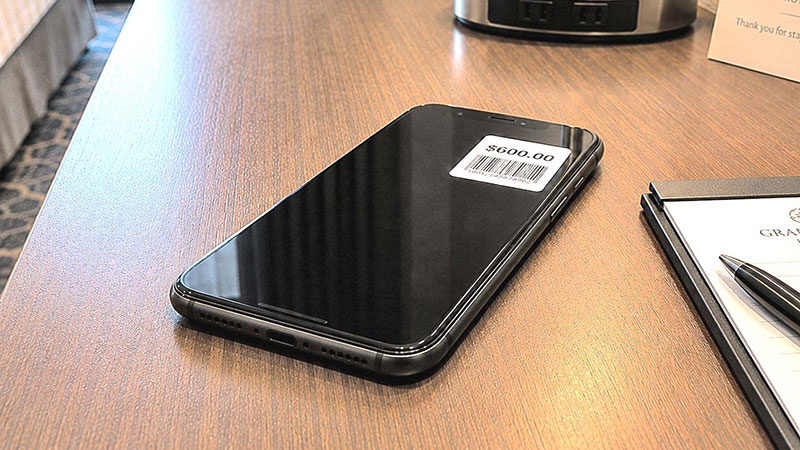


Mr. Fine was planning to travel cross-country on business. He mentioned his plans one afternoon to his neighbor, Mr. Neuman.
“That’s perfect timing!” exclaimed Mr. Neuman. “My son lives in that area. I need to get a phone to him. Would you be willing to take it along?”
“Sure,” replied Mr. Fine. “I’m flying there anyway.”
“My son will pick up the phone from you,” said Mr. Neuman, adding, “I’d like to pay you $25 anyway, for your efforts.”
He gave Mr. Fine the phone, still bearing its $600 price tag, along with the $25 payment.
The flight went smoothly. After checking in to his hotel, Mr. Fine placed the phone on the desk in his room until Mr. Neuman’s son would collect it.
That evening, he went out to dinner with several business associates. When he returned, the phone had vanished!
Mr. Fine searched the room, checked his luggage, and even spoke with hotel management. But the phone was gone.
Realizing it had apparently been stolen, he called Mr. Neuman.
“I’m very sorry,” Mr. Fine apologized, “but the phone was apparently stolen from my hotel room. I’m liable for it and will reimburse you the full $600 value of the phone.”
Mr. Neuman was still understandably upset. “My son was counting on the phone,” he said. “You should also return the $25 I paid you. You didn’t complete the delivery.”
Mr. Fine disagreed.
“I made the trip, carried the phone, and am compensating you for the theft,” he replied. “Why should I also forfeit the $25?”
“I paid you to deliver the phone,” countered Mr. Neuman. “In the end, the job wasn’t done!”
When Mr. Fine returned home, the two came before Rabbi Dayan and asked:
“Must Mr. Fine also return the $25 payment?”
“A shomer sachar is paid to guard the entrusted item with heightened responsibility,” replied Rabbi Dayan. “Therefore, he is usually responsible for theft, but exempt from oness – circumstances beyond his control (C.M. 303:2-3).”
“The Gemara (B.M. 58a) indicates that when loss occurs through oness, the shomer is also entitled to his wages (Shach C.M. 303:5).
However, in cases of theft of items for which the guardian is nonetheless exempt based on a Scriptural exemption – such as hekdesh, real estate, and documents – he is not entitled to his wages, since he did not do his job properly and the item was stolen (C.M. 301:1).
Some Acharonim maintain that, all the more so, regarding items for which the guardian is liable, he is not entitled to his wages if the item was stolen, since he did not do his job properly (Ketzos 227:11; Yehuda Yaaleh C.M. #211).
Nonetheless, Tumim (66:68) rules that if the guardian did guard properly at first, he is entitled to his wages for the work done or time units up until the theft occurred. Thus, if the wages were set per day or week, the guardian is entitled to his pay for the days or weeks that he guarded the item properly before it was stolen.
However, other Acharonim maintain that when the guardian pays for the stolen item, it is like he returned the item to its owner, so that he is entitled to his wages (Cheshek Shlomo, B.M. 58a).
Chazon Ish (B.K. 7:18) also questions this point, but takes for granted that the guardian cannot be expected to simultaneously forfeit his wages and pay for the stolen item, since this would be like he is paying the owner more than the value of the loss. Therefore, he can deduct his due wages from the value of the item that he is liable for. (See also Pis’chei Choshen, Pikadon 2:18[42], who understands the Meiri (B.M. 83a) in this way and rules accordingly.)
Perhaps this dispute hinges on whether the shomer sachar is paid for his extra efforts in safeguarding the item – in which case theft negates his right to wages – or is paid for accepting heightened liability, so that he is still entitled to wages when he reimburses for the item (see B’inyan Geder Chiyuvei Shomer Sachar, by HaRav Aharon Mittelman, Beis David (Zichron Tuvia), pp. 624-628).
“Thus, in our case,” concluded Rabbi Dayan, “due to the dispute, Mr. Fine cannot be compelled to pay the full value of the phone and also to return the fee he was paid.”
Verdict: There is a dispute whether a shomer sachar who pays for a stolen item is entitled to his wages. Due to this dispute, he cannot be compelled both to pay the full value of the item and to return the wages due until the theft occurred.