 October 16, 2026
 A Time For New Thinking In The Charedi World (Part I)
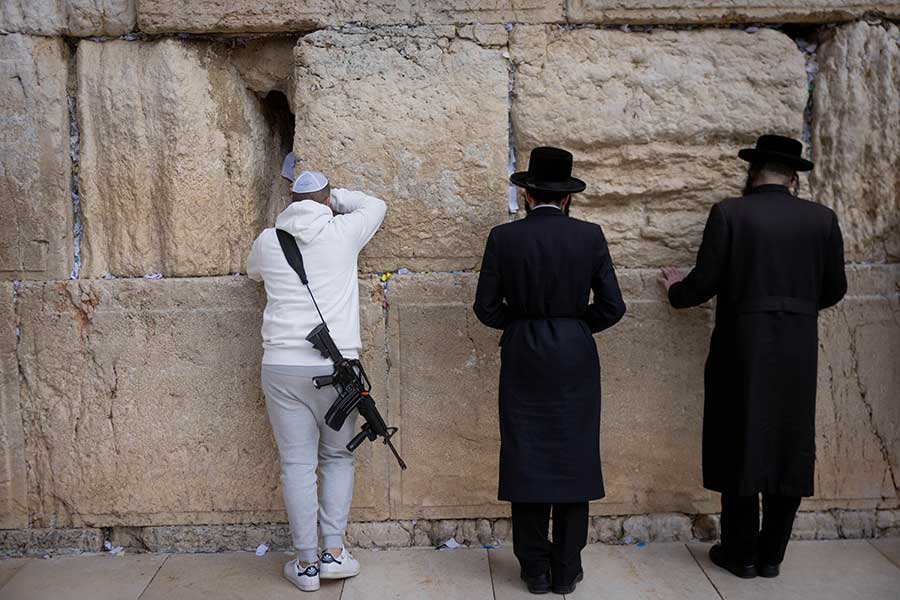


One thing is clear to almost everyone in Israel: The world has changed since Simchas Torah. There is no going back to the way things were.
The subhuman monsters who murdered, raped, and beheaded our brothers and sisters have shaken the world. In Israel, for the most part, there is a tremendous unity of purpose and a sense of brotherhood to fight together for our national future. Unlike what was going on before October 7, when left and right, religious and secular, were at each other's throats, there are now countless examples of Jews of all types coming together, appreciating each other, finding common ground as Jews, and hoping together for Hashem’s help. Many see in this great hope that it is part of the necessary conditions that will hopefully lead to our final redemption, speedily in our days.
However, I believe that the current scenario is very fragile. I am old enough to have lived through the Six-Day War, the Yom Kippur War and intifadas and other crises and have seen similar unifying moments (although this seems to be the most powerful yet). In all those cases the unity waned soon after the crisis abated, and unfortunately, the sinas chinom that we Jews excel at returned quite quickly.
It is already happening. The leaders of the “Kaplan Movement,” who regularly led rallies of tens of thousands paralyzing the country and did so much damage in the name of “democracy,” found themselves on October 8 without a platform on which to bloviate and feel important. Unfortunately, they found a way to be “relevant” again. They are leading a growing movement that is cynically using the pain of the families of hostages to whip up anti-Netanyahu and anti-government protests, blaming him and the government for the security failures on October 7 and demanding that Netanyahu resign immediately. (They, of course, refuse to admit their part in causing the national weakness that our enemies saw, and blame it all on others.) They have returned to the streets in Kaplan and at the homes of cabinet ministers, and soon will attempt mass rallies countrywide.
While this is, thankfully, still only a minority view, the seething hatred of many is still just under the surface, waiting to be stoked by extremists on both sides. There is enormous resentment against the leadership of the army and the government that left Israel so vulnerable on October 7. Most sane people understand that a day of reckoning must come after the war, but the anger and desire for heads to roll bubbles up more and more frequently. When this finally happens, it is hard to envision that much unity will survive.
My concern, however, is mostly with the charedi public. As I wrote repeatedly before October 7, it is plain that much, if not most, of the anger and protests that were going on were not caused by “Judicial Reform” but by the anger and fear that the secular public has of the growing power and numbers of the religious, and particularly the charedi, community. They feared that the predominantly secular liberal State of Israel is in danger of becoming far more religious and conservative, and were strengthened in those fears by slander and lies in the media and from the intelligentsia.
What is crucial for us to consider is why so many otherwise reasonable fellow Jews harbor such resentment against the charedi community. It is vital for us to understand that from the perspective of the secular public, there is a huge monolithic charedi community that (a) refuses to serve in the army or engage in National Service, (b) seeks huge sums from the government coffers to fund their institutions and support thousands of families as the price for their participation in the government, (c) often seeks to impose halachic restrictions on those who are not interested in observance, and (d) contains those who frequently engage in despicable behavior such as demonstrations for their causes in which they call police and soldiers Nazis.
While much of this is exaggerated by the overwhelmingly anti-religious media, there is too much of it that is true. What concerns me is that once the war is over, there will be no going back to the way things were, and I believe that – unless things change, and change quickly and significantly – there will be a major blow-up between the secular and religious public. Allow me to explain.
On the one hand, in many ways the war has sparked a growing appreciation of the charedim. It is widely recognized that the largely charedi heroes of Zaka and Ichud Hatzalah and other chesed organizations have been providing vital volunteer service under incredibly difficult conditions. Moreover, the unbelievable level of giving and chesed has been incredible. Along with many secular organizations, they have provided food, lodging and every possible need to displaced families. There has been massive and overflowing support for any possible help to the soldiers, including the purchase of needed equipment. There has been a great spiritual revival among the soldiers in which they requested, and charedim have provided, tens of thousands of tzitzis, tefillin and other religious articles, and this has been a major Kiddush Hashem. There is no question that for many the negative stereotypes and prejudices have been broken.
And yet many issues are bubbling to the surface, causing a greater and greater rift. These include:
- This war is incurring a gargantuan financial cost. Not only to replenish military equipment but to rebuild the many villages destroyed, to finance grants for the half million reservists and businesses (e.g. tour guides like me) out of work for months, and the thousands of families who have been displaced from their homes and businesses. As many billions must be expended on these vital costs, there will be little sympathy for financing yeshivas and kollels at the levels that the religious community has grown accustomed to requesting. This goes not only for the government but also for philanthropists who will be directing their donations elsewhere.
- The blanket exemption for all charedi young men from the army and national service. As things now stand, the army will begin large-scale drafting of yeshiva students on April 1 unless the Supreme Court or government intervenes. Any tolerance for continuing the exemption on the part of the Israeli public is quickly evaporating, as the crying need for more soldiers grows daily. The old arguments for exemption are now completely unpersuasive to the unconvinced.
- The discouragement of young men from receiving a secular education. I am not writing about those who are really learning full time, although an argument can be made there as well. But many, many young men are prevented from supporting their families properly by a lack of willingness to allow them to have a proper education and engage in a lucrative profession. As I argued above, the world has changed in the last sixty years. With the percentage of charedi children being over 25 percent, and growing, the present economic condition is unsustainable from within, and the large public will rebel at supporting it.