 October 9, 2026
 Categories: Headline / Features / Jewish Community
A Tribute to an Innovator of Spreading Yiddishkeit
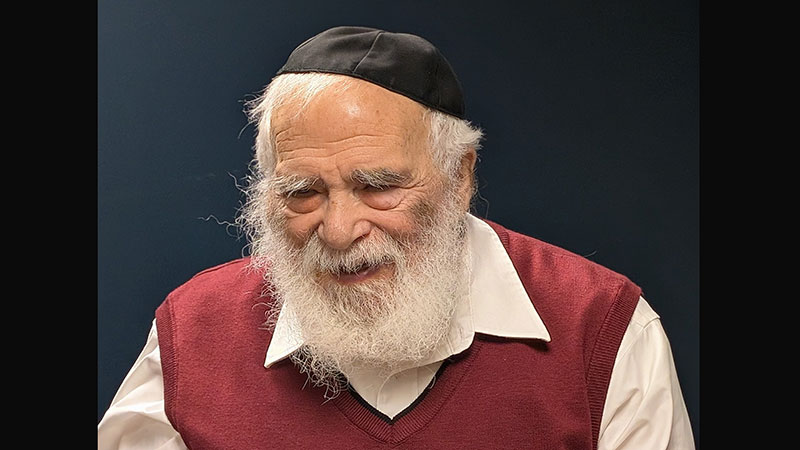


Rabbi Yisroel Eliezer Rubin ben R’ Moshe was niftar on Friday night, October 2, 2026 (21 Tishrei 5787). He passed away peacefully in his sleep just hours after participating in hakafos at Congregation Shomray Torah, commonly known as “the Shteeble,” in Albany.
Rabbi Rubin was born on May 9, 1948 (30 Nissan 5708) in Brooklyn, NY. He was raised in Montreal, Canada, where his father was a shochet u’bodek (ritual slaughterer and inspector). He graduated from the Merkaz HaYeshivos Tomchei Tmimim Lubavitch in Montreal in 1967 and received semicha in 1971.
The Lubavitcher Rebbe, Menachem Mendel Schneerson, personally assigned Rabbi Rubin to Albany in 1974 as the shliach (emissary) for the northeast region.
“The Rebbe actually gave me a choice of three places: New Orleans; Indianapolis, Indiana; and Albany, New York. I chose Albany because it was more convenient to Montreal and Crown Heights,” Rabbi Rubin said on the television program The Jewish View in 2015.
On another episode of that program, taped in 2014, Rabbi Rubin recalled the Rebbe’s message to him before he headed to his posting in Albany in 1974 at age 26, as well as the difficulties the Albany Jewish community had in warming up to Rabbi Rubin’s brand of Judaism and spirituality.
“Every generation takes a toll, and so it’s so important to reach out to Jews where they are, even if it is not in the shul. We have to reach out, care for, and be concerned for every Jew on the street,” he said. He said the Rebbe taught his followers to make Judaism “available and accessible to Jews everywhere.”
There were several creative ways that Rabbi Rubin did this. It wasn’t always about asking Jews to put on tefillin. Food always hit the spot. “In those days, we started off with a kosher cart. We used to have a kosher hot dog stand at the Twin Towers (99 Washington Avenue) right up from the Capitol, and Jewish legislators used to come up and buy their kosher food,” Rabbi Rubin shared. “Then we opened up a kosher pizza and falafel store and The New York Times covered it. That was the first time Sheldon Silver, an assemblyman, was [shown] in The New York Times eating pizza – that was in this article,” he recalled.
Assemblyman David Weprin (D - Hollis, Queens) told The Jewish Press the rest of the story behind the hot dog cart and the pizza store. Weprin is a UAlbany (called SUNY Albany in the 1970s) graduate. He urged his roommate Carey Kessler to team up with Rabbi Rubin to sell hot dogs and later pizza.
“I helped them out also, but it was really more Carey Kessler who did that, and then, you know, it morphed into the pizza place, and the pizza place became like the only kosher restaurant in Albany,” Weprin said. “For example, when Shelly Silver was elected to the Assembly, he would basically eat in the pizza shop every night for a long time because there was no other place. That’s all due to Rabbi Rubin.”
The 1970s were tough times for Rabbi Rubin as he tried to get the ball rolling with the Chabad movement locally. “I can’t say it was all fun,” he said on The Jewish View. “There were difficult times as well. We had to struggle to be recognized, but now everybody knows that Chabad is a good service. It’s something very important for Jews today. When I first came here, organizations and synagogues were far stronger and more cohesive than they are today.”
Weprin noted that Rabbi Rubin “was probably one of the first shluchim before it became every city, every location in the country, around the world. He kind of predated that. Albany was one of the first Shabbos houses and the first real presence bringing Yiddishkeit and Judaism closer to the people on the SUNY Albany campus.”
Upon his arrival, Rabbi Rubin quickly established himself as the regional director of Chabad of the Capital Region and Northeastern NY and as the visionary rosh yeshiva of Maimonides Hebrew Day School.
Rabbi Moshe Bomzer, a senior rabbi in the community and director of the Vaad HaKashruth of the Capital District, developed a special relationship with Rabbi Rubin.
“Rabbi Rubin’s brilliance manifested itself in bringing Congregation Beth Abraham-Jacob (CBAJ) and the Shteeble together for united Torah learning, sharing the Torah Times with CBAJ members, and having Rabbi Rubin’s children bringing Chabad to the synagogue,” Rabbi Bomzer told The Jewish Press. “Rabbi Rubin’s ‘inreach’ to New York state government and politics transcended party lines and always brought [everyone] to celebrate Tu b’Shvat, Purim, and Chanukah in the public square.”
“His pride and joy remain his school, Shabbos House, and the extended Chabad Houses within the Capital District,” Rabbi Bomzer continued. “I have lost a dear confidante, mentor, and friend, and his loss will be felt by all for many years to come.”
In a poignant tribute to his teacher, Rabbi Zalman Simon, director of the Bethlehem Chabad near Albany, reflected on Rabbi Rubin’s legacy.
“For more than five decades, Rabbi Rubin helped shape and build Jewish life throughout the region. He was a founder of Maimonides Hebrew Day School in 1980. He also stood at the helm of a growing network of Chabad centers throughout the Capital Region and Northeast New York,” Rabbi Simon wrote in a statement to the Albany Jewish community. “Known for his creativity, originality, and unique approach to Jewish education, Rabbi Rubin was constantly finding new ways to make Torah and mitzvos meaningful, relevant, and accessible. Learning and teaching Torah remained at the center of his life and shlichus, including throughout his recent illness.”
Rabbi Rubin was friends with Rabbi Shmuel Butman, z”l, director of the Lubavitch Youth Organization. Rabbi Butman’s son, Rabbi Velvl Butman, director of the Chabad of Westchester County, shared his remembrances of Rabbi Rubin with The Jewish Press.
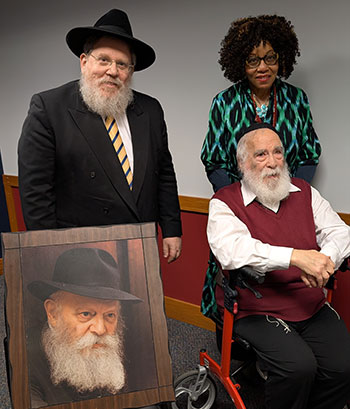
“I have enormous respect and admiration for Rabbi Rubin. We have to remember [that he] came to the world of Jewish activism in the early 70s. It wasn’t as popular as it is today and there wasn’t modern technology to share ideas. Many of the things you had to do were done by yourself locally with your own creativity. He was incredibly gifted with creative thinking. He was original and his dedication was superb.
“I remember he was always involved in Jewish education. He was a visionary leader [in Jewish education] in every possible way. He cared for every Jewish child. It didn't make a difference to him if the child came from a wealthy home or a poor home, but he sincerely believed that every Jewish child deserves a Jewish education, regardless of their abilities.”
Rabbi Butman also referred to Rabbi Rubin as an “extraordinary scholar.”
“It was amazing and shocking to see how much he remembered on the spot. You can ask him questions in different areas and you’d be surprised what he was able to pull out of the hat from his memory and often in a very creative, entertaining way. He had this cute way of merging Torah, humor, modernity, and inspiration all into one mix,” Rabbi Butman said. “Rabbi Rubin knew exactly how creative he was. He used it when he needed to. He knew exactly where to stand firm on his principles and to make sure that Jewish education is not compromised. He was a very humble man...despite all of his talents and his wisdom and his scholarship. He didn’t carry himself as a pompous, arrogant person at all.”
That sentiment was echoed by his wife, Rochel – or Morah Rochel, as she is known in the local Hebrew school. “He was a humble man,” she told me at the funeral.
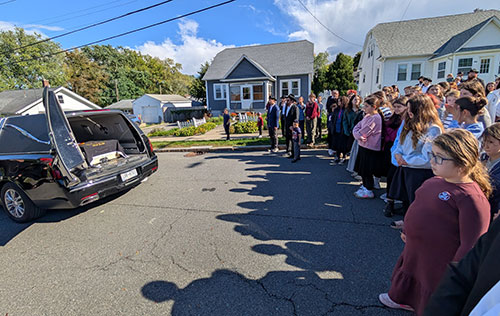
More than 150 members of the Orthodox Jewish community of Albany filled the cemetery grounds on Fuller Road near the Shabbos House Rabbi Rubin founded with his brother-in-law Moshe Chanowitz in the mid-1970s. His graveside funeral was without eulogies because it was Isru Chag, the day following the holiday of Simchat Torah. There are plans in the works for the Jewish community to have opportunities to remember, reflect upon, and appreciate Rabbi Rubin – his unique personality and style, his Torah, his creativity, and the many gifts he gave to our community and far beyond it.
Rabbi Rubin’s eldest son, Mendel, offered some words on behalf of the attendees to pay final respects to his father.
“Sukkot is a holiday season that my father loved tremendously. Simchas Torah was his holiday and it’s fitting because he had the simcha of the Torah. He really had a very big joy, a true joy in learning Torah. It was his passion. It was his love. It was the center of his life even during his illness,” Rabbi Mendel told the large crowd of attendees gathered among the cemetery tombstones.
Rabbi Rubin’s passing marked exactly 52 years since he began shepherding a community that had not previously been exposed to the Lubavitch movement. He arrived in Albany on Sukkot 1974, according to family members, and passed away during the last day of the weeklong harvest celebration, which appropriately emphasizes themes of gratitude, community, and Divine protection during the Israelites’ journey through the desert.
Rabbi Rubin is survived by 10 of his 11 children: R’ Mendel (Raizy) (director of Shabbos House, UAlbany); R’ Abba (Raizel) (Saratoga Springs Chabad); R’ Yossi (Leah) (Clifton Park Chabad, Saratoga County); R’ Shmuly (Laiky) (Union College Chabad, Schenectady); Devorah Leah (R’ Mendy) Mathless (University Heights Chabad, Albany); Rivky (Mendel) Cohen (Manchester, England); R’ Efraim (Menucha) (Crown Heights, Brooklyn); R’ Simmy (Chaya) (Albany); Mushky (Brooklyn); and R’ Mordechai (Chana) (Colonie Chai Jewish Center, Colonie, NY), as well as his grandchildren and great-grandchildren and his sisters Rochel (Hershel) Zaklos (Detroit), Esther (Moshe) Chanowitz (Montreal, Canada), and Sara (Yankel) Yuzevitz (Brooklyn). He was predeceased by his parents, Rabbi Moshe and Yocheved Miriam Rubin, as well as his daughter Esty Cohen of Manchester, England.
Governor Kathy Hochul wrote a brief, pithy statement recognizing the loss to the Jewish community.
“I extend my deepest condolences to the Rubin family and the Chabad Lubavitch community on the passing of Rabbi Israel Rubin. Rabbi Rubin leaves behind a tremendous legacy, serving as a Chabad emissary for the Capital Region for 52 years and playing an instrumental role in shaping the Capital Region’s Jewish community. May his memory forever be a blessing.”
There are so many stories and remembrances of Rabbi Rubin from Capital District residents and former residents, including this writer, who could write a book about Rabbi Rubin’s legacy and the gaping holes he leaves in so many hearts.
May his family be comforted by all the mourners of Zion and Jerusalem, and may his memory be for a blessing and his legacy continue to inspire us and the generations to come.