 October 16, 2026
 Categories: Headline / Front Page / Perspectives
A White-Shirt Pesach
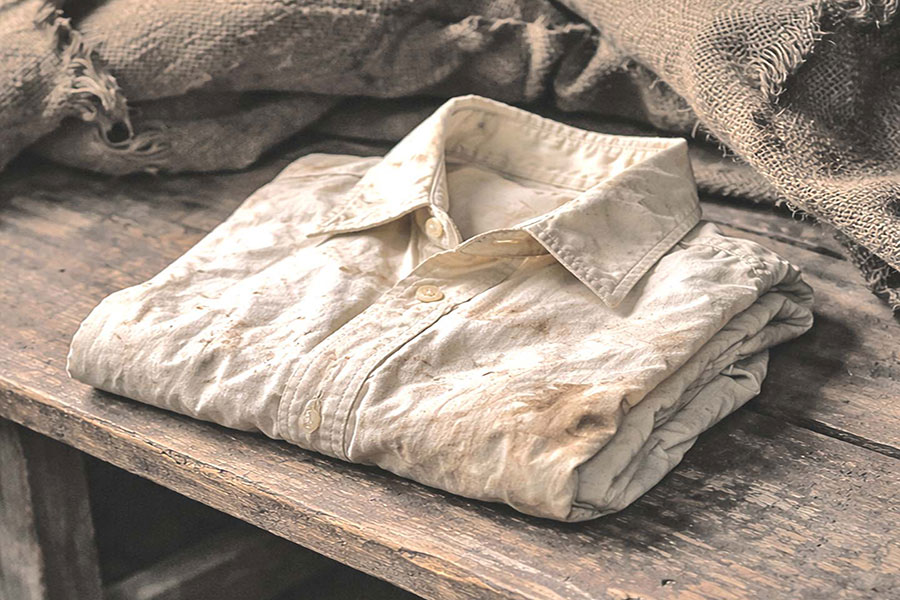


It was March of 1988. A few months earlier, the first intifada had broken out, leading to large protests and mobs across numerous Palestinian villages. I was a post-college student at Yeshivat Har Etzion in Gush Etzion. This uprising felt different from later, more violent waves. There were no bombings and no organized terror networks; this was largely an intifada of protests and relentless stone-throwing.
The army was stretched thin and needed extensive manpower to manage protests erupting across village after village, where riots and stone-throwing had become routine. One by one, my friends in the Israeli hesder program began receiving draft notices.
It soon became clear that the entire yeshiva would empty out, as everyone was drafted into emergency service.
The whole yeshiva felt the impact; a heavy, palpable sadness settled over us. Many had already served two stints in the army and were looking forward to a stretch of uninterrupted Torah study. To make matters more difficult, Pesach was just a few weeks away. Having spent multiple Sedarim in the army, my friends were hoping, this time, to sit at a family Seder, slow and deliberate, not rushed and improvised.
The disappointment, even a quiet heaviness, hung in the air.
Our revered rosh yeshiva, Rav Yehuda Amital, gathered us and shared his experiences from the labor camps during WWII. Of course, there was no distinction between Shabbat and the rest of the week. Each day demanded grueling, backbreaking labor.
He told us that he kept an old, crumpled white shirt, which he would fold and place in his pocket every Friday morning. After long hours of exhausting work, he would slip away at sunset. There, beyond the sight of the guards, he would put on the white shirt as his Kabbalat Shabbat, marking the arrival of the sacred day. Then he would return to his labor, having found a small but meaningful way to keep Shabbat even within those harsh conditions.
He told us, almost sharply, “You are spoiled.” Your Shabbat is spread across so many elements: the food, the singing, the Torah, the friends, the rest, the family time. My Shabbat in the camps was compressed into a single white shirt and those few minutes of wearing it. But it was intense, it was meaningful, and Hashem was with me.
He then turned to the boys who were about to be drafted for Pesach. This year, he said, your Seder may be rushed, perhaps no more than half an hour before you are called back to serve. But it will carry the same depth as that white shirt in the labor camps. Hashem will be with you in that shortened Seder, just as He was with me there.
That story about the crumpled white shirt deeply changed my life. So often, when I felt confined by circumstances and life’s difficult conditions, I returned to that white shirt and challenged myself to rise above my frustration.
The story also taught me that at times of scarcity or hardship, when the resources we usually rely upon are stripped away, those very moments can deepen our connection. With fewer external layers and supports, the experience becomes sharper and more focused. What remains, whether physical or emotional, carries greater weight, just as his own Shabbat in the camps was concentrated into that single white shirt.
The image of my rebbe’s white shirt, and the way scarcity can intensify religious and emotional experience, stayed with me through many challenging moments.
A Disrupted Pesach
That lesson returns to me this year. This year’s Pesach will feel very different for many people, both in Israel and abroad. Travel restrictions have disrupted plans, leaving families who hoped to be together separated. In Israel, ongoing limitations and strict safety guidelines will continue to shape how the chag is observed, often in constrained settings. Many feel frustrated, sensing that this year’s Pesach will fall short of what they had hoped for. Rav Amital’s white shirt reminds us that we won’t always have the resources we seek, but we can still breathe deep meaning into less than ideal Shabbatot or chagim. Even when the setting is diminished, the core experience can remain intact, and at times even grow stronger. His message speaks to life in general, but it is especially relevant to the experience of Pesach. The night we left Egypt was chaotic and unexpected. We imagined a measured departure, yet we were driven out in haste. The dough we had prepared did not have time to rise. Pharaoh pursued us as we fled. We did not control the moment or the process; we were carried forward toward a destination we could hardly grasp. A Pesach that feels less controlled and less orderly more closely reflects that original night. Letting go of the need to shape every detail this year may return us to the experience of that first Pesach. This year on Pesach, let go. That may be the truest path to freedom. And of course, whatever limitations we may face, it is important to think about those whose Pesach will be far more disrupted. Tens of thousands of soldiers continue to fight, heroically defending us and protecting our borders. Their Pesach will be compressed and often improvised. The least we can do, in light of their sacrifice, is not to complain about the more moderate restrictions we face.Misplaced Language
Relatedly, we must be careful about the way we speak. There is an ancient tradition that Jews were exiled to Germany after the destruction of the First Temple in the sixth century. Seventy years later, Ezra called upon Jews across the diaspora to return with him to Jerusalem. Most did not respond and chose to remain in exile. Only forty-two thousand returned, leaving the Second Mikdash period diminished in both national strength and spiritual ambition. Within that story, a particular failing is attributed to the Jews of Germany. They are described as having written to Ezra Hasofer, praising the kindness of their hosts and declining his invitation. They encouraged him to return to Yerushalayim, while they remained behind, speaking of Germany as if it were their Yerushalayim. The tradition records that because they spoke of another land in those terms, they later suffered disproportionately across the generations. We must be careful with the language we use when we speak about Israel and about our bond to this land. Over the past few months, as travel bans have limited the usual Pesach traffic, the phrase “stuck in Israel” has been used. That language is not only painful and insensitive to Israelis who are defending this land on behalf of Jews around the world, it is also historically short-sighted. There were even billboards portraying Israel as a burning country, while “rescue” flights were arranged to bring non-Israelis “home” for Pesach. It is understandable and important that families want to spend Pesach together. But the language used has been misguided. No Jew is ever “stuck” in Israel. Those who choose to leave to be with family should do so in a way that reflects that they are not escaping, but remain bound in a shared fate with this country and with the Jewish people.